
Miso ramen soup with tofu
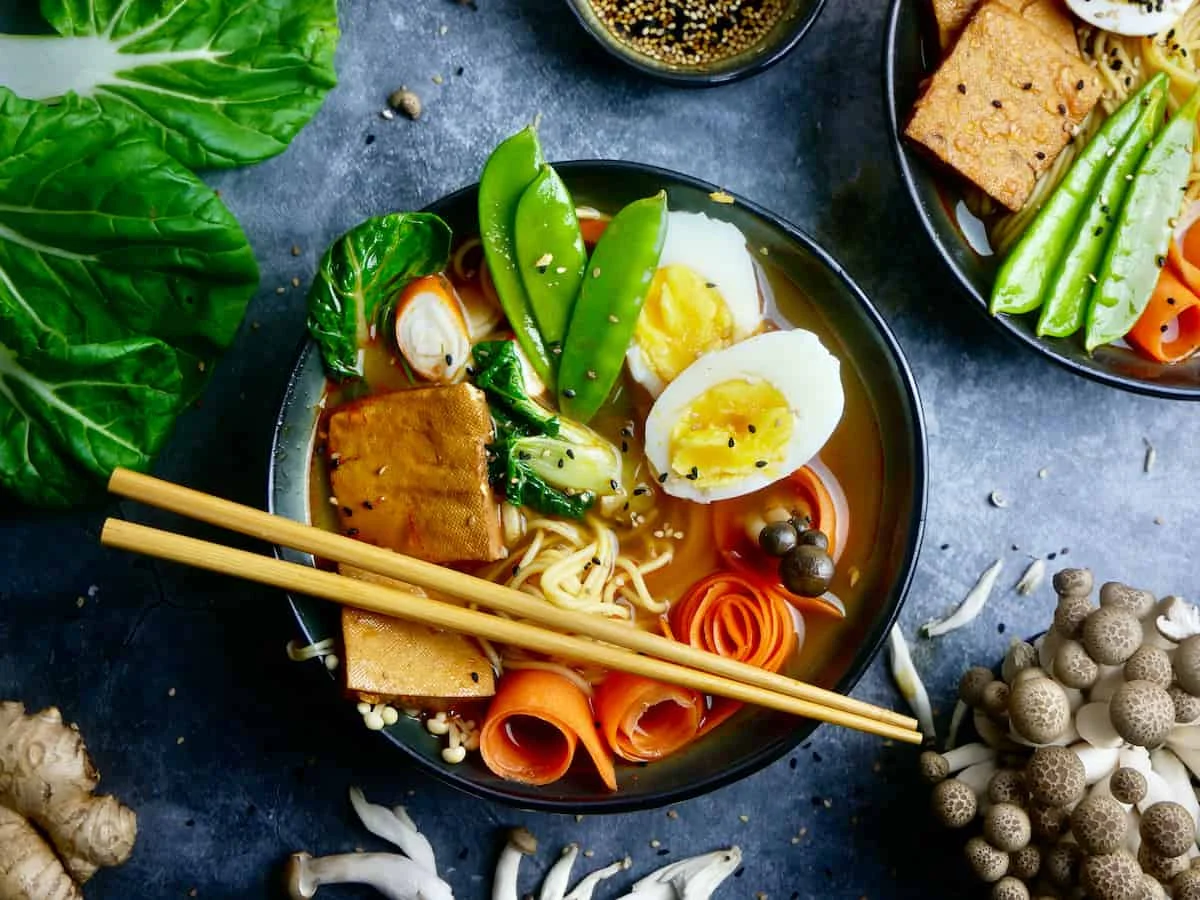
This Japanese-inspired miso ramen brings noodles, tofu, vegetables and a savoury broth together in one bowl. It is a quick, customisable meal, ready in about 30 minutes.
Ingredients
- 1 litrewater
- 2 cubesbeef stock
- 1 piece (2 cm)ginger
- 2 clovesgarlic
- 3 tspsoy sauce
- 2 tspmiso paste
- 2 tspsesame oil
- 400 gramen noodles
- 50 gmushrooms
- 200 gpak choi
- 150 gcarrots
- 150 gtofu
- 100 gmange-tout
- 2eggs
- a littlesalt
- a littleblack pepper
Instructions
- 1
Make the stock
Dissolve the beef stock cubes in boiling water.
- 2
Cook the eggs
If using them, cook the eggs in hot water to your preferred doneness.
- 3
Cook the noodles
Cook the noodles in a separate pan according to the packet instructions.
- 4
Chop aromatics
Finely chop the garlic and ginger.
- 5
Fry the aromatics
Heat a little sesame oil in a saucepan and briefly fry the garlic and ginger.
- 6
Add the seasonings
Add the soy sauce and miso paste, then stir briefly.
- 7
Simmer the broth
Pour in the beef stock, cover the pan and simmer over a low heat for 5 minutes.
- 8
Season the broth
Taste and adjust the broth with salt and pepper.
- 9
Prepare the tofu
Slice the tofu and season it well.
- 10
Fry the tofu
Add oil to a frying pan and fry the tofu on both sides.
- 11
Slice the vegetables
Cut the carrots and mushrooms into thin slices.
- 12
Assemble the bowls
Arrange the vegetables, noodles, cooked egg if using, and tofu in bowls. Pour the broth over the top.
What is miso ramen?
Ramen is a Japanese noodle soup, usually served with noodles and toppings in a savoury broth. Miso paste, made from fermented soya beans, gives this version a deep, salty-savoury flavour.
Here, tofu, vegetables and optional eggs make the bowls substantial, while beef stock gives the broth a meaty base. That means this particular recipe is not vegetarian, despite the tofu.
Nutrition and macros by portion
The nutrition label shows one serving as written: 342 calories, 19g protein, 45g carbs, 8g fat.
| Portion | Adjustment | kcal | Protein | Carbs | Fat |
|---|---|---|---|---|---|
| Lighter | More vegetables, fewer noodles | 239 kcal | 13g | 31g | 6g |
| This serving | As written | 342 kcal | 19g | 45g | 8g |
| Hungry | Larger noodle portion | 513 kcal | 29g | 68g | 12g |
The noodles and vegetables provide most of the carbohydrate, while tofu and egg contribute protein. Sesame oil and egg add fat, and the beef stock cubes, soy sauce and miso bring much of the salt. For a balanced plate, serve with extra vegetables and avoid adding much more salty seasoning.
Building the broth
Aromatics: Briefly frying the chopped garlic and ginger in sesame oil releases their fragrance before the liquid goes in. Keep the heat moderate so they do not catch.
Miso and stock: Stir the miso and soy sauce in before adding the stock, then let the covered broth simmer gently for 5 minutes. Taste it before adding salt, since both stock cubes and soy sauce are already salty.
Getting the components ready
Noodles: Cook them separately according to their packet instructions, as specified in the method. This keeps them easy to portion into the bowls.
Vegetables: Slice the carrots and mushrooms finely so they are easy to eat with noodles. The method does not give separate cooking instructions for the pak choi or mange-tout, so have them ready to add to the bowls with the other vegetables.
Tofu and eggs
Tofu: Slice and season the tofu before frying both sides. Give the pieces space in the pan so they can brown rather than steam.
Eggs: The recipe makes them optional and leaves the cooking time to personal preference. Cook them in hot water while preparing the other components, then add them to the bowls if desired.
Assembling the bowls
Divide the noodles, vegetables and tofu between two bowls, adding the cooked egg if using. Pour the hot broth over everything just before serving.
For a more even serving, distribute the tofu and vegetables between both bowls before adding the broth. Serve promptly so the noodles do not sit in the liquid for too long.
What to serve with ramen
The noodles, tofu, vegetables and broth make this a complete bowl on their own. If you want something alongside, serve a small plate of cucumber or other crisp vegetables to add a fresh contrast.
The broth is the main source of saltiness, so keep any extra sauces on the side and let everyone season their own bowl.
Recipe notes & tips
- Check the noodle packet and avoid cooking them beyond its suggested time.
- Taste the broth before adding salt because the stock cubes, soy sauce and miso are already savoury.
- Cut the carrots and mushrooms thinly for easier eating with the noodles.
- Fry the tofu in batches if the pan is crowded.
- Add the broth to the bowls just before serving to keep the noodles from becoming too soft.
Variations
- Vegetarian broth: Replace the beef stock cubes with vegetable stock.
- More heat: Add chilli to the broth to give it a spicy edge.
- Extra greens: Add more pak choi for a vegetable-forward bowl.
- Different mushrooms: Use another type of mushroom in place of the listed mushrooms.
- No egg: Leave out the optional eggs and serve the bowls with tofu and vegetables.
Common mistakes to avoid
- Salting too soon: Stock cubes, soy sauce and miso are salty, so taste the broth before seasoning.
- Burning the aromatics: Fry the garlic and ginger briefly over moderate heat before adding the liquids.
- Crowding the tofu pan: The pieces may steam rather than brown; fry them in batches if needed.
- Overcooking the noodles: Follow the packet instructions and drain them once cooked.
- Leaving noodles in the broth: Assemble the bowls just before serving so they do not turn too soft.
How to store
Store leftover broth and toppings separately from the noodles in covered containers in the fridge and use within 2 days. Reheat the broth and toppings until steaming, cook fresh noodles if possible, and assemble just before eating.
Frequently asked questions
Is this miso ramen vegetarian?
No. The recipe uses beef stock cubes, even though it also includes tofu. Use vegetable stock instead if you want a vegetarian version.
Can I leave out the eggs?
Yes. The method describes the eggs as optional, so you can simply omit them.
Do I cook the noodles in the broth?
No. The method calls for cooking them in a separate pan according to the packet instructions, then adding them to the bowls.
How long should I cook the eggs?
The recipe does not specify a time; it says to cook them to your preference. Add them to the bowls once cooked if you want to include them.
Should the pak choi and mange-tout be cooked first?
The method does not specify a separate cooking step for these vegetables. It says to assemble the bowls with the vegetables and pour over the broth.
Cook it from the original
This recipe comes from fittastetic.com. Their page has the author’s own photos, notes and tips — the best place to cook it from.
Open the recipe on fittastetic.com