
Feta saganaki
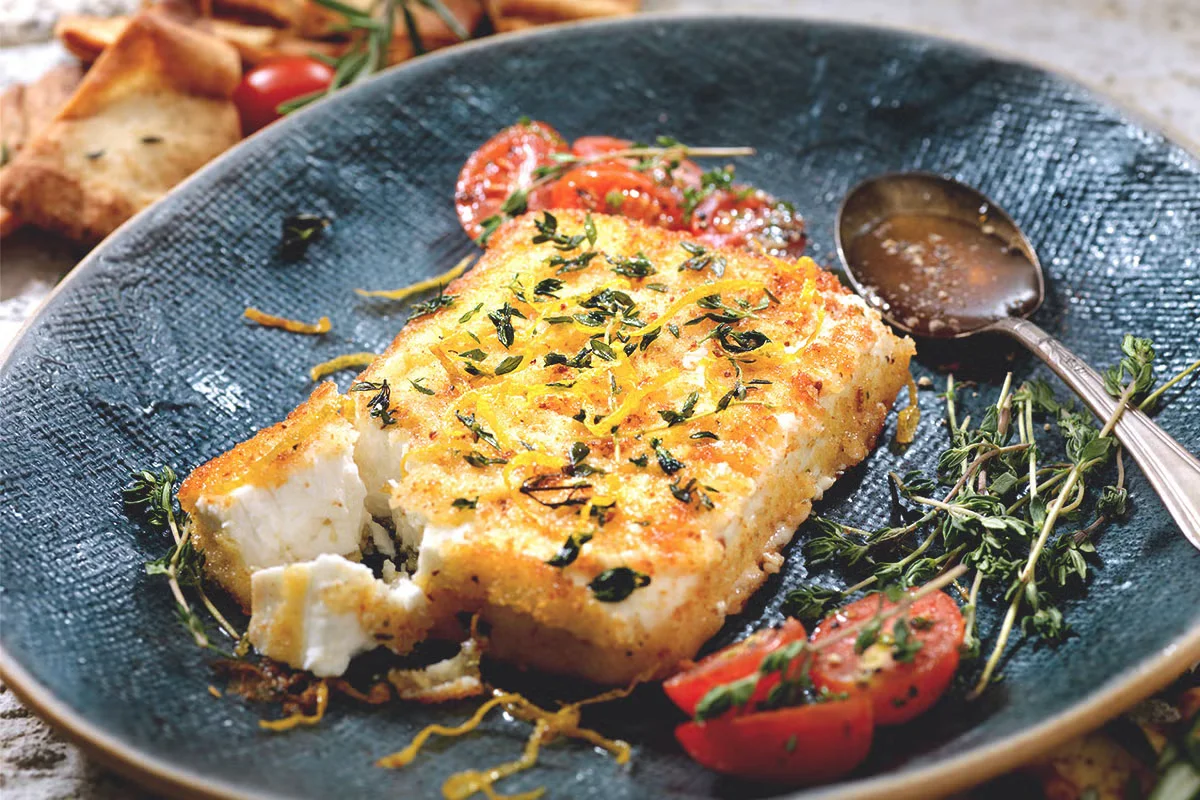
Feta saganaki is crisp-coated, pan-fried feta served with ripe tomatoes and lemon. It makes a warm Mediterranean starter or a simple main when paired with bread and other sides.
Ingredients
- 220 gfeta
- 2firm, ripe Ramati tomatoes
- 1 teaspoondried oregano
- 60 gwholemeal flour
- as neededextra-virgin olive oil
- 1lemon
- to tasteblack pepper
Instructions
- 1
Coat the feta
Cut the feta into eight equal pieces, each about 2 × 3 cm. In a small bowl, beat the egg with the finely chopped oregano. Dip the feta in the egg mixture, shake off the excess, then coat it in the flour. The method calls for an egg, but the ingredient list does not give its quantity.
- 2
Fry until golden
Heat olive oil in a frying pan over a medium heat. Add the feta pieces and cook until golden, then turn them and brown the other side. Drain on kitchen paper.
- 3
Plate and serve
Arrange the fried feta on a plate with sliced tomatoes. Season with black pepper and garnish with lemon wedges.
What is feta saganaki?
Saganaki refers to Greek dishes cooked in a small frying pan, and the name is often used for a fried cheese starter. This version coats feta in egg and flour, then pan-fries it until the outside is golden.
The crisp coating contrasts with feta’s soft, salty centre. Fresh tomato and lemon add brightness alongside the rich cheese.
Nutrition and macros by portion
The nutrition label shows one serving as written: 990 calories, 41g protein, 52g carbs, 69g fat.
| Portion | Adjustment | kcal | Protein | Carbs | Fat |
|---|---|---|---|---|---|
| Lighter | Less oil, extra tomatoes | 693 kcal | 29g | 36g | 48g |
| This serving | As written | 990 kcal | 41g | 52g | 69g |
| Hungry | Add bread and sides | 1485 kcal | 62g | 78g | 104g |
Most of the protein and fat come from the feta, while the flour provides much of the carbohydrate; tomatoes contribute a smaller amount. Olive oil adds fat, and the egg mentioned in the method would also contribute some protein and fat. Balance the plate with extra fresh vegetables, and note that the oil amount and missing egg quantity make the estimate especially approximate.
The coating and its ingredients
Feta: Cut the cheese into eight similarly sized pieces so they are easier to coat and turn. The recipe specifies pieces about 2 × 3 cm.
Flour: Wholemeal flour gives the outside a slightly more substantial coating. Shake off any excess egg before dredging so the coating does not become clumpy.
Egg: The method uses beaten egg with oregano, but the supplied ingredient list omits the egg and gives no quantity. You will need to decide how much to use to coat the feta.
Getting a golden crust
Oil temperature: Heat the olive oil over a medium heat before adding the cheese. If the pan is too cool, the coating can absorb oil instead of browning; if it is too hot, it may darken before the feta is warmed through.
Turning: Let the first side become golden before turning each piece. Use a thin spatula and handle the feta gently, as the coating can loosen.
Texture and doneness
Look for a golden exterior on both sides, as directed in the method. The feta should be warmed and soft inside while still holding its shape.
Drain the cooked pieces briefly on kitchen paper to remove excess oil. Serve soon after frying, while the coating is at its crispest.
Fresh accompaniments
Tomatoes: Slice the firm, ripe tomatoes and arrange them beside the hot feta. Their freshness makes a good contrast to the salty cheese.
Lemon: Add wedges for squeezing at the table; their acidity cuts through the richness. Crusty bread or focaccia can be served alongside for dipping and scooping.
Timing and serving
No cooking time is specified, so use the colour of the coating rather than a fixed number of minutes as your guide. Prepare the tomatoes and lemon while the oil heats, then fry the feta just before serving.
This portion can work as a substantial starter or a small main. For a fuller meal, serve it with bread and additional Mediterranean sides such as olives or peppers.
Recipe notes & tips
- Pat the feta dry before coating so the egg mixture clings more evenly.
- Chop the oregano finely before mixing it into the beaten egg.
- Shake off excess egg before dredging each piece in flour.
- Use medium heat and wait for a golden crust before turning the feta.
- Drain the fried pieces on kitchen paper, then serve them promptly.
- Squeeze lemon over the feta at the table for a fresher, tangier finish.
Variations
- Add peppers: Serve sliced sweet or hot peppers alongside the tomatoes.
- Try thyme: Use thyme in place of oregano in the egg mixture.
- Include olives: Add olives to the plate for another savoury Mediterranean accompaniment.
- Add onion: Serve thinly sliced onion with the tomatoes for extra sharpness.
- Use diced tomatoes: Spoon chopped tomato beside the feta instead of serving slices.
Common mistakes to avoid
- Wet feta: Pat it dry before coating so the egg and flour adhere better.
- Clumpy coating: Shake off excess egg before pressing the pieces into the flour.
- Oil too cool: Let the pan heat over medium before adding the feta to help the coating brown.
- Rough turning: Turn the pieces gently with a thin spatula so the crust stays intact.
- Serving too late: Fry the feta close to serving time, as the coating softens as it stands.
- Missing egg quantity: The method calls for egg but the list omits it, so prepare enough beaten egg to coat the pieces without assuming a specified amount.
How to store
Store leftovers in a sealed container in the fridge and eat within 2 days. Reheat gently in a frying pan until warmed through; the coating may not be as crisp as when freshly cooked.
Frequently asked questions
Is the egg included in the ingredient list?
No. The method says to beat an egg with the oregano, but the ingredient list does not include egg or give a quantity. You will need to supply enough beaten egg to coat the feta.
How do I know when the feta is ready?
Follow the method’s visual cue: turn the pieces once the first side is golden, then cook the other side until golden too. Drain them on kitchen paper.
Can I make feta saganaki without wholemeal flour?
The supplied recipe specifies wholemeal flour. Another flour could be used for the coating, but the texture and flavour may differ.
What can I serve with feta saganaki?
Serve it with the specified tomato slices and lemon wedges. Crusty bread or focaccia, olives, or peppers also make suitable Mediterranean accompaniments.
Can I prepare it ahead?
You can slice the tomatoes and lemon ahead, but fry the feta just before serving so the coating stays crisp.
Cook it from the original
This recipe comes from finedininglovers.it. Their page has the author’s own photos, notes and tips — the best place to cook it from.
Open the recipe on finedininglovers.it