
Russian salad with tuna
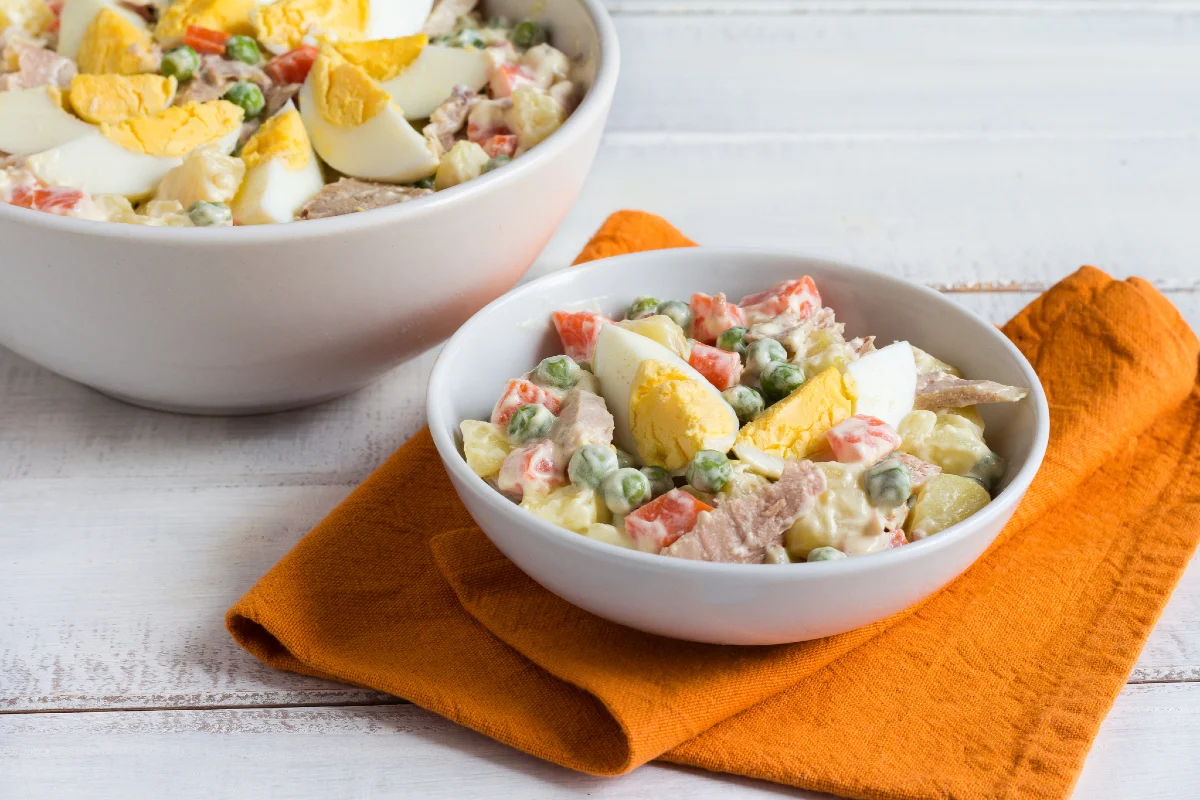
This Russian salad combines steamed potatoes, carrots and peas with tuna and mayonnaise, then gets finished with egg wedges. It is a make-ahead appetiser for parties, with a richer, pickle-free take on the classic.
Ingredients
- 300 gpotatoes
- 200 gcarrots
- 200 gpeas
- 150 gtuna in oil
- 180 gmayonnaise
- as neededfine salt
- 4eggs
Instructions
- 1
Steam the potatoes
Peel the potatoes and cut them into 1 cm cubes. Steam them covered for 15 minutes, then transfer them to a bowl.
- 2
Cook the vegetables
Meanwhile, peel the carrots and cut them into cubes the same size as the potatoes. Steam for about 10 minutes, then transfer to a bowl. Steam the peas for 10 minutes as well.
- 3
Combine the vegetables
Put all the vegetables in a serving bowl, season lightly with salt and mix. Once they have cooled until just warm, add the drained tuna, broken into large pieces.
- 4
Mix and chill
Add the mayonnaise and mix until everything is evenly coated. Cover with cling film and chill the salad for 1 hour. Meanwhile, put the eggs in a saucepan of cold water and cook for 5 minutes from the moment the water boils.
- 5
Garnish and serve
Drain the eggs and set them aside. Once cool enough to handle, peel them and cut each into four wedges. Decorate the salad with the cooked eggs just before serving.
What is Russian salad?
Russian salad, also known as Olivier salad, is a cold dish of cooked vegetables bound with mayonnaise. It is associated with Russian cuisine and has many regional versions, often served as a starter or party dish.
This version pairs potatoes, carrots and peas with tuna, then uses egg wedges as a garnish. Leaving out gherkins keeps the flavour focused on the vegetables, fish and creamy dressing.
Nutrition and macros by portion
The nutrition label shows one serving as written: 552 calories, 0g protein, 23g carbs, 41g fat.
| Portion | Adjustment | kcal | Protein | Carbs | Fat |
|---|---|---|---|---|---|
| Lighter | Use less mayonnaise | 386 kcal | 0g | 16g | 29g |
| This serving | As written | 552 kcal | 0g | 23g | 41g |
| Hungry | Serve a larger scoop | 828 kcal | 0g | 34g | 61g |
The potatoes and peas provide most of the carbohydrates, while the mayonnaise and oil from the tuna contribute much of the fat. Tuna and eggs add protein, although the supplied nutrition figures list protein as 0 g. Serve a modest scoop with a green salad or other fresh vegetables to balance the plate.
Why steam the vegetables?
Potatoes: cutting them into 1 cm cubes before cooking helps them cook evenly and gives the finished salad a neat, consistent texture.
Carrots and peas: steaming keeps the vegetables separate from cooking water, which can help avoid a wet salad. Add each ingredient after its own stated cooking time.
Getting the texture right
Cool the vegetables until they are just warm before adding the tuna and mayonnaise. Mixing while they are very hot can make the mayonnaise looser and less creamy.
Fold the tuna in gently after draining it, so it stays in substantial pieces rather than disappearing into the dressing.
The mayonnaise and resting time
Mayonnaise binds the vegetables and tuna, giving this version its rich, creamy finish. Mix until the ingredients are coated, rather than mashing the soft vegetables.
The hour in the fridge gives the salad time to chill before serving. Keep it covered while it rests.
Cooking the eggs
The method calls for cooking the eggs for 5 minutes from the point the water boils. Follow that timing, then drain and leave them until cool enough to peel.
Cut each peeled egg into four wedges and arrange them on top at the end. Adding them just before serving keeps the garnish distinct.
Serving ideas
Serve the salad cold as an appetiser or part of a spread. A crisp green salad or sliced tomatoes can add freshness alongside its creamy dressing.
For a buffet, keep the bowl chilled until serving and avoid leaving it out for longer than necessary.
Recipe notes & tips
- Cut the potatoes and carrots into evenly sized cubes so they cook at a similar rate.
- Steam each vegetable for the time given rather than cooking them all together.
- Drain the tuna well before adding it to the vegetables.
- Let the vegetables cool until just warm before mixing in the mayonnaise.
- Chill the salad covered for the full hour before serving.
- Add the egg wedges at the last moment for a tidy finish.
Variations
- Add gherkins: fold in finely chopped gherkins for a tangy contrast.
- Use tuna in water: drain it thoroughly for a less oily flavour.
- Add fresh herbs: scatter chopped parsley over the finished salad.
- Make individual portions: spoon the chilled salad into small glasses or bowls.
- Add extra egg: use additional wedges on top if you want more egg in each serving.
Common mistakes to avoid
- Uneven vegetable cubes: cut them to a consistent 1 cm size for more even cooking.
- Overcooked potatoes: check them at the stated 15-minute mark so they keep their shape.
- Wet tuna: drain it well before mixing to avoid loosening the mayonnaise.
- Mixing while hot: let the vegetables cool until just warm before adding the dressing.
- Mashing the salad: stir gently so the cooked vegetables remain in cubes.
- Skipping the chill: cover and refrigerate for 1 hour before serving.
How to store
Keep the salad covered in the fridge and eat within 2 days. It is best served cold, so stir gently after chilling rather than reheating it.
Frequently asked questions
Can I make Russian salad with tuna ahead of time?
Yes. Chill it covered for the specified hour, or prepare it earlier and keep it refrigerated until serving.
Can I use frozen peas?
Yes. Steam them for the stated 10 minutes, checking that they are tender before adding them to the bowl.
Why are the eggs cooked separately?
They are cut into wedges and used to decorate the salad, rather than mixed into the vegetable base.
Should the tuna be drained?
Yes. Drain the tuna in oil before breaking it into large pieces and adding it to the vegetables.
Can I leave out the tuna?
You can omit it, though the result will no longer be the tuna version and will have a different balance of flavour and texture.
How should I serve the salad?
Serve it chilled as an appetiser or as part of a spread, with the egg wedges arranged on top.
Cook it from the original
This recipe comes from giallozafferano.es. Their page has the author’s own photos, notes and tips — the best place to cook it from.
Open the recipe on giallozafferano.es