
Teriyaki chicken
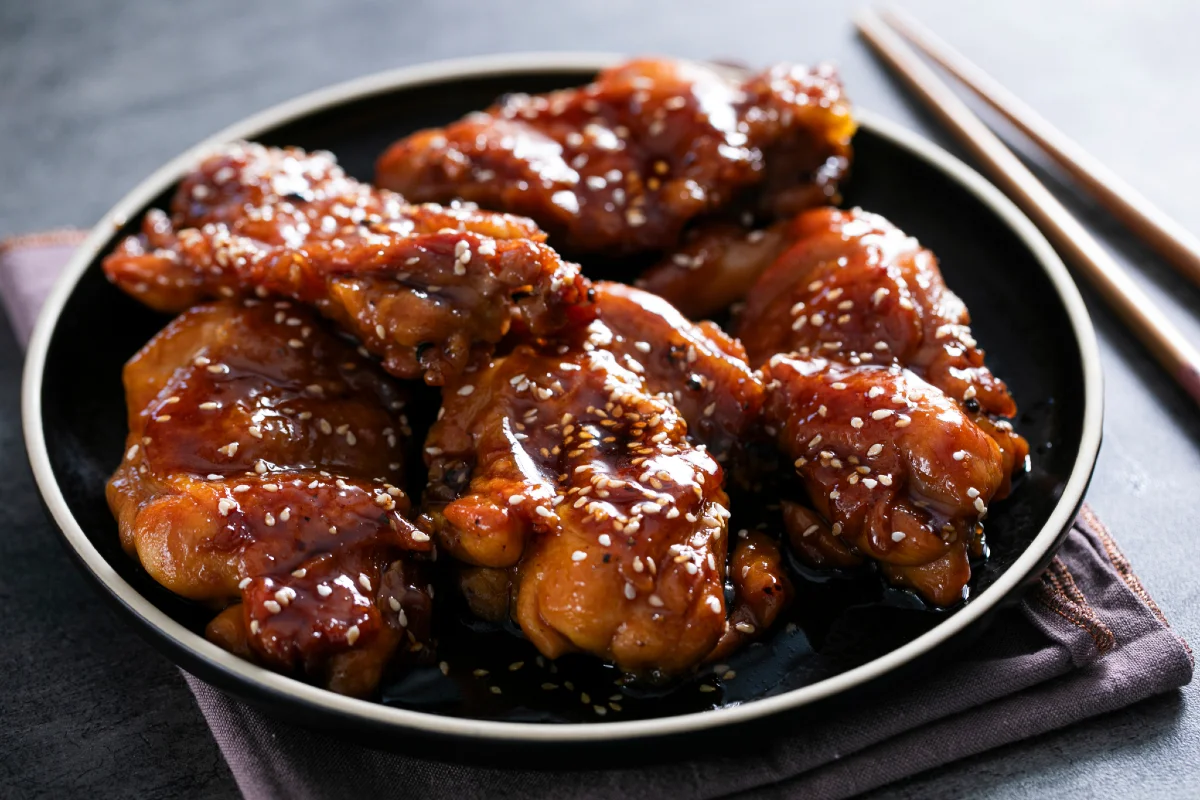
Teriyaki chicken pairs crisp-skinned chicken thighs with a glossy, sweet-savoury sauce made from soy sauce, mirin, sake and sugar. The sauce takes time to reduce, but the rest is a straightforward pan-cooking job.
Ingredients
- 950 gchicken thighs
- 20 gsesame seeds
- 20 gsunflower oil
- to tastefine salt
- to tasteblack pepper
- 100 gsoy sauce
- 100 gmirin
- 100 gsake
- 50 gsugar
Instructions
- 1
Season the chicken
Put the chicken thighs in a bowl and season them with the sunflower oil, fine salt and black pepper.
- 2
Mix and cover
Turn the chicken until evenly coated. Cover the bowl with cling film and set it aside while you make the sauce.
- 3
Combine the sauce
Pour the mirin into a saucepan, then add the sake, soy sauce and sugar.
- 4
Reduce the sauce
Cook over a medium-low heat for about 30 minutes, stirring often with a whisk so the sauce does not stick to the bottom. Once it has reduced to about half its original volume, take it off the heat and leave it to cool slightly. Heat a large frying pan and place the chicken thighs in it skin-side down.
- 5
Cook the chicken
Cook over a medium-high heat without moving the thighs for at least 6–7 minutes, until a good crust forms. Turn them and cook the other side for 6–7 minutes. Pour in the teriyaki sauce, reduce the heat to medium-low and turn the thighs in the pan during the final 5 minutes of cooking.
- 6
Glaze and serve
Add the sesame seeds and spoon the pan juices over the chicken to keep it moist. Serve hot.
What is teriyaki chicken?
Teriyaki is a Japanese style of cooking in which food is coated with a glossy, sweet-savoury glaze. This version builds its sauce from soy sauce, mirin, sake and sugar, then finishes the chicken in the pan with that reduced mixture.
The method combines crisping the skin with a final glaze, so the thighs get browned before the sauce coats them.
Nutrition and macros by portion
The nutrition label shows one serving as written: 670 calories, 40g protein, 27g carbs, 43g fat.
| Portion | Adjustment | kcal | Protein | Carbs | Fat |
|---|---|---|---|---|---|
| Lighter | Smaller thigh portion | 469 kcal | 28g | 19g | 30g |
| This serving | As written | 670 kcal | 40g | 27g | 43g |
| Hungry | Add extra rice | 1005 kcal | 60g | 41g | 65g |
The chicken provides most of the protein and fat, while the sugar and mirin contribute much of the carbohydrate. Soy sauce is a major source of sodium; serve with plain rice and vegetables to make a more balanced plate without adding much extra seasoning.
The sauce ingredients
Soy sauce: brings saltiness and savoury depth, while mirin and sugar give the glaze its sweetness.
Sake: joins the other liquids in the sauce and helps form a balanced, pourable mixture as it reduces.
Let the sauce reduce
Keep the saucepan at medium-low heat and stir often for about 30 minutes. The cue to stop is a volume roughly half what you started with; take it off the heat then and let it cool slightly.
Get the skin crisp
Place the thighs skin-side down in a hot frying pan and leave them undisturbed for at least 6–7 minutes. Moving them too soon can prevent a good crust from forming.
Turn the thighs and give the other side 6–7 minutes before adding the sauce. The final 5 minutes at medium-low heat let the glaze coat the chicken.
Finish with sesame
Add the sesame seeds near the end, then spoon the pan juices over the thighs to keep their surface coated. Serve the chicken hot while the glaze is still glossy.
What to serve alongside
Serve with steamed rice to catch the sauce, and add a simple vegetable side such as greens or broccoli for contrast. Keep the side seasoning restrained, since the glaze and soy sauce already bring plenty of savoury flavour.
Recipe notes & tips
- Pat the chicken skin dry before seasoning if it is damp, to help it brown in the pan.
- Use a large frying pan so the thighs have room to brown rather than crowding together.
- Stir the sauce frequently as it reduces, paying attention to the base of the saucepan.
- Keep the heat medium-low once the sauce is added so the glaze does not catch.
- Spoon the pan juices over the thighs during the final cooking stage.
Variations
- Add ginger: include finely grated ginger in the sauce for a fragrant variation.
- Add garlic: stir crushed garlic into the sauce as it cooks for a deeper savoury note.
- Use chicken breast: cook carefully and check for doneness, as breast meat can dry out more quickly.
- Add spring onions: scatter sliced spring onions over the chicken just before serving.
- Serve with noodles: use plain noodles instead of rice to catch the teriyaki glaze.
Common mistakes to avoid
- Moving the chicken too soon: leave it skin-side down for at least 6–7 minutes so a crust can form.
- Skipping frequent stirring: the sugary sauce can stick to the pan, so whisk it often while reducing.
- Adding the sauce too early: brown both sides of the chicken first, then pour in the sauce for the final 5 minutes.
- Using high heat for the glaze: reduce the pan to medium-low after adding the sauce to help prevent it from catching.
- Serving without the pan juices: spoon them over the chicken to keep the finished thighs moist and coated.
How to store
Refrigerate leftovers in a covered container and use within 3 days. Reheat gently in a pan until piping hot, adding a small splash of water if the glaze has become too thick.
Frequently asked questions
Can I make the sauce ahead?
Yes. Cook it until reduced to about half its original volume, cool it, and refrigerate it in a covered container. Reheat it gently when finishing the chicken.
How do I know when the chicken is cooked?
Follow the stated cooking times and check that the thighs are cooked through at the thickest part before serving. If you use a food thermometer, follow your local food-safety guidance for poultry.
Can I use boneless thighs?
Yes, but they may cook faster than bone-in thighs. Keep an eye on them and check for doneness rather than relying only on the stated timing.
What can I use instead of sake?
The recipe specifies sake as part of the sauce. Leaving it out or substituting another liquid will change the flavour and balance.
What should I serve with teriyaki chicken?
Plain rice and simply prepared vegetables make good accompaniments and work well with the sweet-savoury glaze.
Cook it from the original
This recipe comes from giallozafferano.es. Their page has the author’s own photos, notes and tips — the best place to cook it from.
Open the recipe on giallozafferano.es