
Pasta in beef broth
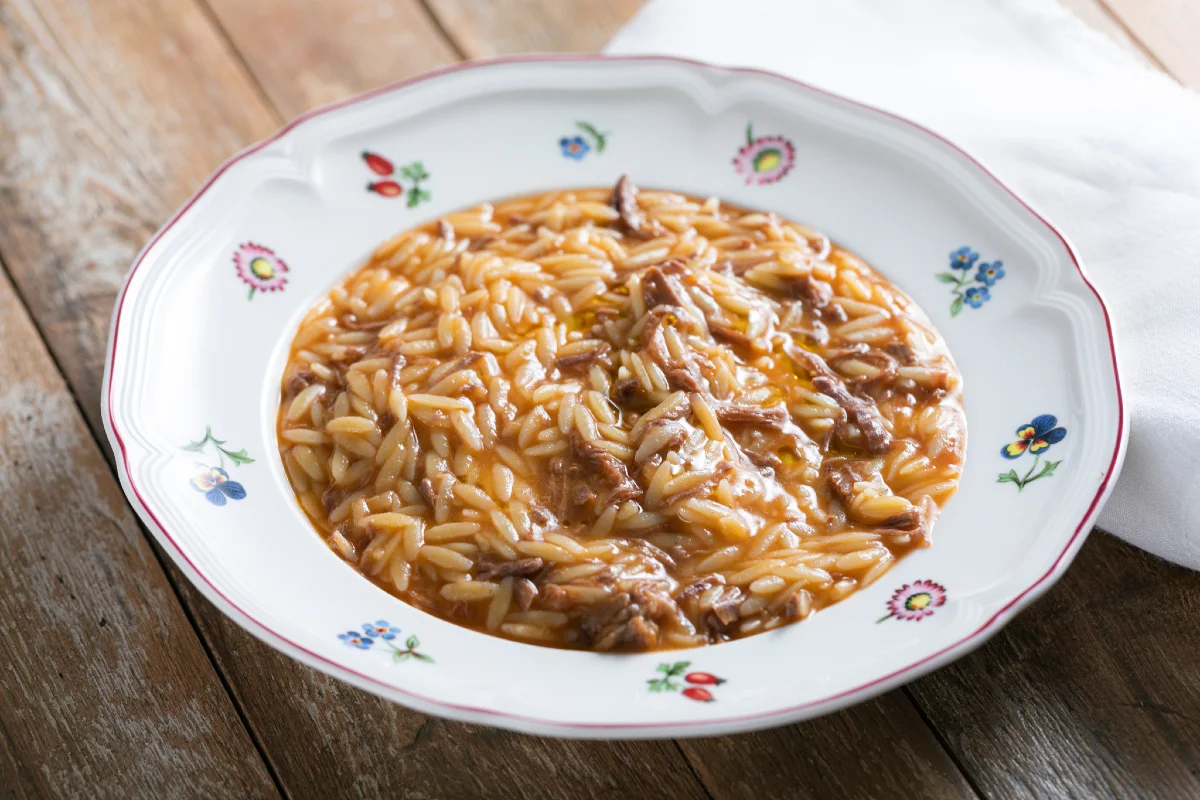
Orzo cooks directly in a beef broth enriched with puréed vegetables, then is finished with shredded beef, olive oil and Parmesan. It makes a warming, filling one-pot meal with a smooth, creamy texture.
Ingredients
- 320 gorzo
- 400 gbeef shin
- 1white onion
- 1 stalkcelery
- 1carrot
- 30 gParmigiano Reggiano DOP, for grating
- 1 tablespoontomato purée
- 1 leafbay leaf
- to tasteextra-virgin olive oil
- to tastefine salt
Instructions
- 1
Prepare the ingredients
Cut the beef into pieces and chop the vegetables. Put the beef in a large pan with plenty of cold water, then add the celery.
- 2
Add the vegetables
Add the carrot and onion, then add the bay leaf.
- 3
Simmer the beef
Stir in the tomato purée, bring the pan to the boil and simmer for about 2 hours, or until the beef is tender. Skim off any foam from the surface during cooking. Season with salt only during the final 30 minutes.
- 4
Shred and purée
When the beef is tender and cooked through, remove it from the pan and leave it to cool, keeping the broth and vegetables. Shred the cooled beef by hand or break it into rough pieces, then blend the cooked vegetables with a hand blender.
- 5
Cook the orzo
Blend the vegetables until smooth and velvety. If there is a lot of broth, remove some, then bring the remaining broth to the boil. Add the orzo and cook for the time stated on the packet, adding the vegetable purée towards the end.
- 6
Finish the soup
Add the shredded beef and stir. Take the pan off the heat, drizzle in olive oil and mix well, adjusting the consistency with more broth as desired.
- 7
Add the Parmesan
Stir in the grated Parmigiano Reggiano and serve the pasta in beef broth immediately.
What is pasta in beef broth?
This is a hearty soup in which small pasta cooks in a long-simmered beef broth, with shredded meat and blended vegetables stirred back in. The method draws on a familiar home-cooking approach found in many kitchens: make a rich broth, then turn it into a complete meal.
Here, blending the cooked vegetables gives the broth a smooth, creamy body without adding cream. Orzo is small enough to cook directly in the broth and makes the soup substantial.
Nutrition and macros by portion
The nutrition label shows one serving as written: 556 calories, 33g protein, 60g carbs, 18g fat.
| Portion | Adjustment | kcal | Protein | Carbs | Fat |
|---|---|---|---|---|---|
| Lighter | Use less olive oil | 389 kcal | 23g | 42g | 13g |
| This serving | As written | 556 kcal | 33g | 60g | 18g |
| Hungry | Larger bowl | 834 kcal | 50g | 90g | 27g |
Most of the carbohydrates come from the orzo, while the beef and Parmesan provide much of the protein. Fat comes mainly from the beef, Parmesan and olive oil; serve with a green salad or other vegetables to add freshness alongside the hearty soup.
Build a clear, flavourful broth
Beef shin: this cut becomes tender during a long, gentle simmer and gives the broth depth. Starting it in cold water helps the broth develop gradually as it heats.
Skimming: remove the foam that rises during cooking with a slotted spoon. Season only in the final 30 minutes, as the broth reduces and its saltiness becomes easier to judge.
Blend the vegetables smoothly
Cooked vegetables: blend the onion, celery and carrot with a hand blender until velvety. They thicken and enrich the broth while keeping the dish's flavour rooted in its original ingredients.
Broth level: reserve the cooking liquid, but remove some if there is more than you need. You can add it back later to loosen the soup to your preferred consistency.
Cook the orzo in the broth
Direct cooking: add the orzo to boiling broth and follow the packet time. Stir occasionally so the pasta does not settle and stick to the bottom.
Timing: add the vegetable purée towards the end of the pasta's cooking time, then stir in the shredded beef. The orzo continues to absorb liquid as it stands, so serve promptly.
Finish for a creamy texture
Olive oil: stir it in after taking the pan off the heat for a smooth, rounded finish. Add broth gradually if the soup has become thicker than you like.
Parmesan: finely grate the cheese and mix it in just before serving. It adds savoury richness and works best while the soup is hot.
Serve it straight away
This is filling enough to serve on its own, or alongside a simple green salad for freshness. Keep extra hot broth nearby so everyone can adjust the thickness in their bowl.
Serve the soup as soon as the pasta is cooked. If it sits, the orzo will continue to soften and take up broth.
Recipe notes & tips
- Cut the beef into similar-sized pieces so it cooks at a similar rate.
- Keep the simmer gentle after bringing the broth to the boil.
- Skim foam from the surface as it appears for a cleaner-tasting broth.
- Reserve the cooking broth before blending the vegetables.
- Check the packet time and taste the orzo near the end of cooking.
- Serve immediately, with extra broth ready to loosen the soup.
Variations
- Extra herbs: add a little chopped parsley when serving.
- More vegetables: include extra carrot or celery in the broth.
- Peppery finish: grind black pepper over each bowl.
- Cheesier topping: serve with extra grated Parmigiano Reggiano.
- Broth consistency: keep more cooking liquid for a looser soup.
Common mistakes to avoid
- Hard boil: a vigorous boil can make the broth cloudy; lower the heat to a gentle simmer.
- Skipping the skimming: foam can cloud the broth; remove it with a slotted spoon during cooking.
- Salting too early: the broth may reduce and taste too salty; season during the final 30 minutes.
- Blending without reserving broth: the soup can become too thick; keep the cooking liquid to adjust it.
- Overcooking the orzo: it softens further as it sits; follow the packet time and serve promptly.
- Adding cheese over high heat: it may not blend in as smoothly; stir it in after taking the pan off the heat.
How to store
Refrigerate leftovers in a covered container for up to 3 days. Reheat gently in a pan, adding broth or water as needed because the orzo will absorb liquid while stored.
Frequently asked questions
Can I make the beef broth ahead?
Yes. Cook the beef and vegetables, then chill the broth and meat separately. Blend the vegetables and cook the orzo in the broth when you are ready to serve.
Can I use a different cut of beef?
Use a cut suited to slow cooking that can become tender enough to shred. Cooking time may vary, so check the meat for tenderness rather than relying only on the clock.
Why is my soup too thick?
Orzo absorbs broth as it cooks and continues to do so after cooking. Stir in reserved broth or hot water a little at a time until it reaches the consistency you want.
Can I cook the orzo separately?
Yes, though the method specifies cooking it in the broth. Cooking it separately can help keep the soup from thickening as much, especially if you expect leftovers.
How do I know when the beef is ready?
It should be tender enough to shred or break into pieces easily. If it is still firm, continue simmering and check again.
Cook it from the original
This recipe comes from giallozafferano.es. Their page has the author’s own photos, notes and tips — the best place to cook it from.
Open the recipe on giallozafferano.es