
Canapés
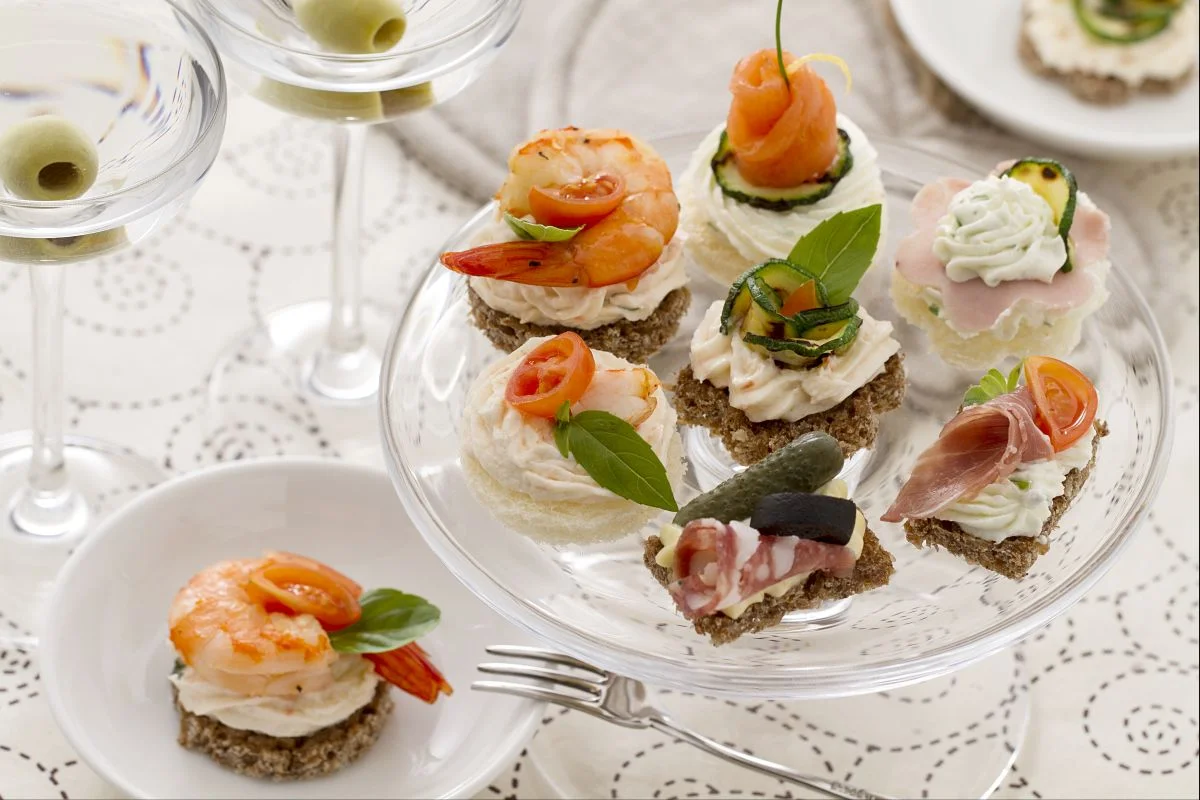
A colourful assortment of bite-sized canapés topped with prawn and herb spreads, smoked salmon, ham, salami and vegetables. They make a varied party appetiser, with several toppings prepared in advance and assembled on bread just before serving.
Ingredients
- 130 gPrawns
- 1 cloveGarlic
- as neededExtra-virgin olive oil
- 50 gCream cheese
- to tasteBlack pepper
- to tasteBasil (optional)
- to tasteFine salt
- to tasteChives
- 60 gCream cheese
- to tasteFine salt
- to tasteBlack pepper
- 90 gSliced white bread
- 1 sliceCooked ham
- 40 gSmoked salmon
- to tasteBasil
- 1 lemonLemon zest
- to tasteBlack pepper
- 8 small slicesCourgette
- to tasteChives, to garnish
- to tasteBasil
- 5Mini gherkins
- 5Prawns, with tails
- 4Cherry tomatoes
- 2 slices, cut into quartersSalami
- 1 sliceSerrano ham
- 1, slicedBlack olive
- 150 gRye bread
- 10 small slicesCourgette
- 30 gMayonnaise
Instructions
- 1
Make the spreads
Blend 60 g cream cheese with the chives until thick, then season with salt and pepper if needed. To make the prawn spread, wash, clean and peel the prawns. Brown a clove of garlic in a little oil in a non-stick frying pan.
- 2
Blend the prawns
Cook the prawns in the pan over a high heat for a few minutes. Blend them with 50 g cream cheese, a few basil leaves, salt and pepper to taste until thick.
- 3
Prepare salmon bases
For the salmon canapés, cut a courgette into thin slices and grill them for a few minutes; you need 18 slices. Peel the lemon with a vegetable peeler and finely cut the peel into julienne strips. Cut the salmon into strips 1.5 cm wide and 7–8 cm long, then roll each strip into a small rose. Remove the crusts from the white bread and use a 5 cm cutter to make five shapes.
- 4
Assemble salmon canapés
Transfer the chive cream to a piping bag fitted with a star nozzle and pipe a rosette onto each bread shape. Add a grilled courgette slice to each, using five in total and keeping the rest for later. Top with a salmon rose and garnish with a strand of chive and lemon peel.
- 5
Cut ham bases
For the cooked ham canapés, use a flower-shaped cutter to cut five pieces of bread and five pieces of ham. Take three of the previously grilled courgette slices and cut them in half. Pipe a rosette of herb cream onto each bread base; prawn cream can be used instead if preferred.
- 6
Finish ham canapés
Add a slice of ham and another rosette of cream to each base, then finish with half a courgette slice.
- 7
Make prawn canapés
For the prawn canapés, remove the crust from the rye bread and use a 5 cm cutter to cut five shapes. Quarter two cherry tomatoes, then pipe prawn cream onto the bread. Put a tail-on prawn on each base; cook these in a frying pan for a couple of minutes with a little extra-virgin olive oil and a clove of garlic. Finish each canapé with a tomato quarter and a basil leaf.
- 8
Make courgette canapés
Cut the 10 remaining grilled courgette slices in half. Pipe prawn cream onto the rye bread rounds and arrange the courgette pieces in a flower shape, finishing each with a basil leaf.
- 9
Make ham canapés
Cut the Serrano ham into strips and roll them into small flowers, then quarter two cherry tomatoes. Remove the crust from the rye bread and cut five rectangles about 5 cm long, using leftover bread from the earlier preparation if needed. Pipe a rosette of herb cream onto each piece, then add a ham flower, a piece of tomato and a basil leaf.
- 10
Make salami canapés
Cut the salami slices into quarters and prepare five rye bread rectangles as before, using leftover bread if available. Thinly slice an olive and transfer the mayonnaise to a piping bag. Pipe mayonnaise onto each bread piece, add a rolled quarter-slice of salami, then garnish with a mini gherkin and a slice of olive.
What are canapés?
Canapés are small, topped bites served as appetisers, often built on bread or a pastry base. They are associated with European entertaining, where neatly cut bases and carefully arranged toppings make them easy to pass around.
This version brings together several savoury combinations rather than sticking to one topping. Creamy herb and prawn spreads tie the assortment together, while the different breads, meats, fish and vegetables give each bite its own character.
Nutrition and macros by portion
The nutrition label shows one serving as written: 330 calories, 17g protein, 32g carbs, 14g fat.
| Portion | Adjustment | kcal | Protein | Carbs | Fat |
|---|---|---|---|---|---|
| Lighter | Use less mayonnaise | 231 kcal | 12g | 22g | 10g |
| This serving | As written | 330 kcal | 17g | 32g | 14g |
| Hungry | Add more rye bases | 495 kcal | 26g | 48g | 21g |
The bread supplies most of the carbohydrates, while the cream cheese, mayonnaise and olive oil contribute much of the fat. Prawns, ham, salmon and cream cheese provide protein, and the cured meats, olives and salted spreads can contribute a noticeable amount of sodium. Serve a few canapés alongside salad or fresh vegetables for a more balanced plate.
Two spreads, many toppings
Herb cream: blending cream cheese with chives makes a thick base that can be piped into tidy rosettes. Season it after blending so the salt and pepper do not overpower the other toppings.
Prawn cream: blend the cooked prawns with cream cheese, basil and seasoning until smooth and dense enough to sit on bread. The method also uses whole tail-on prawns as a separate garnish.
Getting the courgette right
Thin slices: the recipe calls for 18 slices in total, first grilling them briefly and then using them across the salmon, ham and courgette toppings. Aim for slices that are flexible but still hold their shape.
Even cooking: arrange the slices so they have contact with the hot cooking surface, and turn them as needed. Leave them to cool before adding them to the cream-topped bread.
Shape and assemble neatly
Bread bases: the white bread is cut into shapes for the salmon and cooked ham, while rye bread is trimmed for the other toppings. Removing the crusts gives the bases a neat edge and helps the toppings stay the focus.
Piping: a piping bag makes the cream rosettes easy to portion and gives each base a similar amount. If you do not have a star nozzle, use a small spoon to add a compact mound instead.
Keep the textures distinct
Crisp edges: the bread should remain firm enough to hold its toppings, so avoid assembling the canapés too far ahead. Creamy spreads and juicy garnishes can soften it as they sit.
Fresh garnish: add the basil, chives, lemon peel and tomato at the end. Their colour and shape help distinguish the different varieties on a platter.
Plan the preparation
Make ahead: the two cream spreads and grilled courgette can be prepared before you start cutting and decorating the bases. Keep them chilled until you are ready to assemble.
Final assembly: pipe and top the bread close to serving time, particularly for the mayonnaise and cream-based varieties. The full preparation takes about 65 minutes according to the recipe.
Serve as a mixed platter
A selection: arrange the salmon, cooked ham, prawn, courgette, Serrano ham and salami canapés together so guests can choose between different flavours. Keeping each type in a separate group makes the toppings easy to identify.
What to serve alongside: offer the platter with other small appetisers, or add a simple green salad and fresh vegetables if serving it as part of a light meal.
Recipe notes & tips
- Cut the bread shapes before piping the spreads to keep the work surface tidy.
- Let the grilled courgette cool before placing it on the cream.
- Blend the prawn mixture until thick so it stays on the bread.
- Use a small piping bag or a snipped corner of a food bag if you do not have a piping nozzle.
- Keep the bread offcuts for the rye rectangles where the method suggests using leftovers.
- Add delicate basil and lemon peel just before serving.
Variations
- Extra herbs: add finely chopped basil to the chive cream for a greener, more aromatic spread.
- Different bread: use another firm sliced bread in place of rye for the savoury bases.
- Cucumber garnish: use thin cucumber slices instead of mini gherkins for a fresher finish.
- Vegetarian platter: omit the meat and fish toppings and make extra courgette and cream-cheese canapés.
- Citrus finish: add a little finely grated lemon zest to the prawn spread as well as the salmon garnish.
Common mistakes to avoid
- Overcooking the prawns: they can become tough, so cook them only for the short time specified.
- Making the spread too loose: blend in stages and stop once the mixture is thick enough to pipe.
- Using warm courgette: it can soften the cream, so let the grilled slices cool before assembling.
- Leaving the crusts on: trim them away where the recipe calls for shaped bread bases so the pieces sit neatly.
- Assembling too early: moist toppings can soften the bread, so add them close to serving.
- Overloading the bases: keep each garnish compact so the canapés are easy to pick up and eat.
How to store
Store any prepared spreads separately in covered containers in the fridge and use within 2 days. Assembled canapés are best served promptly; if necessary, cover and refrigerate them for up to a day, then serve chilled rather than reheating.
Frequently asked questions
Can I make the spreads ahead?
Yes. Prepare the herb and prawn spreads in advance, cover them and keep them refrigerated until assembly.
Do I need a piping bag?
No. A small spoon will work, though it will give the cream a less decorative finish.
Can I use frozen prawns?
Yes, provided they are thawed and drained before cooking. Follow the recipe’s brief cooking time and avoid overcooking them.
How can I stop the bread going soft?
Pipe on the spreads and add the toppings shortly before serving. Keep the bread and prepared toppings separate until then.
Can I prepare the courgette in advance?
Yes. Grill the slices ahead and let them cool, then keep them covered in the fridge until you assemble the canapés.
How many canapés does this recipe make?
The method describes five bases for several of the varieties, but the listed ingredients and instructions do not give a single clear total. The stated serving yield is four.
Cook it from the original
This recipe comes from giallozafferano.es. Their page has the author’s own photos, notes and tips — the best place to cook it from.
Open the recipe on giallozafferano.es