
Roast chicken
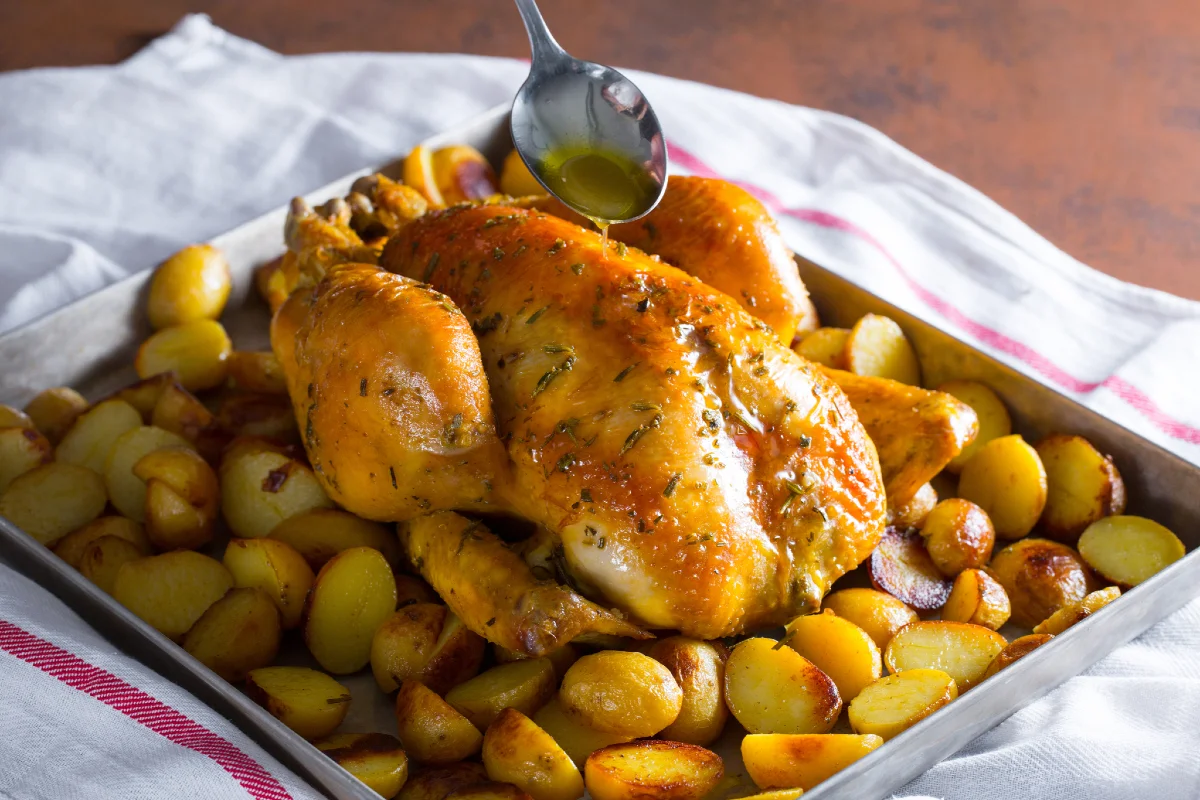
This whole roast chicken is seasoned with a finely chopped blend of garlic, sage, bay, rosemary and oregano. It is a straightforward oven-centrepiece, with oil helping the herbs cling to the skin as it roasts.
Ingredients
- 1 kgwhole chicken
- 10 gcoarse salt
- 2 clovesgarlic
- 5 leavessage
- 2 leavesbay
- 2 sprigsrosemary
- 1 sprigoregano
- as neededextra-virgin olive oil
Instructions
- 1
Tie the chicken
Tie the chicken so it holds its shape during cooking. Use an oven-safe elastic trussing band: loop it around the ends of the drumsticks, stretch it behind the breast and secure the chicken.
- 2
Blend the seasoning
Put the coarse salt in a blender with the bay leaves, rosemary, sage, fresh oregano and 2 peeled garlic cloves.
- 3
Oil the chicken
Blend the ingredients, then transfer the mixture to a small bowl. Put the chicken in a roasting dish and brush or rub extra-virgin olive oil over both sides.
- 4
Coat with herbs
Rub the aromatic mixture over the whole chicken, working it in with your hands so it sticks. Season the inside of the chicken with the mixture too.
- 5
Roast and baste
Roast in a preheated conventional oven at 180°C for about 1 hour, basting occasionally with the cooking juices. Halfway through, remove the chicken from the oven and turn it onto its other side so it cooks evenly. Return it to the oven and continue roasting, basting from time to time. Remove it when the cooking time is up; to check doneness, measure the temperature at the centre of the thigh, which should reach 72°C.
What is roast chicken?
Roast chicken is a familiar oven-cooked main course found in many food traditions, so this recipe does not belong to one specific cuisine. Its character comes from a whole bird roasted with a savoury herb-and-garlic coating.
The blend of sage, bay, rosemary and oregano gives the chicken a fragrant flavour, while rubbing the mixture over the skin and inside helps season it all over.
Nutrition and macros by portion
The nutrition label shows one serving as written: 401 calories, 0g protein, 2g carbs, 27g fat.
| Portion | Adjustment | kcal | Protein | Carbs | Fat |
|---|---|---|---|---|---|
| Lighter | Remove the chicken skin | 281 kcal | 0g | 2g | 19g |
| This serving | As written | 401 kcal | 0g | 2g | 27g |
| Hungry | Serve a larger portion | 602 kcal | 0g | 3g | 41g |
Chicken provides most of the protein, while its skin and the olive oil contribute much of the fat and energy; the herbs and garlic add only a small amount of carbohydrate. Serve it with vegetables and a modest portion of potatoes or another starchy side to round out the plate.
The herb and garlic blend
Fresh herbs: Rosemary, sage and oregano are blended with bay and coarse salt to make a finely chopped seasoning. Use the stated amounts so none of the herbs overwhelms the rest.
Garlic: Peel the cloves before blending so they break down evenly and spread through the mixture.
Preparing the chicken
Trussing: The oven-safe elastic band holds the legs in position and helps the bird keep its shape. Make sure the band is intended for oven use.
Oiling: Coat both sides with olive oil before adding the herbs. This gives the seasoning a surface to cling to and helps distribute it over the skin.
Basting and turning
Basting: Spoon or brush the cooking juices over the chicken occasionally as it roasts. This is the method’s main hands-on task, so keep an eye on the oven without opening it more often than needed.
Turning: Halfway through the approximately 1-hour cooking time, turn the chicken onto its other side, then continue roasting and basting.
Checking doneness
Temperature: Check the centre of the thigh with a thermometer; the recipe specifies 72°C. Insert the probe into the thickest part without touching bone.
Appearance: The chicken should be cooked through before serving. If the thigh has not reached the stated temperature after the approximate cooking time, continue roasting and check again.
Serving the chicken
Carving: Serve the chicken as the main course and spoon some of the cooking juices over the portions. A sharp carving knife makes it easier to separate the legs and slice the breast.
On the side: Pair it with potatoes, vegetables or a crisp salad for a balanced plate. Choose sides that can be prepared while the chicken roasts.
Recipe notes & tips
- Check that the elastic trussing band is labelled as safe for oven use.
- Blend the seasoning until the herbs and garlic are finely chopped.
- Rub the herb mixture over both the outside and inside of the chicken.
- Baste with the juices collected in the roasting dish.
- Turn the chicken halfway through the roasting time.
- Use a thermometer to check the centre of the thigh reaches 72°C.
Variations
- Citrus note: Add lemon wedges to the serving plate for a fresh contrast.
- More garlic: Increase the garlic only if you want a more pronounced savoury flavour.
- Herb swap: Use another fresh herb in place of oregano while keeping the total herb quantity similar.
- Pepper: Add ground black pepper to the seasoning blend for extra warmth.
Common mistakes to avoid
- Using non-oven-safe elastic: Check the packaging before trussing the chicken.
- Seasoning only the skin: Rub some of the herb mixture inside the chicken as well.
- Skipping the turn: Turn the bird halfway through so both sides cook evenly.
- Forgetting to baste: Spoon the cooking juices over the chicken occasionally during roasting.
- Guessing doneness: Check the centre of the thigh with a thermometer and look for 72°C.
How to store
Refrigerate leftover chicken in a covered container within 2 hours and use within 3–4 days. Reheat portions until piping hot throughout, or enjoy the cooked chicken cold.
Frequently asked questions
Can I prepare the herb mixture ahead?
Yes. Blend it shortly before cooking or prepare it ahead and keep it covered in the refrigerator until you are ready to season the chicken.
Do I have to turn the chicken?
The method calls for turning it halfway through the roasting time to encourage even cooking on both sides.
How do I know when the chicken is cooked?
Measure the temperature at the centre of the thigh; this recipe specifies 72°C. Avoid touching bone with the thermometer probe.
What does basting mean?
Basting means spooning or brushing the cooking juices from the roasting dish over the chicken as it cooks.
Can I use dried herbs?
The recipe specifies fresh oregano and fresh sprigs or leaves of the other herbs. Dried herbs will give a different texture and intensity, so the result may not match the original.
What can I serve with roast chicken?
Serve it with potatoes, vegetables or salad. The cooking juices can be spooned over the carved chicken.
Cook it from the original
This recipe comes from giallozafferano.es. Their page has the author’s own photos, notes and tips — the best place to cook it from.
Open the recipe on giallozafferano.es