
How to clean baby squid
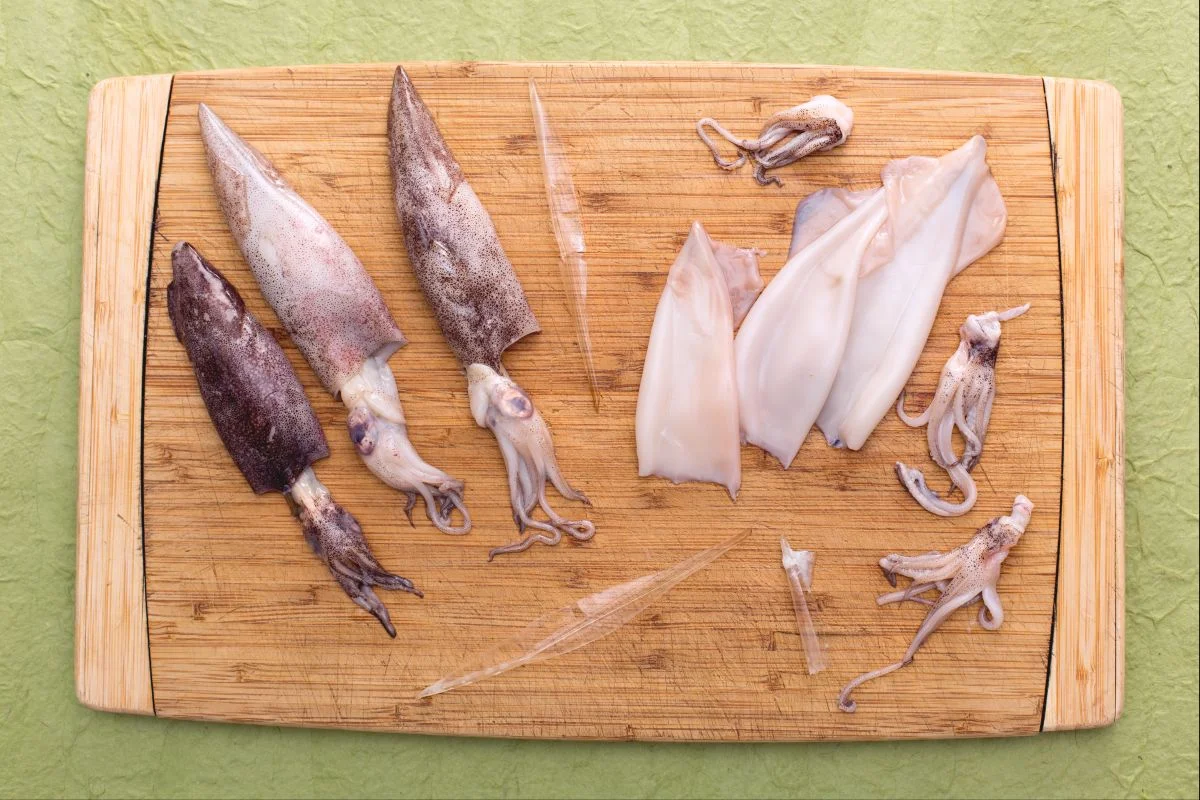
A straightforward guide to cleaning fresh baby squid before cooking. Remove the head, innards, transparent quill, eyes, beak and skin, then rinse all the parts thoroughly.
Ingredients
- 500 gfresh squid
Instructions
- 1
Rinse and separate
Rinse the squid carefully under plenty of cold running water and set it on a work surface. Hold the head with two fingers and gently pull it away from the body; set it aside. Inside the body, find the small, transparent, cartilage-like quill and pull it out.
- 2
Remove the innards
Pull out the squid’s innards and rinse the body. Take the head and, holding it firmly between two fingertips, use a knife to cut around the eyes. Press beneath the eyes to remove them. Find the beak in the centre of the tentacles and push it out.
- 3
Peel and rinse
Use a knife to remove the beak. Make a cut in the body and peel away the skin, then remove the skin from the tentacles as well. Rinse all the squid parts under running water before using them in your recipe.
What is cleaned baby squid?
Baby squid is squid prepared for cooking by removing its inedible inner parts, eyes and beak. Squid is used in many Mediterranean cuisines, where it may be served on its own or added to other dishes.
This preparation keeps the body and tentacles intact for use in a recipe. The key is to work gently so the parts stay in good shape and are easy to rinse clean.
Nutrition and macros by portion
The nutrition label shows one serving as written: 181 calories, 0g protein, 2g carbs, 4g fat.
| Portion | Adjustment | kcal | Protein | Carbs | Fat |
|---|---|---|---|---|---|
| Lighter | Use less added oil | 127 kcal | 0g | 1g | 3g |
| This serving | As written | 181 kcal | 0g | 2g | 4g |
| Hungry | Prepare a larger portion | 272 kcal | 0g | 3g | 6g |
The only ingredient is squid, which provides most of the protein; the recipe itself adds no carbohydrate or cooking fat. This is a preparation guide rather than a complete meal, so serve the cooked squid with vegetables and a suitable source of carbohydrates for a more balanced plate.
Start with a cold rinse
Cold water: rinse the squid before cleaning to wash away surface residue and make it easier to handle. Use a clean work surface and keep the squid chilled until you are ready to start.
Separate the head carefully
Steady pull: hold the body and head securely, then ease them apart rather than tugging sharply. Set the head aside so you can remove the eyes and beak from the tentacles afterwards.
Find the quill and innards
Transparent quill: look inside the body for the thin, clear, stiff strip and draw it out. It can be easy to miss, so check the cavity before rinsing.
Innards: pull them out gently, taking care not to leave remnants inside the body. Rinse the body once they are removed.
Remove the eyes and beak
Eyes: cut around them with a small knife, then press underneath to remove them. Keep your fingers clear of the blade as you hold the head.
Beak: find the firm piece at the centre of the tentacles and push it out so it can be removed. Check the centre again before rinsing.
Peel and check the squid
Skin: make a cut in the body and peel the outer skin away; repeat on the tentacles. Work patiently, as small squid can be fiddly to handle.
Final rinse: rinse the body and tentacles under running water, checking that the quill, innards, eyes and beak are gone. The cleaned squid is then ready for another preparation.
Keep everything organised
Separate parts: keep the body and tentacles together in a clean dish as you work, and discard the removed pieces. Clean the work surface and utensils after handling raw squid.
Recipe notes & tips
- Keep the squid cold while you work.
- Use a small, sharp knife for trimming around the eyes.
- Pull out the transparent quill before rinsing the body.
- Check the centre of the tentacles carefully for the beak.
- Rinse the body and tentacles after cleaning.
Variations
- Leave the skin on: skip peeling if your chosen recipe calls for it.
- Keep the tentacles whole: remove the eyes and beak without cutting the tentacles apart.
- Save the cleaned body: prepare it separately for a dish that uses squid rings.
- Clean in batches: work through several squid before rinsing and storing the cleaned parts.
Common mistakes to avoid
- Pulling too hard: separate the head from the body gently to avoid damaging the parts.
- Missing the quill: check inside the body for the clear, stiff strip before rinsing.
- Leaving the beak behind: feel the centre of the tentacles and push it out.
- Cutting too close to the eyes: use a controlled cut and keep your fingertips clear.
- Skipping the final rinse: wash every part under running water before cooking.
How to store
Keep cleaned squid covered in the refrigerator and use it promptly, or freeze it for longer storage. Thaw frozen squid in the refrigerator before cooking.
Frequently asked questions
Do I have to remove the skin?
The method removes the skin from both the body and tentacles. Whether to keep it depends on the recipe you plan to make.
What is the transparent strip inside the squid?
It is the quill, a thin, clear, firm structure inside the body. Pull it out before rinsing.
Where is the squid’s beak?
It sits in the centre of the tentacles. Push it out and remove it before using the squid.
Can I clean the squid ahead of time?
Yes. Keep it covered and chilled after cleaning, and use it promptly or freeze it.
Should I keep the head and tentacles?
The method removes the eyes and beak but retains the tentacles. Keep the cleaned parts if your recipe calls for them.
Cook it from the original
This recipe comes from giallozafferano.es. Their page has the author’s own photos, notes and tips — the best place to cook it from.
Open the recipe on giallozafferano.es