
Shortbread
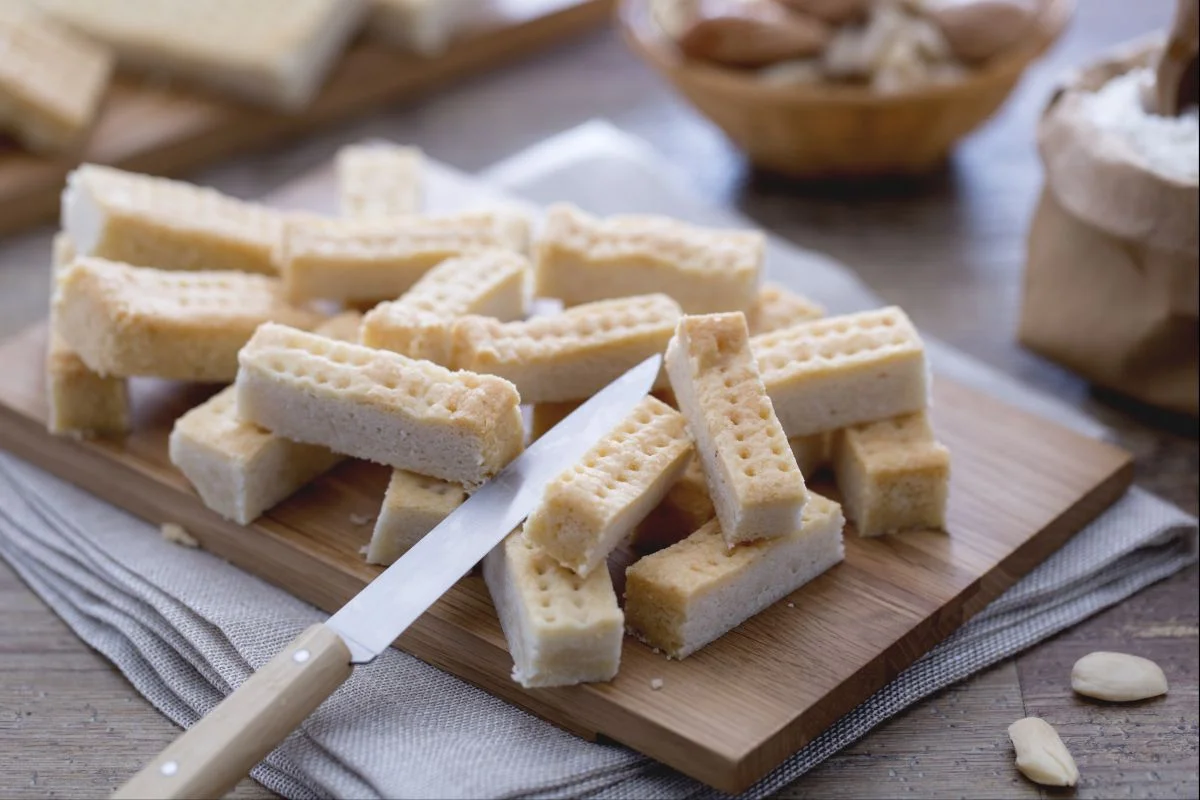
Shortbread is a traditional Scottish biscuit with a buttery, crumbly texture, enjoyed across the United Kingdom in many local variations. This version combines plain flour with ground almonds and is baked as a slab before being cut into neat fingers.
Ingredients
- 250 gcold butter
- 300 gplain flour
- 125 gsugar
- 125 gground almonds
- 5 gfine salt
Instructions
- 1
Combine dry ingredients
Sift the plain flour into a food processor bowl, or a mixing bowl if working by hand. Add the ground almonds and sugar.
- 2
Work in butter
Cut the cold butter into pieces and add it to the flour mixture with the salt. Mix with the paddle attachment until the mixture is smooth and evenly combined.
- 3
Chill the dough
Turn the dough onto a work surface and shape it into a block. Flatten it slightly, wrap it in cling film and chill for 1 hour.
- 4
Fill the tin
Butter and flour a shallow 24 × 24 cm tin. Take the dough from the fridge and press it into the tin.
- 5
Shape and prick
Smooth the dough with a small rolling pin, spreading it evenly into the corners. Cover the tin with cling film and chill for a further 30 minutes. Remove it from the fridge and prick the whole surface with the tines of a fork in the traditional shortbread pattern.
- 6
Bake and cut
Bake in a preheated conventional oven at 180°C for 30 minutes, or in a fan oven at 160°C for 20 minutes, until lightly golden. Turn the slab out onto a chopping board while it is still hot, then cut it into rectangles about 3 × 9 cm using a sharp knife or pastry wheel. Separate the biscuits and leave them to cool completely before serving.
What is shortbread?
Shortbread is a traditional Scottish biscuit known for its rich, crumbly texture. It is eaten throughout the United Kingdom, where shapes and small details vary from place to place.
This version adds ground almonds to the flour and bakes the dough in a square tin. Cutting the slab while it is still warm gives the biscuits their finger-like shape.
Nutrition and macros by portion
The nutrition label shows one serving as written: 194 calories, 0g protein, 21g carbs, 12g fat.
| Portion | Adjustment | kcal | Protein | Carbs | Fat |
|---|---|---|---|---|---|
| Lighter | Serve a smaller finger | 136 kcal | 0g | 14g | 8g |
| This serving | As written | 194 kcal | 0g | 21g | 12g |
| Hungry | Serve extra fingers | 291 kcal | 0g | 31g | 17g |
The flour and sugar provide most of the carbohydrates, while butter and ground almonds contribute much of the fat. Pair a shortbread finger with fruit or yoghurt if you want a more balanced snack.
Why use cold butter?
Cold butter is easier to work into the dry ingredients without making the dough greasy. Cut it into small pieces so it can mix evenly through the flour and almonds.
Mix just until the dough becomes smooth and cohesive. Chilling it afterwards helps it firm up for shaping.
Get an even slab
Tin: Press the dough into the greased and floured 24 × 24 cm tin, taking care to reach all four corners.
Surface: Smooth it evenly with a small rolling pin so the slab bakes at a consistent rate. The second chill firms the dough before it goes into the oven.
Pricking and baking
Fork marks: Prick the chilled surface all over with the tines of a fork, making the familiar shortbread pattern.
Colour: Look for a light golden finish rather than a deep brown one. The recipe gives different settings and times for conventional and fan ovens, so use the one that matches your oven.
Cut while warm
Shortbread is delicate once baked, so turn the slab out and cut it while it is still hot. A sharp knife or pastry wheel helps make clean rectangles about 3 × 9 cm.
Separate the pieces and let them cool completely before serving. They firm up as they cool, so avoid handling them more than necessary.
Serve with a simple drink
These buttery biscuits are lovely with tea or coffee, either as a small treat or alongside fruit for a more varied snack. Their rich texture also pairs well with berries.
For an after-dinner option, serve one or two fingers with a bowl of fresh fruit rather than adding another rich dessert.
Recipe notes & tips
- Keep the butter cold until you are ready to mix the dough.
- Scrape down the bowl if flour mixture gathers around the sides.
- Press the dough firmly into the corners of the tin for an even slab.
- Chill the shaped dough for the full 30 minutes before baking.
- Cut the slab while hot, then leave the biscuits undisturbed until fully cool.
Variations
- Citrus note: Add finely grated lemon zest to the dry ingredients for a fresh aroma.
- Vanilla: Mix a little vanilla into the dough for a gentle flavour variation.
- Chocolate dip: Once cool, dip one end of each biscuit in melted chocolate.
- Different shape: Cut the warm slab into squares instead of fingers.
- Spiced version: Add a pinch of ground cardamom to the flour mixture.
Common mistakes to avoid
- Soft butter: It can make the dough greasy; start with butter straight from the fridge.
- Uneven thickness: Some pieces may bake faster; level the dough into the tin and corners.
- Skipping the second chill: The dough may be harder to handle; chill it for the full 30 minutes.
- Overbaking: The biscuits can become too dark; take them out when lightly golden.
- Waiting to cut: The slab may crumble once cool; cut it into fingers while it is still hot.
How to store
Once completely cool, store the biscuits in an airtight container at room temperature for up to a week. They are best served at room temperature; reheating is not necessary.
Frequently asked questions
Can I make the dough by hand?
Yes. Use a mixing bowl and work the cold butter into the dry ingredients until the dough is smooth and cohesive.
Can I make the dough ahead?
Yes. Keep it wrapped in the fridge and press it into the tin when you are ready to continue. Let it chill in the tin for the stated 30 minutes before baking.
How do I know when the shortbread is baked?
The surface should be lightly golden after the stated baking time. Avoid waiting for a deep brown colour.
Why should I cut it while it is hot?
The baked slab is easier to divide before it cools and firms up. Use a sharp knife or pastry wheel and handle it carefully.
Can I use a fan oven?
Yes. The method gives a fan setting of 160°C for 20 minutes, compared with 180°C for 30 minutes in a conventional oven.
Cook it from the original
This recipe comes from giallozafferano.es. Their page has the author’s own photos, notes and tips — the best place to cook it from.
Open the recipe on giallozafferano.es