
Rabbit in salmì with polenta
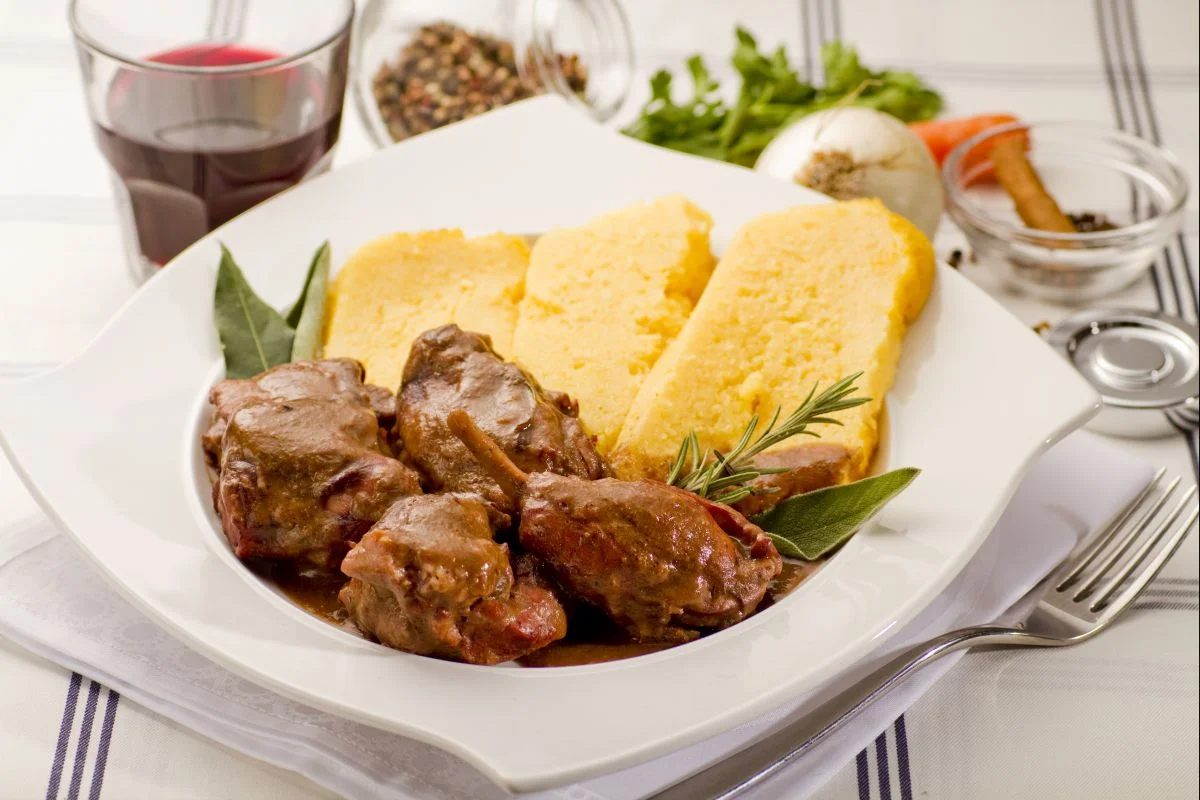
Rabbit in salmì is a slow-cooked rabbit stew marinated in red wine and aromatic herbs, served here with slices of firm polenta. It is a warming, make-ahead-friendly meal for a leisurely winter supper.
Ingredients
- 1.25 kgrabbit
- 2white onions
- 1 stalkcelery
- 1carrot
- 2 clovesgarlic
- 2 sprigsrosemary
- 4cloves
- 6black peppercorns
- 4 leavessage
- 2 leavesbay
- 3 bunchesparsley
- 2 sprigsthyme
- 4 leavesbasil
- 1 stickcinnamon
- 1 litrered wine
- as neededfine salt
- 90 ml (6 tablespoons)extra-virgin olive oil
- 2 tablespoons00 flour
- 2 litreswater
- as neededcoarse salt
- 15 ml (1 tablespoon)extra-virgin olive oil
- 500 ginstant polenta
Instructions
- 1
Prepare the rabbit
Remove the rabbit’s head, excess fat and internal organs, then cut it into pieces, wash and pat dry. Put it in a large bowl with one peeled onion cut into large pieces, the peeled sliced carrot, chopped celery, peeled and crushed garlic, rosemary, thyme, cloves, cinnamon, peppercorns, sage, basil, bay and parsley.
- 2
Marinate and flour
Pour over the red wine, add a couple of pinches of salt, cover the bowl and refrigerate for at least 12 and up to 24 hours. Drain the rabbit, pat it dry with kitchen paper and coat the pieces in flour.
- 3
Brown the rabbit
Warm the oil in a small pan and soften the finely chopped remaining onion over low heat for 10–15 minutes. Transfer the onion to a large pan or casserole, add the floured rabbit pieces and brown them on both sides.
- 4
Add the marinade
Drain the vegetables and spices from the marinade and add them to the rabbit. Cook gently for 5 minutes, stirring occasionally. Pour in the remaining marinade liquid, which should cover the rabbit, cover the pan and simmer gently for at least 50–60 minutes.
- 5
Cook the polenta
Bring about 2 litres of water to the boil. Add coarse salt and 1 tablespoon of extra-virgin olive oil, then take the pan off the heat and gradually whisk in the instant polenta. Return it to low heat and stir with a wooden spoon until cooked. Pour it into a rectangular dish brushed with oil, leave to cool completely, then turn it out and cut it into slices about 1 cm thick; grill the slices if you wish.
- 6
Blend the sauce
When the rabbit is cooked, remove the lid and adjust the seasoning with salt and pepper. Take the pan off the heat, lift out the rabbit and keep it warm. Blend the cooking liquid and vegetables into a smooth sauce, then reduce it until it reaches the thickness you want.
- 7
Finish and serve
Return the rabbit pieces to the sauce and cook everything together for 5 minutes. Turn off the heat and serve at once with slices of polenta, spooning the sauce over them.
What is rabbit in salmì?
Salmì is a traditional Italian way of preparing game, using a wine marinade and slow cooking to build a deeply savoury sauce. Rabbit is a lean meat that suits this approach, while the wine and herbs give the dish its characteristic richness.
In this version, the rabbit is served with firm polenta cut into slices rather than soft polenta. The slices can be grilled for a little colour and a pleasing contrast to the tender meat and smooth sauce.
Nutrition and macros by portion
The nutrition label shows one serving as written: 526 calories, 0g protein, 43g carbs, 18g fat.
| Portion | Adjustment | kcal | Protein | Carbs | Fat |
|---|---|---|---|---|---|
| Lighter | Less polenta, more greens | 368 kcal | 0g | 30g | 12g |
| This serving | As written | 526 kcal | 0g | 43g | 18g |
| Hungry | Extra polenta slices | 789 kcal | 0g | 65g | 26g |
The polenta supplies most of the carbohydrates, while the olive oil contributes much of the fat; rabbit is the main protein source. For a more balanced plate, serve the portion with a generous side of green vegetables or salad.
Why marinate the rabbit?
The long soak gives the rabbit time to take on the flavour of the red wine, vegetables and herbs. Allow at least 12 hours and no more than 24, keeping the covered bowl in the fridge.
Dry the drained pieces well before flouring them. This helps them brown in the pan rather than releasing moisture straight away.
Build flavour in stages
Softened onion: cook the remaining onion slowly for 10–15 minutes, until tender, before adding it to the large pan. This provides a mellow base for the rabbit.
Rabbit and aromatics: brown the floured pieces on both sides, then give the drained marinade vegetables and spices 5 minutes in the pan. Pour in only the marinade liquid at the next stage.
Watch the slow simmer
Keep the heat low once the wine goes in and cover the pan. The rabbit should cook gently for at least 50–60 minutes; check that it is tender before moving on.
Blend the cooking liquid and vegetables, then reduce the sauce to the thickness you prefer. Return the rabbit for the final 5 minutes so the pieces are hot and coated.
Set the polenta for slicing
Whisk the instant polenta gradually into the salted, oiled water off the heat to limit lumps. Return the pan to low heat and stir until the polenta is cooked.
Pour it into an oiled dish and let it cool completely before turning it out. Slices about 1 cm thick hold their shape; grilling them is optional.
Serve the dish
Arrange the rabbit with slices of polenta and spoon the reduced sauce over both. The polenta is a natural partner for the wine-rich juices and makes the meal feel substantial.
A simple green salad or a plainly dressed seasonal vegetable can add freshness alongside the rich sauce.
Recipe notes & tips
- Use a bowl large enough for the rabbit pieces to sit beneath the wine and aromatics.
- Keep the marinade covered in the fridge for the full soaking time.
- Pat the rabbit dry thoroughly before coating it with flour.
- Brown the rabbit in batches if the pan is crowded.
- Stir the polenta steadily as it cooks to keep it smooth.
- Cool the polenta fully before slicing so the pieces hold together.
Variations
- Grilled polenta: grill the cooled slices before serving for browned edges.
- Softer polenta: serve the polenta freshly cooked instead of cooling and slicing it.
- Herb balance: use the listed herbs as directed, or omit an herb you do not have.
- Thicker sauce: reduce the blended cooking liquid for longer before returning the rabbit.
- Wine choice: use a dry red wine with a flavour you enjoy drinking.
Common mistakes to avoid
- Skipping the marinade: the recipe relies on at least 12 hours of soaking, so plan ahead.
- Wet rabbit: excess moisture hinders browning; pat the pieces dry before flouring.
- High heat: a hard boil can make the sauce reduce too quickly; keep the covered simmer gentle.
- Lumpy polenta: adding it all at once can leave clumps; whisk it in gradually off the heat.
- Slicing warm polenta: it may not hold its shape; let it cool completely first.
How to store
Refrigerate leftover rabbit and sauce in a covered container for up to 3 days. Store the polenta separately, then reheat the rabbit gently in its sauce and warm or grill the polenta slices before serving.
Frequently asked questions
How long should the rabbit marinate?
Marinate it in the fridge for at least 12 hours and up to 24 hours. The recipe's stated 150-minute cooking time does not include this marinating period.
Can I make the polenta ahead?
Yes. Cook it, pour it into an oiled dish and leave it to cool completely before slicing. Reheat the slices on a grill if you like.
How can I tell when the rabbit is tender?
After at least 50–60 minutes of gentle cooking, check that the meat is tender when pierced. If it is not, continue simmering gently until it is.
Can I make the sauce smoother?
Yes. Blend the cooking liquid and vegetables as directed, then reduce the sauce until it reaches your preferred consistency.
Can I serve the polenta soft?
Yes. The recipe sets the polenta so it can be sliced, but you can serve it freshly cooked instead if you prefer a soft texture.
Cook it from the original
This recipe comes from giallozafferano.es. Their page has the author’s own photos, notes and tips — the best place to cook it from.
Open the recipe on giallozafferano.es