
Asparagus with savoury sabayon
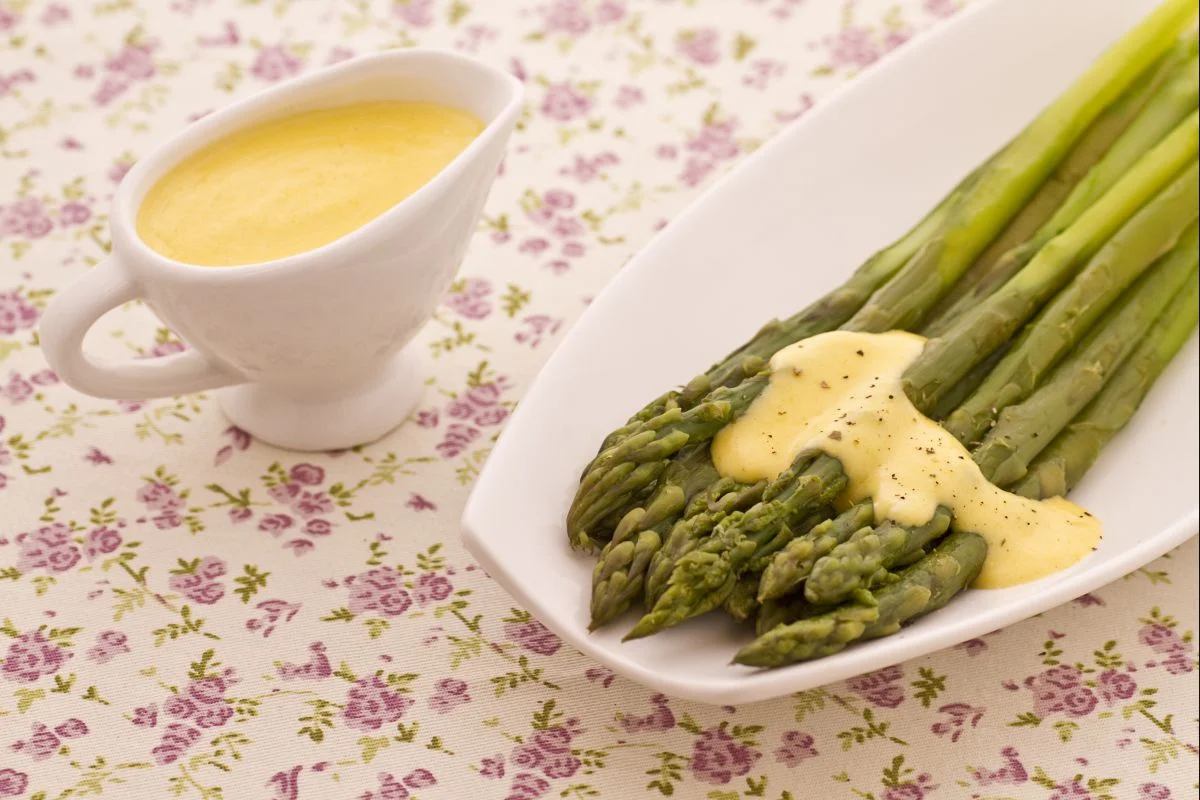
Tender green asparagus is served warm with a savoury sabayon: a light, whisked sauce made here with egg yolks, butter and white wine. It makes an elegant starter, and the sauce is best prepared just before serving.
Ingredients
- 600 ggreen asparagus
- 4egg yolks
- 60 gbutter
- 80 mlwhite wine
- as neededfine salt
- as neededblack pepper
Instructions
- 1
Prepare asparagus
Wash the asparagus, trim away the pale ends and scrape off any tough outer skin. Tie the spears into a bundle with kitchen string and boil in salted water for 10–15 minutes, until tender but still firm. Drain and keep warm while you make the sabayon.
- 2
Whisk the sabayon
Put the 4 egg yolks in a heavy-based stainless-steel saucepan suitable for a bain-marie and whisk with a pinch of salt. Set it over a larger pan filled one-third full with very hot water; keep the heat very low so the water does not boil, but only moves gently. Add the softened butter and whisk vigorously. Once the mixture is smooth, gradually pour in the wine in a thin stream, whisking continuously until the sauce begins to thicken. Remove from the heat, pour over the asparagus tips, season with black pepper to taste and serve immediately.
What is savoury sabayon?
Sabayon is a whisked sauce made by gently warming egg yolks; it is related to the Italian dessert zabaglione, but this version is savoury. White wine gives the sauce a bright note, while butter makes it rich and smooth.
Here, the asparagus is boiled until just tender and served warm beneath the freshly made sauce. The contrast between firm spears and soft, airy sabayon is what makes this simple starter feel special.
Nutrition and macros by portion
The nutrition label shows one serving as written: 210 calories, 6g protein, 6g carbs, 17g fat.
| Portion | Adjustment | kcal | Protein | Carbs | Fat |
|---|---|---|---|---|---|
| Lighter | Use less butter | 147 kcal | 4g | 4g | 12g |
| This serving | As written | 210 kcal | 6g | 6g | 17g |
| Hungry | Serve with extra asparagus | 315 kcal | 9g | 9g | 26g |
The asparagus supplies most of the carbohydrates and fibre, while the egg yolks and butter contribute most of the fat; the yolks also provide protein. Pair a portion with bread or a simple salad if you want a more rounded plate.
Get the asparagus ready
Trim and scrape: remove the pale, woody ends and scrape the tougher outer skin from the lower stalks so they cook evenly.
Tie the spears: make a loose bundle with kitchen string before boiling. This keeps the asparagus together and makes it easier to lift and drain.
Cook the spears gently
Salted water seasons the asparagus as it cooks. Boil the bundle for 10–15 minutes, checking towards the end; the stalks should be tender but retain some firmness.
Drain well and keep the asparagus warm while making the sauce. Serve it promptly so the spears do not cool while the sabayon is being finished.
Keep the bain-marie calm
Gentle heat: the lower pan should hold very hot water that moves slightly, not a rolling boil. Too much heat can make the yolks cook unevenly.
Steady whisking: add softened butter first, then trickle in the wine once the mixture is smooth. Keep whisking until the sauce starts to thicken, then take it off the heat.
Look for the right texture
The sabayon is ready when it has thickened into a smooth, creamy sauce. The recipe gives no fixed whisking time, so use the texture rather than the clock as your cue.
Pour it over the asparagus tips while it is still warm and serve straight away. A little black pepper adds seasoning at the end.
Serving the starter
Arrange the warm spears on a platter or divide them between plates, then spoon the sabayon over the tips. Keep accompaniments simple so the asparagus and wine-scented sauce remain the focus.
For a more substantial meal, serve alongside bread or a simple salad. The sauce is at its best freshly made, so prepare it close to serving time.
Recipe notes & tips
- Choose spears of similar thickness so they cook at roughly the same rate.
- Scrape only the tougher lower stalks; the tender tips do not need peeling.
- Have the larger pan and hot water ready before you start whisking the yolks.
- Soften the butter in advance so it incorporates more easily.
- Pour the wine in a thin, gradual stream while whisking continuously.
- Serve as soon as the sauce is poured over the asparagus.
Variations
- Add lemon: finish the sauce with a little lemon zest for a fresher edge.
- Use white wine: choose a dry white wine to keep the sabayon savoury.
- Add herbs: scatter finely chopped chives over the finished asparagus.
- Try green peppercorns: use them in place of some black pepper for a different bite.
- Serve with bread: offer toasted bread alongside to catch any extra sauce.
Common mistakes to avoid
- Boiling too hard: keep the water at a gentle simmer so the asparagus stays intact.
- Leaving tough skin on: scrape the lower stalks so they are pleasant to eat.
- Using boiling bain-marie water: keep it very hot but not boiling to reduce the risk of overcooking the yolks.
- Adding wine too quickly: pour it in a thin stream while whisking so the sauce stays smooth.
- Stopping too soon: whisk until the sauce begins to thicken before taking it off the heat.
- Waiting to serve: sabayon is best poured over the asparagus and served immediately.
How to store
The asparagus can be refrigerated in a covered container for up to 2 days and reheated gently. Sabayon is best made fresh and served straight away; it may lose its smooth texture if stored or reheated.
Frequently asked questions
How do I know when the asparagus is cooked?
It should be tender when pierced but still firm, not limp. Begin checking at 10 minutes, as cooking time depends on the thickness of the spears.
Can I make the sabayon ahead?
It is best made just before serving, since its texture is most reliable when freshly whisked. Prepare the asparagus ahead and keep it warm while you make the sauce.
What does a bain-marie mean here?
It means setting the saucepan of yolks inside a larger pan of hot water. Keep the water from boiling and maintain a very low heat.
Why has my sabayon become lumpy?
The heat may have been too high or the mixture may not have been whisked steadily. Use gently moving water and whisk continuously as you add the butter and wine.
Can I use another type of asparagus?
The recipe is written for green asparagus. If the spears are especially thick, they may need a little longer; check for tenderness while keeping them firm.
Can I reheat leftover sabayon?
It is not ideal to reheat, as the sauce can lose its smooth texture. Make only what you plan to serve and enjoy it freshly prepared.
Cook it from the original
This recipe comes from giallozafferano.es. Their page has the author’s own photos, notes and tips — the best place to cook it from.
Open the recipe on giallozafferano.es