
Roasted aubergines
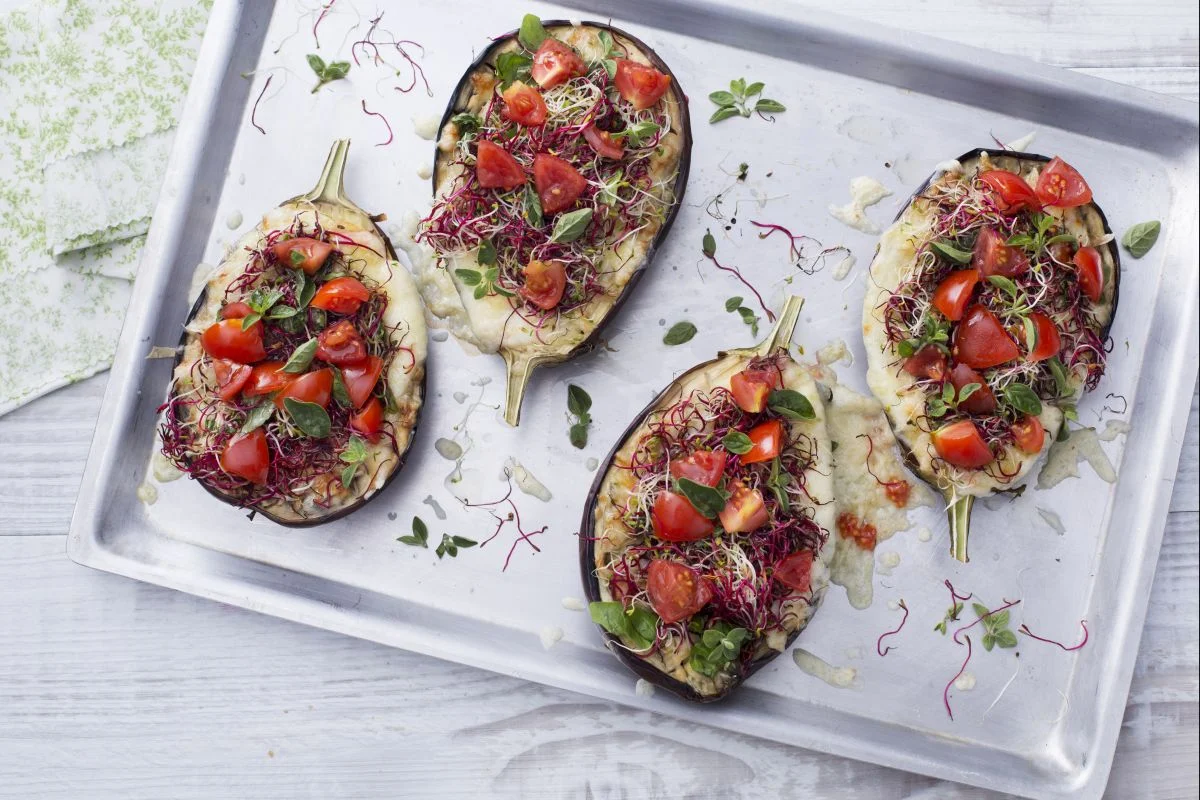
These roasted aubergines are topped with melted caciocavallo, cherry tomatoes and fresh shoots for a colourful dish. Serve them as a starter or make them the centrepiece of a summer meal.
Ingredients
- 2aubergines
- 150 gcaciocavallo cheese
- 30 gbeetroot shoots
- 30 galfalfa shoots
- 150 gcherry tomatoes
- to tasteoregano
- to tastebasil
- to tasteextra-virgin olive oil
- to tastefine salt
Instructions
- 1
Salt the aubergines
Wash the aubergines and halve them lengthways. Score the flesh in a grid pattern with a small knife, taking care not to cut through the skin. Sprinkle generously with fine salt.
- 2
Rinse and drain
Massage the salt into the aubergine flesh. Place the halves cut-side down on a rack and leave them to drain for at least 1 hour. Rinse under running water.
- 3
Start roasting
Pat the aubergines dry with kitchen paper and put them on a baking tray. Bake in a preheated conventional oven at 190°C for 20 minutes. Meanwhile, grate the caciocavallo using the large holes of a grater.
- 4
Add the cheese
After the first 20 minutes, take the aubergines out of the oven, scatter over the grated cheese and return them to the oven for another 20 minutes at 190°C. Meanwhile, cut each cherry tomato into 8 pieces and set aside.
- 5
Prepare the shoots
Mix the beetroot and alfalfa shoots in a bowl. Tear in the basil leaves, season with salt and mix. Do not add oil at this stage, as it may wilt the shoots.
- 6
Finish and serve
After the second 20 minutes of baking, take the aubergines out of the oven; the cheese should be fully melted. Top with the shoots and tomatoes, drizzle with a little olive oil and add a few fresh oregano leaves. Serve.
What are roasted aubergines?
Roasted aubergines are a straightforward oven dish in which the flesh softens and takes on the flavours of its toppings. Aubergine is used widely in Mediterranean cooking, and this version pairs it with Italian caciocavallo and fresh shoots.
The method builds flavour in stages: first the aubergine is salted and drained, then it roasts with cheese before the fresh toppings go on. That contrast makes it suitable as either a starter or a main course.
Nutrition and macros by portion
The nutrition label shows one serving as written: 240 calories, 0g protein, 6g carbs, 17g fat.
| Portion | Adjustment | kcal | Protein | Carbs | Fat |
|---|---|---|---|---|---|
| Lighter | Use less cheese and oil | 168 kcal | 0g | 4g | 12g |
| This serving | As written | 240 kcal | 0g | 6g | 17g |
| Hungry | Add another aubergine half | 360 kcal | 0g | 8g | 25g |
The aubergine and tomatoes contribute most of the carbohydrate, while the caciocavallo and olive oil provide much of the fat; the cheese also supplies the dish's protein. Pair a serving with a source of fibre such as wholegrain bread or a green salad to make the plate more rounded.
Why salt and drain the aubergine
Salting: the recipe has you massage salt into the scored flesh, then leave the halves cut-side down for at least an hour. Rinsing and drying them afterwards removes the surface salt and prepares them for roasting.
Scoring: the shallow grid cuts expose more of the flesh to the seasoning and heat. Keep the knife short of the skin so each half stays intact.
Choosing the cheese
Caciocavallo: this cheese is grated over the aubergines after their first 20 minutes in the oven. The second 20-minute bake melts it over the softened flesh.
Grating: use the large holes of a grater, as directed, to make pieces that can be scattered evenly. Add it only after the initial roast so it does not spend the entire cooking time in the oven.
Roasting and doneness
First bake: arrange the aubergine halves on a baking tray and roast them in a preheated conventional oven at 190°C for 20 minutes. Then add the cheese and bake for a further 20 minutes at the same temperature.
Doneness cue: the recipe describes the cheese as fully melted when the aubergines come out. If it is not melted yet, use that visual cue before adding the fresh toppings.
Keep the toppings fresh
Shoot mixture: combine the beetroot and alfalfa shoots with torn basil and salt. Leave out the oil while mixing, since the recipe notes that it can make the shoots wilt.
Tomatoes and herbs: cut the cherry tomatoes into 8 pieces each and add them after roasting. Finish with a drizzle of olive oil and fresh oregano leaves just before serving.
Serving the aubergines
Serve the halves warm, once the melted cheese is covered with the shoots and tomatoes. Their colourful toppings make them easy to present individually as a starter.
For a more substantial meal, serve them with bread or a simple grain side. Keep any accompaniments separate until serving so the fresh shoots stay crisp.
Recipe notes & tips
- Set a timer for the hour-long draining stage as well as for each oven bake.
- Rinse the salted aubergines thoroughly, then pat them dry before they go on the tray.
- Score only the flesh so the aubergine halves hold their shape.
- Grate the caciocavallo while the aubergines complete their first bake.
- Mix the shoots and basil without oil, then dress the finished aubergines just before serving.
Variations
- Add garlic: rub a cut garlic clove over the scored flesh before roasting.
- Change the herbs: use fresh thyme in place of the oregano.
- Use another melting cheese: substitute a cheese that melts well if caciocavallo is unavailable.
- Add a little heat: scatter chilli flakes over the cheese before the second bake.
- Make it a meal: serve each aubergine half with bread or cooked grains.
Common mistakes to avoid
- Cutting through the skin: score only the flesh so the halves remain intact.
- Skipping the draining time: leave the salted halves cut-side down for at least 1 hour as directed.
- Leaving them wet: rinse off the salt and pat the aubergines dry before baking.
- Adding oil to the shoots: keep it out of the bowl so the shoots do not wilt.
- Topping too early: add the shoots and tomatoes after roasting to keep them fresh.
How to store
Store leftovers in a covered container in the fridge and eat within 2 days. Reheat the aubergine gently in the oven until warm, then add fresh shoots and herbs if available.
Frequently asked questions
Can I prepare the aubergines ahead?
You can salt and drain them ahead, then rinse and dry them before baking. Add the shoots and tomatoes just before serving.
Can I skip the draining stage?
The method calls for at least 1 hour of draining after salting. If you are short on time, the texture may differ from the intended result.
What if I cannot find caciocavallo?
Use another cheese that melts well. The recipe relies on grated cheese melting over the aubergine during the second bake.
Can I use a fan oven?
The method specifies a conventional oven at 190°C. A fan oven may cook differently, so check the aubergines and melted cheese as they bake.
How do I stop the shoots from wilting?
Mix them with the basil and salt without oil, then add them to the aubergines after baking. Drizzle on the oil at the end.
Cook it from the original
This recipe comes from giallozafferano.es. Their page has the author’s own photos, notes and tips — the best place to cook it from.
Open the recipe on giallozafferano.es