
Grandma's tart
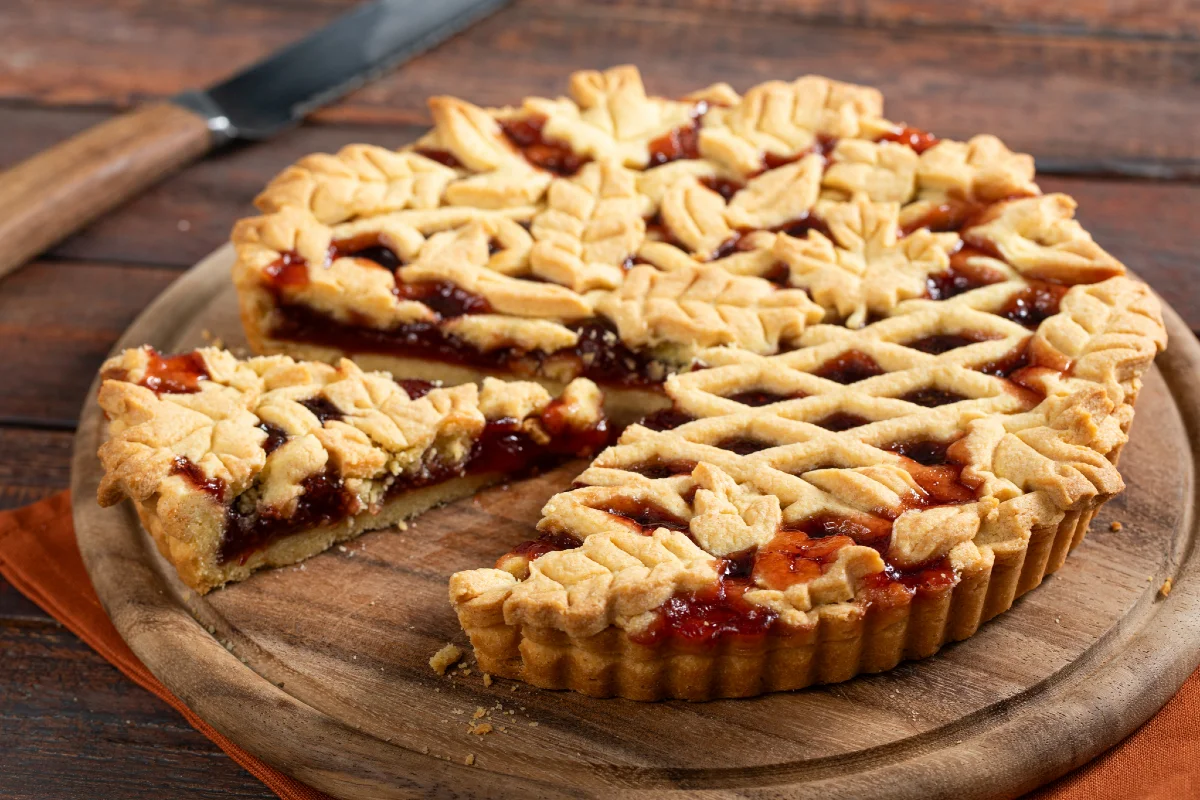
This homemade jam tart pairs a buttery shortcrust pastry with a generous layer of strawberry jam and a decorative pastry lattice. It takes a little time to chill and shape, but the method makes a welcoming dessert for sharing.
Ingredients
- 500 g00 flour
- 220 gcold butter
- 200sugar
- 1egg
- 2egg yolks
- 1 pinchfine salt
- as neededlemon zest
- 600 gstrawberry jam
Instructions
- 1
Start the pastry
Tip the flour onto a work surface and make a well in the centre. Put the egg and egg yolks in the well.
- 2
Add the butter
Add a pinch of salt and scatter the sugar over the flour. Add the cold butter, cut into small pieces.
- 3
Work the dough
Add lemon zest. Using your fingertips, quickly work from the outside towards the centre until you have a smooth dough.
- 4
Chill the dough
Shape the dough into a compact block, wrap it in cling film and chill for 30 minutes. Place it on a lightly floured surface and divide it into two pieces, one slightly larger than the other. Roll out the smaller piece to about 6–7 mm thick.
- 5
Shape the lattice
Roll the pastry around the rolling pin and lay it over a well-floured lattice cutter. Press gently with the rolling pin, then remove the pastry diamonds by pressing with a finger and cutting away the excess with a knife to form the lattice. If you do not have a lattice cutter, you can make pastry strips by hand.
- 6
Line the tin
Put the lattice in the freezer and quickly knead together the pastry trimmings for decoration. Roll out the remaining pastry to a disc about 5 mm thick, then use the rolling pin to transfer it to a 26 cm tart tin, preferably one with a removable base. Press it into the edges and trim off the excess. Knead those trimmings together with the earlier scraps. Prick the pastry base with a fork to help stop it puffing up as it bakes.
- 7
Fill the tart
Spoon the jam into the tin and level it with the back of a spoon. Use small cutters about 2 cm across to cut biscuits from the leftover pastry, and place them on a baking tray lined with baking paper. Choose any shapes you like.
- 8
Add the lattice
Take the lattice from the freezer and carefully loosen it from the cutter. Lay it over the tart and press gently, then trim away the excess pastry with a knife. Use the trimmings to cut more biscuits if you wish.
- 9
Bake and cool
Brush the tart edges with a little water and arrange the biscuits on top so they stick during baking. Place them at the ends of the lattice strips or wherever you prefer. Preheat a conventional oven to 180°C and bake the tart on the middle shelf for about 40–50 minutes. If the lattice browns too quickly, cover the top with aluminium foil. Remove from the oven and leave to cool completely before taking it out of the tin and serving.
What is a jam tart?
This is an Italian-style crostata: a pastry case filled with jam and finished with a lattice top. Its appeal is the contrast between crisp, buttery pastry and soft, fruit-filled centre.
Here, strawberry jam supplies a bright, sweet filling, while lemon zest perfumes the pastry. Chilling the dough helps make the decorative top easier to handle.
Nutrition and macros by portion
The nutrition label shows one serving as written: 735 calories, 8g protein, 125g carbs, 24g fat.
| Portion | Adjustment | kcal | Protein | Carbs | Fat |
|---|---|---|---|---|---|
| Lighter | Smaller slice, berries alongside | 515 kcal | 6g | 88g | 17g |
| This serving | As written | 735 kcal | 8g | 125g | 24g |
| Hungry | Larger slice | 1103 kcal | 12g | 188g | 36g |
The flour and sugar, along with the jam, provide most of the carbohydrates; the butter supplies most of the fat, while the egg and yolks contribute some protein. Pair a slice with fresh berries and plain yoghurt for a more balanced plate.
A pastry made by hand
Cold butter: small pieces are easier to rub quickly into the flour without warming the mixture too much. Work with your fingertips and stop once the dough comes together smoothly.
Egg and yolks: these bind the pastry and give it richness. Add them in the well, then draw in the flour gradually as you work from the outside towards the centre.
Chilling and shaping
Resting time: chill the wrapped dough for 30 minutes before rolling. This firms it up for dividing and shaping.
Lattice handling: freeze the lattice briefly so it is easier to lift from its cutter. A lightly floured work surface and rolling pin help prevent sticking; if you do not have a lattice cutter, make strips by hand.
Getting the base right
Even thickness: roll the base to about 5 mm and press it gently into the 26 cm tin, especially around the edges. Trim the excess neatly and prick the base with a fork as directed.
Jam layer: spread the 600 g of strawberry jam evenly with the back of a spoon. Avoid leaving a very high mound in the centre, which can make the filling less level beneath the lattice.
Doneness and timing
Oven: bake in a conventional oven at 180°C on the middle shelf for about 40–50 minutes. The pastry should look baked and golden; check the surface as it cooks.
Colour: if the lattice darkens before the tart is ready, cover the surface with aluminium foil. Let the tart cool completely before removing it from the tin so the pastry can firm up.
Serving ideas
A slice works well on its own with tea or coffee. For a plated dessert, serve it with a spoonful of yoghurt, crème fraîche or ice cream.
The tart is sweet and pastry-rich, so fresh berries alongside can add a fresh, tart contrast. Cut it with a sharp knife once completely cool.
Recipe notes & tips
- Keep the butter cold and work the pastry quickly with your fingertips.
- Flour the surface and rolling pin lightly to make the pastry easier to lift.
- Use a removable-base tin if available, as suggested in the method.
- Cut the lattice trimmings into small biscuits rather than discarding them.
- Watch the lattice during baking and cover it with foil if it browns too quickly.
- Cool the tart completely before releasing it from the tin.
Variations
- Different jam: use another thick fruit jam in place of the strawberry jam.
- Hand-cut lattice: roll the pastry into strips and weave them across the filling.
- Citrus zest: use orange zest instead of lemon zest for a different aroma.
- Mixed biscuits: cut the pastry scraps into different small shapes for the decoration.
- Simple finish: leave off the extra pastry biscuits and bake with just the lattice.
Common mistakes to avoid
- Warm pastry: it can become difficult to handle; chill it as directed and work quickly.
- Sticky lattice: flour the cutter and work surface lightly before shaping the pastry.
- Uneven filling: level the jam with the back of a spoon before adding the lattice.
- Puffed base: prick the pastry base all over with a fork before filling.
- Over-browned top: cover the tart with aluminium foil if the lattice colours too quickly.
- Removing it while warm: the pastry may be fragile; wait until the tart is completely cool.
How to store
Store the completely cooled tart covered in the fridge for up to 3 days. Bring slices to room temperature before serving, or warm them briefly in a low oven.
Frequently asked questions
Can I make the pastry without a lattice cutter?
Yes. Roll the pastry and cut it into strips by hand, then arrange them over the jam. The lattice cutter is optional.
Why does the lattice go in the freezer?
A short spell in the freezer firms the shaped pastry and makes it easier to release and transfer onto the tart.
Can I use a different jam?
Yes. Another fruit jam can be used in the same way; choose one that is thick enough to spread and level in the pastry case.
How do I know when the tart is baked?
Bake for about 40–50 minutes at 180°C, until the pastry looks baked and golden. If the lattice browns too quickly, cover it with foil.
Should I remove the tart from the tin while it is warm?
No. Let it cool completely first so the pastry has time to firm up before you release it from the tin.
Can I prepare the pastry ahead?
You can make the dough in advance and keep it wrapped in the fridge. Let it soften just enough to roll if it is very firm.
Cook it from the original
This recipe comes from giallozafferano.es. Their page has the author’s own photos, notes and tips — the best place to cook it from.
Open the recipe on giallozafferano.es