
Risotto with farmyard ragù
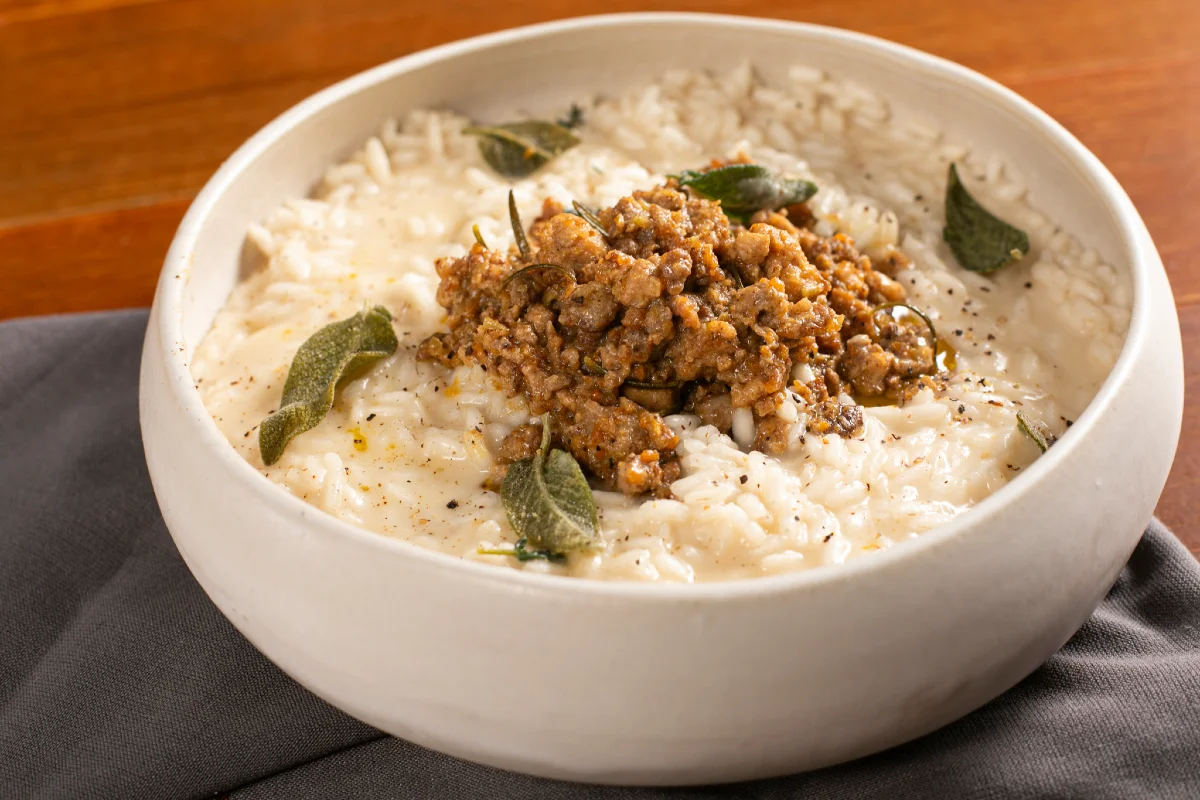
This slow-cooked risotto combines Carnaroli rice with a rich ragù of duck and chicken, finished with Parmesan and crisp sage. It makes a substantial first course for a relaxed meal when you have time to let the ragù turn tender and flavourful.
Ingredients
- 320 gCarnaroli rice
- 600 gmeat stock
- 60 gwhite wine
- to tastesage
- 20 gbutter
- to tasteextra-virgin olive oil
- to tastefine salt
- 250 gboneless duck thighs, skin on
- 250 gboneless chicken thighs, skin on
- 1carrot
- 1celery stalk
- 1golden onion
- 300 gmeat stock
- 50 gwhole milk
- 100 gwhite wine
- 50 gMarsala
- 1 sprigsage
- 1 sprigrosemary
- to tasteextra-virgin olive oil
- to tastefine salt
- to tasteblack pepper
- 60 gParmigiano Reggiano DOP
- 60 gbutter
- to tastethyme
- to tasteblack pepper
Instructions
- 1
Prepare the vegetables
Make the meat stock first, using the bones left from trimming the chicken and duck if you like, and keep it hot. Clean the carrot, onion and celery, then finely chop them. Remove the skin from the chicken and duck and set it aside.
- 2
Chop the meat
Finely chop the chicken and duck thighs, removing any tendons or cartilage as you go. The pieces do not need to be uniform, but should be small.
- 3
Render the skin
Put the chicken and duck skin in a steel pan and cook over a low heat until browned, adding a little oil if needed. Once the skin has released plenty of fat, add the chopped duck and chicken.
- 4
Brown the ragù
Raise the heat slightly and brown the meat for at least 5 minutes. Add the chopped vegetables, turn the heat down and cook gently for at least 10 minutes, scraping the base of the pan with a spoon to lift the flavourful browned bits. When the vegetables are well browned, remove the skin.
- 5
Add the wines
Pour in the Marsala and let it evaporate, scraping the bottom of the pan as you go. Add the white wine, then pour in the meat stock without waiting for the wine to evaporate completely.
- 6
Braise the meat
Tie the sage and rosemary together and add the bundle to the pan. Cover and cook over a very low heat for about 1½ hours, until the meat is tender and the sauce has reduced. Stir in the milk.
- 7
Finish the ragù
Stir the ragù and continue cooking, covered, for another 30 minutes. Season with salt and pepper at the end.
- 8
Fry the sage
To cook the risotto, melt the butter with the oil in a saucepan. Add the sage leaves and fry briefly; once curled and changed colour, transfer them to kitchen paper and set aside.
- 9
Toast the rice
Add the rice to the same cooking fat, season with salt and toast over a medium heat for 1–2 minutes. When the grains feel very hot, pour in the white wine.
- 10
Cook the risotto
Cook the rice, adding a ladleful of hot stock at a time and stirring occasionally. When the rice is ready, take the pan off the heat, add the thyme and stir in the cold butter.
- 11
Add the cheese
Stir in the grated Parmesan and cover the pan for a couple of minutes. Mix thoroughly, adding a little more stock if needed to adjust the consistency.
- 12
Serve with ragù
Spoon the risotto onto plates and place the ragù in the centre. Finish with the crisp sage leaves and black pepper to taste.
What is risotto with farmyard ragù?
Risotto is a northern Italian rice dish cooked gradually with stock until the grains are tender and the mixture becomes creamy. Ragù is a slow-cooked meat sauce; here, duck and chicken make a richly flavoured topping.
This version brings together two preparations: a long braise for the ragù and a quick, attentive cook for the rice. Crisp sage adds a fragrant finish and a contrast in texture.
Nutrition and macros by portion
The nutrition label shows one serving as written: 850 calories, 36g protein, 68g carbs, 44g fat.
| Portion | Adjustment | kcal | Protein | Carbs | Fat |
|---|---|---|---|---|---|
| Lighter | Use less butter | 595 kcal | 25g | 48g | 31g |
| This serving | As written | 850 kcal | 36g | 68g | 44g |
| Hungry | Add extra rice | 1275 kcal | 54g | 102g | 66g |
The rice supplies most of the carbohydrates, while duck, chicken and Parmesan provide much of the protein. Butter, cheese and the rendered poultry fat contribute much of the fat; stock and added salt can make the sodium level vary. Balance the plate with a generous serving of green vegetables or salad.
The meat and aromatic base
Duck and chicken: chopping the thigh meat finely helps it mingle with the vegetables and become tender during the long braise. Removing tendons and cartilage gives the finished ragù a more pleasant texture.
Soffritto: finely chopped carrot, celery and onion form the base of the sauce. Give them at least 10 minutes to soften and brown gently, scraping up the browned bits from the pan.
Why render the skin first
Rendered skin: starting it in a cool pan over low heat gives the fat time to melt out before the meat goes in. The recipe removes the skin once the vegetables have browned, leaving the rendered fat to carry flavour through the ragù.
Browning: the meat needs at least 5 minutes over a slightly higher heat. Avoid rushing this stage; the browned surface contributes savouriness to the sauce.
Building the ragù's flavour
Marsala and wine: Marsala goes into the pan first, followed by white wine and stock. Scrape the base after adding the Marsala so the caramelised bits dissolve into the sauce.
Herbs and milk: the tied sage and rosemary flavour the slow braise, while the milk is added after about 1½ hours. The final 30 minutes of covered cooking lets the flavours come together as the meat softens.
Getting the rice creamy
Carnaroli: its grains hold their shape during the gradual cooking, making it a good choice for risotto. Toast it for 1–2 minutes in the sage-scented butter and oil, until the grains feel hot, before adding the wine.
Hot stock: add it a ladleful at a time and stir from time to time. Keep the stock hot so each addition can be absorbed without cooling the rice.
Finishing and serving
Butter and Parmesan: take the rice off the heat before stirring in the cold butter and grated cheese. Cover it for a couple of minutes, then mix well and loosen with a little stock if needed.
To serve: place the ragù in the centre of each portion and scatter over the crisp sage. A simple green salad or lightly cooked greens make a fresh counterpoint to the rich rice and meat.
Recipe notes & tips
- Keep the stock hot in a separate pan while you cook the rice.
- Chop the meat finely and remove tendons and cartilage before cooking.
- Cook the ragù at a very low simmer so the meat has time to become tender.
- Scrape the pan after adding the Marsala to incorporate the browned bits.
- Fry the sage leaves only until they curl and change colour, then drain them on kitchen paper.
- Taste the ragù and risotto before serving, as the stock and Parmesan can both add salt.
Variations
- Extra herbs: add a little more thyme at the end for a stronger herbal note.
- More vegetables: increase the carrot, celery or onion in the soffritto for a more vegetable-forward ragù.
- Stock choice: use chicken stock in place of meat stock if that is what you have available.
- Wine alternative: replace the Marsala with extra white wine, while keeping the recipe's method.
- Sage finish: reserve a few additional sage leaves to fry and use as a more generous garnish.
Common mistakes to avoid
- Cooking the skin too quickly: it may brown before releasing much fat; start over a low heat.
- Crowding the pan with wet meat: it can hinder browning; add the chopped meat once the skin has rendered.
- Letting the ragù boil hard: the meat can cook unevenly; keep it at a very gentle simmer.
- Adding cold stock: it cools the rice and interrupts cooking; heat the stock before using it.
- Pouring in all the stock at once: the rice will not cook in the gradual manner intended; add it a ladleful at a time.
- Skipping the resting pause: the final butter and Parmesan need a couple of minutes covered before mixing.
How to store
Refrigerate leftover risotto and ragù in airtight containers and use within 2 days. Reheat gently in a saucepan with a splash of stock or water, stirring until hot; the rice will be softer than when freshly made.
Frequently asked questions
Can I make the ragù ahead?
Yes. Cook it through, cool it promptly and refrigerate it in a sealed container. Reheat it gently while you prepare the risotto.
Can I use another rice instead of Carnaroli?
Another risotto rice, such as Arborio, can be used, though the cooking time and amount of stock absorbed may differ. Follow the same gradual method and check the grains for doneness.
How do I know when the ragù is ready?
After the slow cooking, the meat should be tender and the sauce reduced. Continue gently simmering if the meat needs more time.
How do I know when the risotto is cooked?
Taste a grain: it should be tender but still have a little firmness. The finished risotto should be creamy and loose enough to adjust with a little stock.
Can I skip the crispy sage?
You can leave it out, though it provides the recipe's crisp, fragrant garnish. The sage leaves are fried briefly in the butter and oil used for the rice.
Can I freeze the ragù?
The ragù can be frozen separately in a freezer-safe container. Thaw it in the refrigerator and reheat it thoroughly; risotto is best cooked fresh.
Cook it from the original
This recipe comes from giallozafferano.es. Their page has the author’s own photos, notes and tips — the best place to cook it from.
Open the recipe on giallozafferano.es