
Battered vegetables
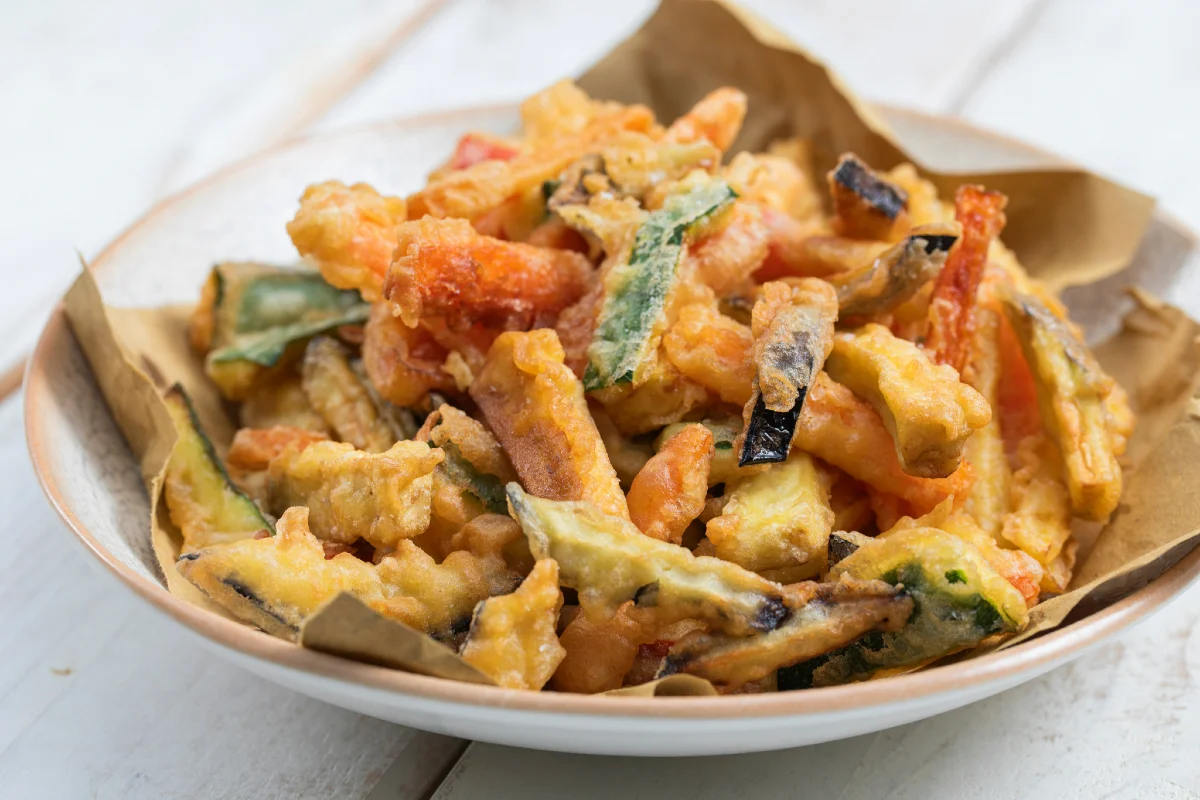
A colourful mix of carrots, courgettes, aubergines and peppers in a light, crisp batter, fried until golden. Serve it piping hot as a vegetarian starter, and swap in seasonal vegetables to suit what you have.
Ingredients
- 200 gCarrots
- 200 gCourgettes
- 200 gAubergines
- 200 gRed and yellow peppers
- 100 g00 flour
- 70 gRice flour
- 250 gSparkling water
- 2Eggs
- To tasteFine salt
- To tasteSunflower oil
Instructions
- 1
Prepare carrots
Wash and dry all the vegetables. Peel the carrots, trim the ends and cut them into sticks about 1.5 cm thick and 4–5 cm long.
- 2
Cut courgettes
Slice the courgettes thickly, then cut them into strips about 1.5 cm thick. Make sticks the same size as the carrots.
- 3
Prepare peppers
Halve the yellow peppers and remove the seeds and inner ribs, then cut them into sticks matching the other vegetables. Repeat with the red peppers.
- 4
Cut aubergines
Slice the aubergines, then cut them into sticks the same size as the other vegetables.
- 5
Mix the batter
Heat plenty of sunflower oil in a saucepan, checking with a suitable thermometer until it reaches 170°C. Meanwhile, put both flours in a bowl, add the sparkling water and the eggs, beaten beforehand. Whisk well, add a pinch of salt and mix to a smooth, fairly thin batter. Add half the vegetables and toss to coat; add the rest in a later batch.
- 6
Fry until golden
When the oil reaches 170°C, lift the vegetables out of the batter one at a time with tongs. Fry them in small batches so the oil temperature does not drop too much. Cook for a few minutes until well browned, then lift them out with a slotted spoon and drain.
- 7
Drain and serve
Place the fried vegetables on a tray lined with kitchen paper and continue with the remaining vegetables. When everything is fried, adjust the salt and serve piping hot.
What are battered vegetables?
This dish is a mixed-vegetable fritto: pieces of fresh produce coated in batter and fried until crisp. Versions of fried vegetables appear in many food traditions, and the assortment can change with the season.
Here, a mix of wheat and rice flour makes a light coating, while sparkling water loosens the batter. Cutting everything to a similar size helps the pieces cook at a comparable pace.
Nutrition and macros by portion
The nutrition label shows one serving as written: 320 calories, 7g protein, 29g carbs, 20g fat.
| Portion | Adjustment | kcal | Protein | Carbs | Fat |
|---|---|---|---|---|---|
| Lighter | Use less absorbed oil | 224 kcal | 5g | 20g | 14g |
| This serving | As written | 320 kcal | 7g | 29g | 20g |
| Hungry | Serve a larger portion | 480 kcal | 11g | 44g | 30g |
The flours provide most of the carbohydrate, while the vegetables contribute fibre and some carbohydrate. The egg and absorbed frying oil supply much of the protein and fat, respectively; exact values vary with how much batter and oil each piece takes up. Pair a portion with a fresh salad or another vegetable dish for a more balanced plate.
Choosing and cutting the vegetables
Even sticks: Aim for pieces about 1.5 cm thick and 4–5 cm long, as specified for the carrots, and cut the other vegetables to match. This gives the batter a consistent surface to cling to and makes the pieces easier to fry evenly.
Dry surfaces: Wash the vegetables, then dry them thoroughly before coating. Excess water can thin the batter and cause more spattering when the vegetables enter the oil.
What the two flours do
00 flour: This fine wheat flour gives the batter structure and helps it coat the vegetables. Whisk it with the liquid until smooth, but avoid leaving lumps.
Rice flour: Rice flour is paired with the wheat flour for a delicate coating. The sparkling water helps make the mixture fluid enough to cling in a thin layer rather than forming a heavy shell.
Getting the batter right
Thin consistency: The finished batter should be smooth and fairly runny, as the method describes. If it is too thick, it can mask the vegetables; lift each piece and let excess batter drip back into the bowl before frying.
Small batches: Coat only half the vegetables at first, then add more as you work through them. This keeps the remaining vegetables from sitting in the batter for too long.
Frying for a crisp finish
Oil temperature: Bring the sunflower oil to 170°C and monitor it with a thermometer. Adding too many pieces at once can cool the oil, so fry in small batches.
Colour and texture: Cook each batch for a few minutes, until the coating is well browned. Use a slotted spoon to lift the pieces out, then let them drain on kitchen paper.
Serving the vegetables
Serve straight away while the coating is at its crispest, with a final adjustment of salt. The assortment makes a substantial starter for sharing or a side alongside a simple main course.
A fresh salad or a squeeze of lemon can add a bright contrast to the fried coating. Keep accompaniments simple so the different vegetables remain easy to taste.
Recipe notes & tips
- Dry the vegetables well after washing so the batter adheres more evenly.
- Cut the vegetables into similar-sized sticks to help them cook at the same rate.
- Whisk the batter until smooth and keep it fairly thin.
- Fry in small batches and let the oil return to 170°C between them.
- Drain each batch on kitchen paper and serve promptly for the best crispness.
Variations
- Seasonal vegetables: Replace some of the listed vegetables with firm seasonal produce cut to a similar size.
- Herb batter: Stir finely chopped parsley into the batter just before coating the vegetables.
- Spiced batter: Add a little paprika or black pepper to the flour mixture for a warmer flavour.
- Lemon finish: Serve with lemon wedges for a fresh, sharp contrast.
- Gluten-free option: Use a suitable gluten-free flour in place of the 00 flour and check that all other ingredients are gluten-free.
Common mistakes to avoid
- Wet vegetables: Excess moisture can loosen the coating and make the oil spit; dry the pieces thoroughly.
- Uneven cuts: Larger or thicker pieces may take longer to cook; keep the sticks close in size.
- Thick batter: A heavy coating can overwhelm the vegetables; aim for a smooth, fairly fluid consistency.
- Crowded saucepan: Too many pieces can lower the oil temperature; fry a few at a time.
- Serving too late: The coating softens as it sits; drain the vegetables and serve them while hot.
How to store
These vegetables are best eaten freshly fried. If needed, refrigerate leftovers in a covered container for up to 2 days, then reheat in a hot oven until warmed through and crisp; the coating may not be as crisp as when freshly cooked.
Frequently asked questions
Can I prepare the vegetables ahead of time?
You can wash, dry and cut them ahead, then refrigerate them in a covered container. For the crispiest result, mix the batter and fry the vegetables close to serving time.
How do I know when the oil is ready?
Use a thermometer and wait until the oil reaches 170°C. Check it between batches, as adding vegetables can lower the temperature.
Can I use different vegetables?
Yes. Choose vegetables that can be cut into similar-sized pieces and adjust the cooking time as needed, since different vegetables soften at different rates.
Why is the batter not sticking?
The vegetables may be damp or the batter may be too thin. Dry the vegetables thoroughly and check that the batter is smooth and fluid, but still coats the pieces.
Can I make these without eggs?
The supplied method includes eggs, so an egg-free version would need a different batter. A plant-based batter can be used, but its texture and coating may differ.
Can I make them in an air fryer?
This recipe is written for deep-frying, and its wet batter may not set the same way in an air fryer. For the intended crisp coating, follow the method and fry in oil.
Cook it from the original
This recipe comes from giallozafferano.es. Their page has the author’s own photos, notes and tips — the best place to cook it from.
Open the recipe on giallozafferano.es