
Creamy paccheri with guanciale and pistachio
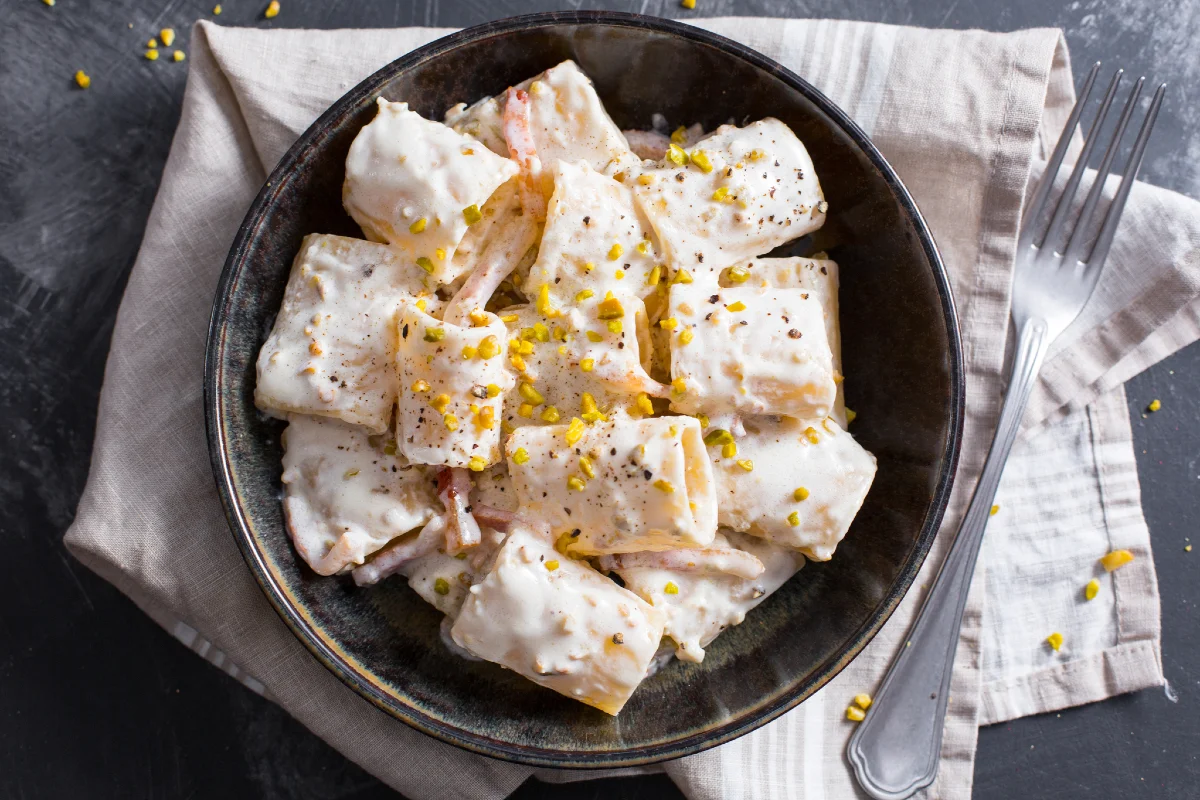
A rich pasta dish pairing wide paccheri with crisp guanciale, toasted pistachios and a creamy cheese sauce. It makes a satisfying first course and comes together in about 35 minutes.
Ingredients
- 320 gpaccheri
- 230 gtrimmed guanciale
- 175 gcream cheese
- 50 gchopped pistachios
- 40 gParmigiano Reggiano DOP, for grating
- as neededfine salt
Instructions
- 1
Prepare the guanciale
Remove the rind from the guanciale. Cut it into slices, then into strips.
- 2
Brown and toast
Put the guanciale in a frying pan without adding oil and cook over medium heat for about 10 minutes, turning it often with a wooden spoon. Once browned, add the chopped pistachios and toast them with the guanciale for about 2 minutes.
- 3
Cook the paccheri
Set aside the browned guanciale and pistachios. Bring a large pan of water to the boil, salt it, then cook the paccheri until al dente, about 7–8 minutes. Reserve a ladleful of pasta water, or enough to loosen the cream cheese.
- 4
Combine the pasta
Stir the cream cheese until smooth, loosening it with the reserved pasta water as needed. Drain the paccheri into the pan with the guanciale and pistachios, add the cream cheese and toss over medium heat.
- 5
Finish and serve
Add the grated Parmesan and mix well. Serve the creamy paccheri immediately.
What are paccheri?
Paccheri are large, wide tubes of pasta associated with southern Italy, particularly Campania. Their roomy shape catches creamy sauce and small pieces of meat and nuts.
This version combines the savoury richness of guanciale with toasted pistachios and cream cheese. The pasta water helps bring those elements together into a coating sauce.
Nutrition and macros by portion
The nutrition label shows one serving as written: 678 calories, 0g protein, 66g carbs, 33g fat.
| Portion | Adjustment | kcal | Protein | Carbs | Fat |
|---|---|---|---|---|---|
| Lighter | Use less guanciale | 475 kcal | 0g | 46g | 23g |
| This serving | As written | 678 kcal | 0g | 66g | 33g |
| Hungry | Serve a larger portion | 1017 kcal | 0g | 99g | 50g |
The paccheri provide most of the carbohydrates, while guanciale and cream cheese contribute much of the fat; the pork and cheeses also provide protein. Pair a serving with a generous portion of vegetables or salad to add freshness and balance the plate.
Choosing the ingredients
Guanciale: this cured pork cheek renders its own fat as it browns, so the recipe starts it in a dry pan. Trimmed guanciale is ready to cut into strips once its rind is removed.
Pistachios: chopped pieces toast quickly in the rendered fat and add a nutty contrast. Keep an eye on them so they do not become too dark.
Cheese: cream cheese creates the smooth base, while grated Parmigiano Reggiano adds a more savoury finish. Grate the Parmesan shortly before using if possible.
Getting the sauce smooth
Pasta water: reserve some before draining the paccheri, as its starch helps loosen the cream cheese. Add it gradually until the cheese is smooth and easy to toss through the pasta.
Heat: combine the ingredients over medium heat, as directed, and keep stirring so the cheese coats the pasta evenly. The sauce should cling to the tubes rather than pool heavily in the pan.
Timing the components
Guanciale: allow about 10 minutes over medium heat, turning the strips often so they brown evenly. Toast the pistachios in the same pan for about 2 minutes.
Paccheri: start checking after 7 minutes, since the stated cooking time is about 7–8 minutes. Drain them when al dente, as they will be tossed briefly with the sauce.
Serving the dish
Serve the paccheri as soon as they are tossed with the Parmesan, while the sauce is creamy and the guanciale is still crisp. A simple green salad or lightly dressed vegetables make a fresh accompaniment to the rich pasta.
Bring the pan to the table if you like, so the dish can be portioned while hot. Keep extra grated Parmesan available for anyone who wants it.
Balancing the rich flavours
Salt: guanciale and Parmesan both bring savoury flavour, so salt the pasta water carefully and taste the finished sauce before adding more seasoning.
Texture: the dish works best with a contrast between tender pasta, crisp-edged guanciale and toasted pistachios. Serve promptly rather than leaving the pasta to sit in the pan.
Recipe notes & tips
- Cut the guanciale into strips of similar size so they brown at roughly the same pace.
- Use a wooden spoon to turn the guanciale often as it cooks.
- Reserve the pasta water before draining the paccheri.
- Add the pasta water to the cream cheese a little at a time to control its consistency.
- Grate the Parmesan finely so it mixes into the sauce more easily.
- Serve straight away for the best contrast between creamy pasta and crisp toppings.
Variations
- Add black pepper: grind a little over the finished pasta for a warm, savoury note.
- Try another nut: use chopped almonds in place of the pistachios for a different crunch.
- Add lemon zest: grate a small amount over the dish just before serving for a bright accent.
- Use another short pasta: choose a large tube shape that can hold the creamy sauce.
- Add greens: serve with wilted spinach or a side of steamed greens for extra colour.
Common mistakes to avoid
- Adding oil to the pan: guanciale releases its own fat, so begin cooking it in a dry pan.
- Skipping the rind removal: remove the guanciale rind before slicing it into strips.
- Overtoasting the pistachios: they need only about 2 minutes in the pan; keep them moving and watch their colour.
- Draining away all the pasta water: reserve a ladleful before draining to help loosen the cream cheese.
- Cooking the pasta too long: check it at 7 minutes and drain it when al dente.
- Leaving the finished pasta to stand: serve it immediately so the sauce stays creamy and the toppings retain their texture.
How to store
For the best texture, serve this pasta immediately. If you have leftovers, refrigerate them in a covered container and use within 2 days; reheat gently in a pan with a splash of water, stirring until hot.
Frequently asked questions
Can I use a different pasta shape?
Yes. Choose a large tube-shaped pasta or another short shape that will hold the cream cheese sauce. Follow the cooking time on the packet and cook it al dente.
Do I need to add oil to the guanciale?
No. The guanciale is cooked in a dry pan and releases fat as it browns.
How much pasta water should I reserve?
Reserve at least a ladleful, as the recipe suggests. Add it gradually to the cream cheese until it is smooth and loose enough to coat the pasta.
Can I prepare the guanciale and pistachios ahead?
You can brown them ahead, but the dish is best assembled and served while the pasta is hot. Reheat the guanciale gently before tossing it with the paccheri.
How can I tell when the paccheri are al dente?
Start checking at about 7 minutes, within the recipe's 7–8 minute cooking time. The pasta should be tender but still have a little firmness when bitten.
Is this dish very salty?
Guanciale and Parmesan are both savoury, so taste the finished sauce before adding extra salt. Salt the pasta water, but avoid over-seasoning it.
Cook it from the original
This recipe comes from giallozafferano.es. Their page has the author’s own photos, notes and tips — the best place to cook it from.
Open the recipe on giallozafferano.es