
Milk dessert
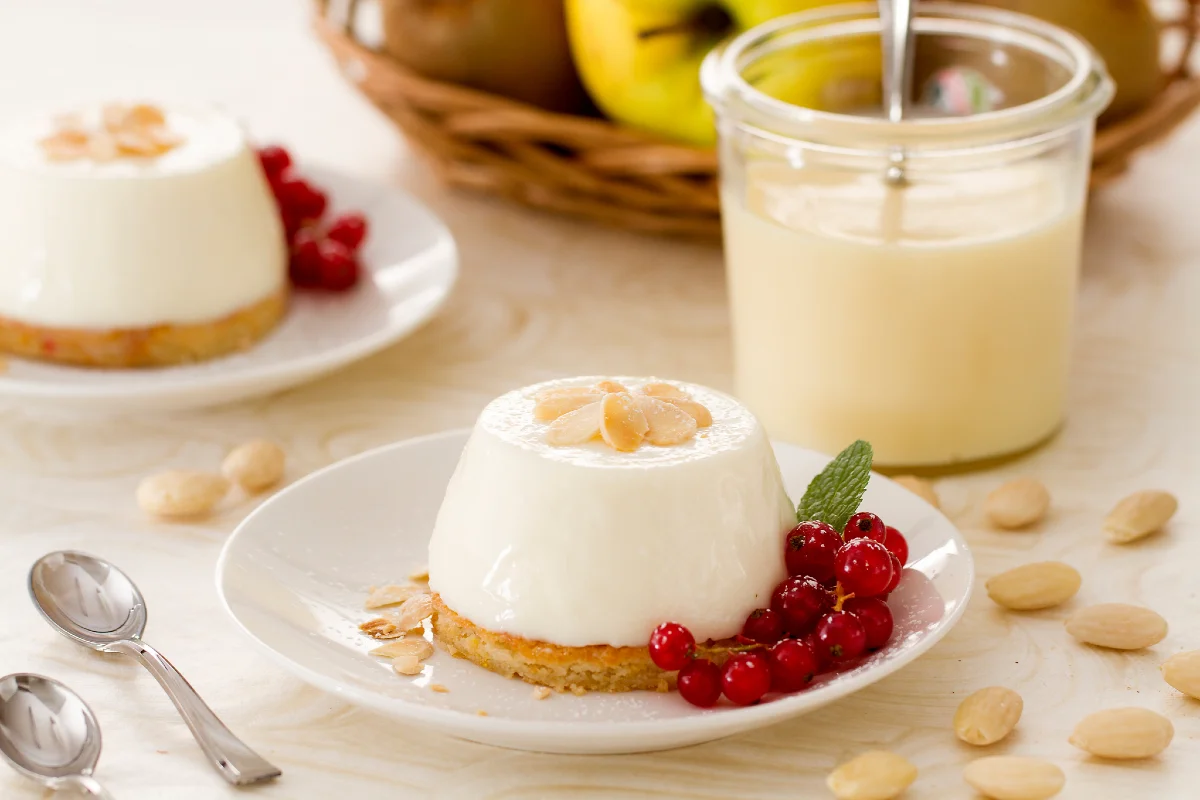
This chilled milk dessert pairs a smooth ricotta and condensed milk semifreddo with a crisp, orange-scented almond biscuit. Make it when you want an elegant individual pudding that can be prepared ahead and served straight from the fridge or slightly frozen.
Ingredients
- 400 gcow’s milk ricotta
- 397 gcondensed milk
- 200 mlfresh liquid cream
- 2gelatine leaves
- 150 galmond flour
- 130 gicing sugar
- 1egg white
- 1 teaspoonhoney
- 1orange zest
- 1 pinchfine salt
Instructions
- 1
Soften the gelatine
Soak the gelatine leaves in cold water for about 10 minutes. Sieve the ricotta into a large bowl to prevent lumps, then add the condensed milk.
- 2
Mix the cream
Whisk the ricotta and condensed milk together. Drain the softened gelatine and dissolve it in the warm cream, stirring until fully dissolved.
- 3
Chill the puddings
Stir the gelatine cream into the ricotta mixture until smooth. Divide it between 6 individual moulds with a capacity of 125 ml each. Chill for 2 hours for a softer texture, or refrigerate or freeze for 4–5 hours for a firmer, frozen consistency.
- 4
Prepare the biscuit
Grate the orange zest and set it aside. Put the chopped almonds in a bowl and add the sieved icing sugar.
- 5
Mix the dough
Add the orange zest and 1 teaspoon of honey, followed by the egg white and a pinch of salt. Stir with a spoon until the mixture is compact and evenly combined.
- 6
Shape the base
Place baking paper on the work surface and spoon the mixture onto it. Spread it into a rectangle about 18 × 25 cm, then transfer it on the paper to a slightly larger rectangular baking tray.
- 7
Bake and cut
Bake in a conventional oven preheated to 180°C for 15 minutes, or in a fan oven at 160°C for about 10 minutes. When golden, remove the biscuit and leave it to cool. Cut out 6 discs using an 8 cm round cutter.
- 8
Assemble and serve
Put a biscuit disc on each dessert plate. Unmould each pudding, briefly dipping its mould in a bowl of hot water if needed to release it, then turn it out onto a biscuit. Decorate to taste with almond flakes and redcurrants before serving.
What is this milk dessert?
This is a chilled Italian-style semifreddo: a soft, set dessert served cold, with ricotta and condensed milk forming its creamy base. Here, it is paired with a thin almond biscuit that adds crunch and a bright note of orange.
The method keeps the two textures distinct: the pudding sets in individual moulds while the biscuit bakes separately. That makes assembly straightforward and gives each portion a crisp base.
Nutrition and macros by portion
The nutrition label shows one serving as written: 609 calories, 0g protein, 61g carbs, 33g fat.
| Portion | Adjustment | kcal | Protein | Carbs | Fat |
|---|---|---|---|---|---|
| Lighter | Smaller pudding portion | 426 kcal | 0g | 43g | 23g |
| This serving | As written | 609 kcal | 0g | 61g | 33g |
| Hungry | Larger biscuit base | 914 kcal | 0g | 92g | 49g |
The condensed milk and icing sugar supply most of the carbohydrates, while the cream, ricotta and almonds contribute much of the fat; the ricotta, cream and egg white also provide protein. Balance the rich dessert with fresh fruit or a lighter main course.
Getting a smooth ricotta mixture
Sieved ricotta: pressing it through a sieve breaks up any curds before the condensed milk is added. This helps the finished pudding feel even rather than grainy.
Gelatine: soften the leaves in cold water, drain them well, then dissolve them in warm cream. The cream should be warm enough to melt the gelatine, but it does not need to boil.
Choosing the set
For a softer pudding, chill the moulds in the fridge for 2 hours, as the method suggests. For a firmer, more frozen texture, leave them for 4–5 hours in the fridge or freezer.
The recipe gives a total time of 35 minutes, but the setting and cooling periods take additional time. Plan ahead so the puddings are ready when you want to serve them.
Making the almond biscuit
Orange zest: grate only the coloured outer peel, avoiding the bitter white pith. It perfumes the almond mixture without making the biscuit damp.
Shaping: spread the compact mixture into an even rectangle about 18 × 25 cm. A level layer bakes more consistently and makes it easier to cut six discs once cool.
Baking and unmoulding cues
Bake the biscuit until its surface is golden: use 180°C for 15 minutes in a conventional oven, or 160°C for about 10 minutes in a fan oven. Let it cool fully before cutting, or the discs may break.
To release a pudding, dip its mould in hot water for just a few moments, then invert it over the biscuit. If it still clings, warm the mould briefly again rather than pulling at the pudding.
Serving the dessert
Set each pudding on a biscuit disc just before serving to preserve the biscuit’s crunch. Almond flakes and redcurrants are suggested as decorations in the method; add them to taste.
The rich, sweet pudding works well as a small dessert after a lighter meal. Serve it on its own or with fresh fruit alongside for a fresher contrast.
Recipe notes & tips
- Sieve the ricotta before mixing to help prevent lumps.
- Drain the gelatine thoroughly before dissolving it in the warm cream.
- Use the fridge for a softer set and the longer setting time for a firmer texture.
- Spread the biscuit mixture evenly so it browns at a similar rate throughout.
- Let the biscuit cool completely before cutting the discs.
- Dip each mould briefly in hot water to make unmoulding easier.
Variations
- Citrus swap: use finely grated lemon zest in place of the orange zest.
- Berry finish: serve with fresh berries instead of the suggested redcurrants.
- Nut topping: scatter extra toasted almond flakes over each pudding.
- Biscuit shapes: cut the cooled biscuit into squares if you do not have an 8 cm cutter.
- Softer set: chill the moulds in the fridge for 2 hours rather than freezing them.
Common mistakes to avoid
- Lumpy ricotta: sieve it before adding the condensed milk.
- Undissolved gelatine: stir it into warm cream until no pieces remain.
- Overbaked biscuit: take it out once golden, using the appropriate oven temperature and time.
- Breaking the biscuit: cool it fully before cutting out the discs.
- Stuck pudding: dip the mould in hot water briefly, then invert it.
- Soggy base: assemble the pudding on its biscuit close to serving time.
How to store
Keep the moulded puddings covered in the fridge and serve within 2 days. Store the cooled biscuit separately in an airtight container so it stays crisp, and assemble just before serving. If the puddings have been frozen, allow them to soften in the fridge before serving.
Frequently asked questions
Can I make the puddings ahead?
Yes. Chill them in their moulds ahead of serving and keep them covered in the fridge. Store the biscuit separately and assemble at the last moment.
How long should the puddings set?
The method suggests 2 hours in the fridge for a softer texture, or 4–5 hours in the fridge or freezer for a firmer, frozen consistency.
What can I use if I do not have individual moulds?
Use small cups or ramekins with a capacity of about 125 ml, if available. The recipe’s method divides the mixture among 6 individual portions.
How do I stop the biscuit from breaking?
Let it cool completely before cutting the discs, and use a round cutter with an 8 cm diameter. Handle the discs gently as you lift them from the baking paper.
Can I skip the hot-water dip when unmoulding?
Try turning the pudding out first. If it sticks, briefly dip the mould in hot water to help release it.
Cook it from the original
This recipe comes from giallozafferano.es. Their page has the author’s own photos, notes and tips — the best place to cook it from.
Open the recipe on giallozafferano.es