
Almond flour cake
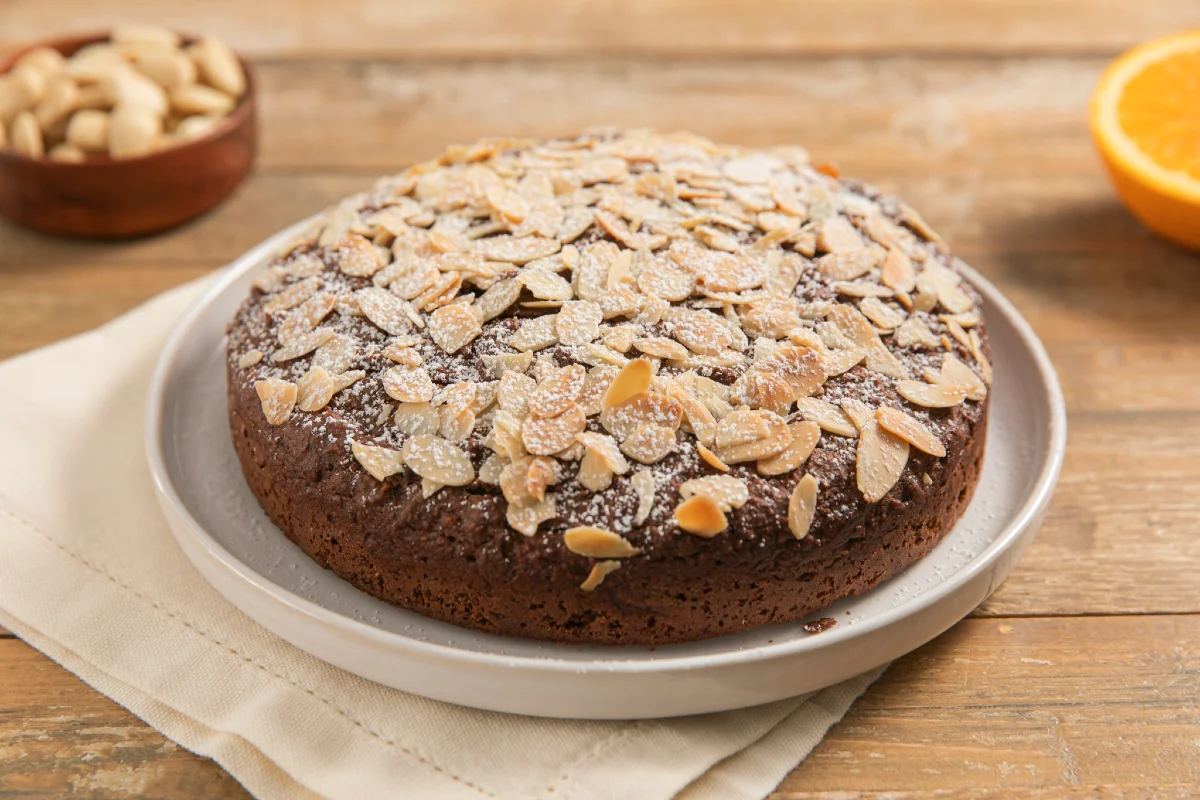
This almond flour cake combines dark chocolate, orange zest and a scattering of flaked almonds in a tender, flourless-style bake. It is straightforward to prepare and makes an inviting dessert or teatime cake.
Ingredients
- 120 galmond flour
- 80 gdark chocolate chips
- 80 gbutter
- 60 gsugar
- 40 gpotato starch
- 3eggs
- 16 ggluten-free baking powder
- 1untreated orange, zest
- 20 gflaked almonds
- as neededicing sugar
Instructions
- 1
Melt the butter
Put the butter in a bowl and melt it in the microwave for a few seconds, or melt it in a heatproof bowl over a pan of simmering water. Place the chocolate chips in a separate bowl; chopped chocolate can be used instead.
- 2
Combine chocolate
Melt the chocolate in the microwave or over a pan of simmering water. Pour in the melted butter and stir until the two are fully combined.
- 3
Whisk eggs
Put the eggs and sugar in a bowl and beat with electric beaters until the mixture is pale and frothy. Pour in the chocolate and butter mixture.
- 4
Add dry ingredients
Add the almond flour, potato starch and sifted baking powder to the bowl.
- 5
Finish the batter
Beat again until the flours are incorporated, then stir in the orange zest. Pour the batter into a 20 cm springform tin lined with baking paper.
- 6
Top and bake
Level the surface with the back of a spoon and scatter the flaked almonds over it. Bake in a conventional oven at 160°C for about 40 minutes.
- 7
Cool and serve
Test the cake with a skewer; it should come out dry. Remove it from the oven and leave it to cool completely before taking it out of the tin. Transfer to a serving plate and dust with icing sugar.
What is almond flour cake?
Almond flour cake is a tender bake made with ground almonds in place of ordinary wheat flour. This version pairs the nutty base with dark chocolate and orange zest, then finishes with flaked almonds and icing sugar.
Almond-based cakes have a long history across European baking, though this recipe is a simple contemporary variation rather than a named regional speciality. Potato starch helps give the batter structure while keeping the ingredient list free from wheat flour.
Nutrition and macros by portion
The nutrition label shows one serving as written: 310 calories, 8g protein, 29g carbs, 20g fat.
| Portion | Adjustment | kcal | Protein | Carbs | Fat |
|---|---|---|---|---|---|
| Lighter | Smaller cake slice | 217 kcal | 6g | 20g | 14g |
| This serving | As written | 310 kcal | 8g | 29g | 20g |
| Hungry | Larger cake slice | 465 kcal | 12g | 44g | 30g |
The almond flour, butter and chocolate provide much of each slice's fat, while the eggs contribute protein. Sugar, potato starch and chocolate supply most of the carbohydrates. Pair a slice with fruit and plain yoghurt for a more balanced plate.
The ingredients that matter
Almond flour: Its natural oils give the crumb richness and a moist, slightly dense texture. Use finely ground almond flour so it blends smoothly into the batter.
Chocolate and butter: Melt them together for an even, glossy mixture that is easy to fold into the eggs. Dark chocolate balances the sweetness and gives the cake its deep flavour.
Potato starch: This light starch supports the almond flour without making the cake heavy. Choose baking powder labelled gluten-free if that is important for your ingredients.
Getting the batter right
Whisked eggs: Beat the eggs and sugar until pale and foamy before adding the chocolate mixture. This step incorporates air that helps lift the relatively rich batter.
Gentle mixing: Once the dry ingredients go in, beat only until they are evenly combined. Stir in the orange zest at the end so its aroma stays noticeable.
How to judge doneness
Oven cue: Bake at 160°C for about 40 minutes in a conventional oven. The top should look set, and a skewer inserted into the cake should come out dry.
Cooling cue: Let the cake cool completely in its tin before releasing the sides. The crumb is delicate while warm and firms up as it cools.
Preparing the tin
Paper lining: Line a 20 cm springform tin with baking paper before adding the batter. A well-lined base makes it easier to lift and serve the cake cleanly.
Even surface: Spread the batter to the edges and smooth the top with the back of a spoon. Distribute the flaked almonds across the surface so each slice gets some crunch.
Serving ideas
Simple finish: Dust the cooled cake with icing sugar just before serving. Adding it at the end keeps the dusting visible rather than letting it disappear into the surface.
On the side: Serve with fresh berries or a spoonful of thick yoghurt for contrast. Coffee or unsweetened tea also suits the chocolate and orange flavours.
Recipe notes & tips
- Let the melted chocolate and butter cool briefly before mixing them into the eggs.
- Sift the baking powder to prevent small lumps in the batter.
- Use a 20 cm springform tin so the cake bakes to the intended thickness.
- Check the cake with a skewer at around 40 minutes, as ovens can vary.
- Wait until the cake is completely cool before releasing the springform sides.
- Dust with icing sugar just before serving for a neat finish.
Variations
- Citrus swap: Use finely grated lemon zest instead of orange for a sharper aroma.
- Chocolate pieces: Replace the chocolate chips with the same amount of chopped dark chocolate.
- Berry side: Serve with fresh raspberries or strawberries for a fruity contrast.
- Toasted topping: Lightly toast the flaked almonds before scattering them over the cake.
- Dairy-free option: Use a suitable plant-based butter alternative and check that the chocolate is dairy-free.
Common mistakes to avoid
- Hot chocolate mixture: Adding it while very hot can affect the eggs; let it cool briefly first.
- Under-whisked eggs: A dense, flat batter can result; beat the eggs and sugar until pale and frothy.
- Overmixing: Excessive beating after adding the flours can make the crumb less tender; stop once combined.
- Opening the oven early: The cake may sink before it sets; wait until it is close to the end of its baking time to check.
- Removing it while warm: The cake can break apart; cool it completely in the tin before unmoulding.
How to store
Once completely cool, keep the cake covered in an airtight container at room temperature for up to 2 days, or refrigerate it for up to 5 days. Bring chilled slices to room temperature or warm them briefly in a low oven before serving.
Frequently asked questions
Is this cake gluten-free?
The listed ingredients contain no wheat flour, but check the labels on the baking powder, chocolate and other packaged ingredients if gluten avoidance is essential.
Can I use chopped chocolate instead of chips?
Yes. The recipe allows the same quantity, 80 g, of chopped dark chocolate.
How do I know when the cake is baked?
After about 40 minutes at 160°C, insert a skewer into the centre. It should come out dry.
Why should the cake cool before I remove it from the tin?
The almond-rich crumb is fragile when hot. Cooling completely helps it firm up so it is less likely to break.
Can I make it ahead?
Yes. Bake and cool it fully, then store it covered; add the icing sugar shortly before serving.
What can I serve with it?
Fresh berries, plain yoghurt, coffee or tea all work well alongside the chocolate and orange.
Cook it from the original
This recipe comes from giallozafferano.es. Their page has the author’s own photos, notes and tips — the best place to cook it from.
Open the recipe on giallozafferano.es