
Bean and mussel soup
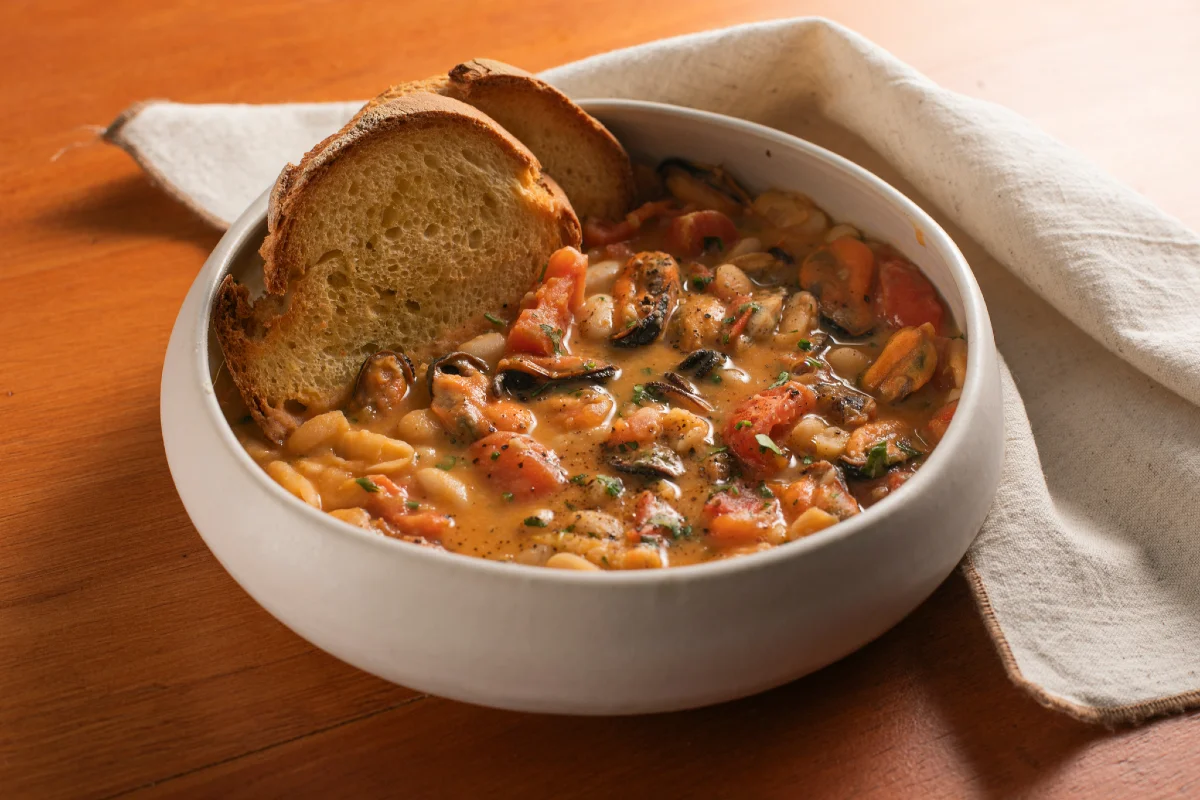
This hearty one-pot soup pairs tender cannellini beans with mussels, tomatoes and a little chilli, finished with parsley and crisp bread. Precooked beans make it a practical choice when you want a warming meal with both land-and-sea flavours.
Ingredients
- 1 kgMussels, for cleaning
- 400 g drainedPrecooked cannellini beans
- 300 gSan Marzano tomatoes
- 2 clovesGarlic
- 1Fresh chilli
- to tasteParsley
- 40 gExtra-virgin olive oil
- to tasteBlack pepper
- 60 gBread
- to tasteExtra-virgin olive oil
- to tasteFine salt
Instructions
- 1
Clean the mussels
Pull away the beards and rinse the mussels under running water, scrubbing the shells with a steel scourer. Heat half the measured oil in a saucepan with the parsley stalks and a peeled garlic clove. Once the pan is hot, add the mussels.
- 2
Open and shell
Cover the pan straight away and cook for a few minutes, until the mussels open. Remove the mussels from their shells and strain the cooking liquid; set both aside. Cut the tomatoes into quarters.
- 3
Cook the beans
Heat the remaining measured oil in a pot with the halved chilli and garlic. Add the beans, season with salt and cook gently for about 6–7 minutes so they take on the flavour. Remove half the beans and put them in a blender jug.
- 4
Blend the soup
Add the quartered tomatoes to the pot and cook gently for 2–3 minutes. Meanwhile, pour about 500 g of the mussel cooking liquid into the blender jug and blend the beans until smooth.
- 5
Simmer and prepare
Stir the bean cream into the pot and cook for about 20 minutes, allowing the liquid to reduce a little. Meanwhile, slice the bread and season it with oil and salt.
- 6
Toast the bread
Toast the bread slices in an oven at 200°C for 6–7 minutes. When the soup has finished cooking, remove the garlic and chilli, then adjust the salt.
- 7
Finish and serve
Turn off the heat and scatter over chopped parsley. Add the shelled mussels and mix well. Serve the soup with the toasted bread.
What is bean and mussel soup?
This is a Mediterranean-style pairing of creamy white beans and briny shellfish, brought together in a tomato-based broth. The combination draws on the familiar coastal idea of matching seafood with pulses, without needing a long-simmered stock.
Here, blending some of the cannellini beans gives the soup body while the rest stay whole. Mussel cooking liquid adds savoury depth, and toasted bread makes the bowl more substantial.
Nutrition and macros by portion
The nutrition label shows one serving as written: 315 calories, 22g protein, 36g carbs, 12g fat.
| Portion | Adjustment | kcal | Protein | Carbs | Fat |
|---|---|---|---|---|---|
| Lighter | Less oil, skip toast | 221 kcal | 15g | 25g | 8g |
| This serving | As written | 315 kcal | 22g | 36g | 12g |
| Hungry | Add more cannellini beans | 473 kcal | 33g | 54g | 18g |
The cannellini beans and bread provide most of the carbohydrates, while olive oil supplies much of the fat. Mussels contribute most of the protein, with smaller amounts from the beans. For a balanced plate, serve a bowl with extra vegetables on the side and keep the bread portion to the recipe amount.
The mussels and their cooking liquid
Clean shells: remove the beards and scrub away any grit before cooking. Discard any mussels that are cracked or remain open when tapped before cooking.
Strain the liquor: once the mussels have opened, strain their cooking liquid to catch any grit. The recipe uses about 500 g of it for blending, so add it carefully and keep the rest to adjust the soup if needed.
Why blend some of the beans?
Half and half: blending part of the beans with mussel liquor makes a smooth base without adding cream. Keeping the other beans whole gives the soup a more varied texture.
Gentle heat: cook the beans with the garlic and chilli over a low heat for 6–7 minutes so they take on the aromatics without catching. The chilli can be removed at the end for a milder finish.
Getting the consistency right
Tomato stage: quartered tomatoes cook briefly before the bean cream goes in, leaving them present in the finished soup rather than fully disappearing. Stir the pot now and then as it simmers.
Reduction cue: after about 20 minutes, the liquid should have reduced a little and the blended beans should give it a lightly thickened feel. If it seems too thick, loosen it with some reserved mussel liquor.
When to add the mussels
Off the heat: stir the shelled mussels in after turning off the hob. This warms them through while helping them stay tender.
Taste at the end: mussel liquor can be naturally salty, so adjust the fine salt only after the broth has reduced. Add black pepper to taste at the table or just before serving.
Crisp bread for serving
Even slices: cut the 60 g of bread into slices of similar thickness so they toast at the same rate. A light coating of oil and salt helps them brown and gives them flavour.
Serve the toast alongside the soup, or add it at the last moment if you like some crunch in the bowl. Keep it separate until serving if you want it to remain crisp.
Recipe notes & tips
- Use the mussel cooking liquid only after straining it well.
- Keep the mussels covered while they open so they cook in their own steam.
- Blend the beans with the mussel liquor until there are no large lumps.
- Stir the soup occasionally during its 20-minute simmer to prevent sticking.
- Toast the bread near the end so it reaches the table crisp.
- Add the mussels after switching off the heat to avoid overcooking them.
Variations
- Milder chilli: leave the chilli whole while cooking and remove it before serving.
- Extra herbs: add more chopped parsley at the table for a fresher finish.
- Thicker soup: blend a little more of the cooked beans into the base.
- More tomato: use a little extra tomato and simmer until it softens into the broth.
- Garlic toast: rub the toasted bread with a cut garlic clove before serving.
Common mistakes to avoid
- Skipping the scrub: grit on the shells can end up in the cooking liquid, so clean and rinse the mussels thoroughly.
- Using unstrained liquor: sediment can make the soup gritty; strain the mussel liquid before adding it.
- Boiling hard: a vigorous simmer can make the soup reduce too quickly; keep the heat gentle.
- Overcooking the mussels: prolonged cooking can make them tough, so stir them in only after turning off the heat.
- Salting too early: the broth concentrates as it reduces, so taste and adjust the salt at the end.
- Leaving toast in the soup: it softens quickly, so serve it separately or add it just before eating.
How to store
Refrigerate leftover soup promptly in a covered container and use within 1–2 days. Reheat gently until piping hot, avoiding a prolonged boil; store the toasted bread separately and refresh it in the oven.
Frequently asked questions
Can I use frozen mussels?
Yes, use cleaned frozen mussels and follow the packet instructions. If they do not provide cooking liquor, use a suitable seafood stock for the blending liquid.
Can I use dried cannellini beans?
Yes, but soak and cook them fully before starting the recipe. Measure out 400 g after draining, as the listed amount is for precooked beans by drained weight.
What if the mussels do not open?
Discard mussels that remain closed after cooking; do not force them open and eat them. Check that the pan was covered and hot enough, and allow a little extra time for the others to open.
Can I make the soup ahead?
You can prepare the bean and tomato base ahead, then reheat it gently. Add the cooked mussels only at the end so they warm through without becoming tough.
What can I use instead of San Marzano tomatoes?
Use another ripe, flavourful tomato variety in the same amount. If using canned tomatoes, drain them first if they are especially watery.
How can I make the soup less spicy?
Remove the seeds from the chilli before cooking, or use only half. Take it out before serving, as the recipe directs.
Cook it from the original
This recipe comes from giallozafferano.es. Their page has the author’s own photos, notes and tips — the best place to cook it from.
Open the recipe on giallozafferano.es