
Neapolitan paccheri
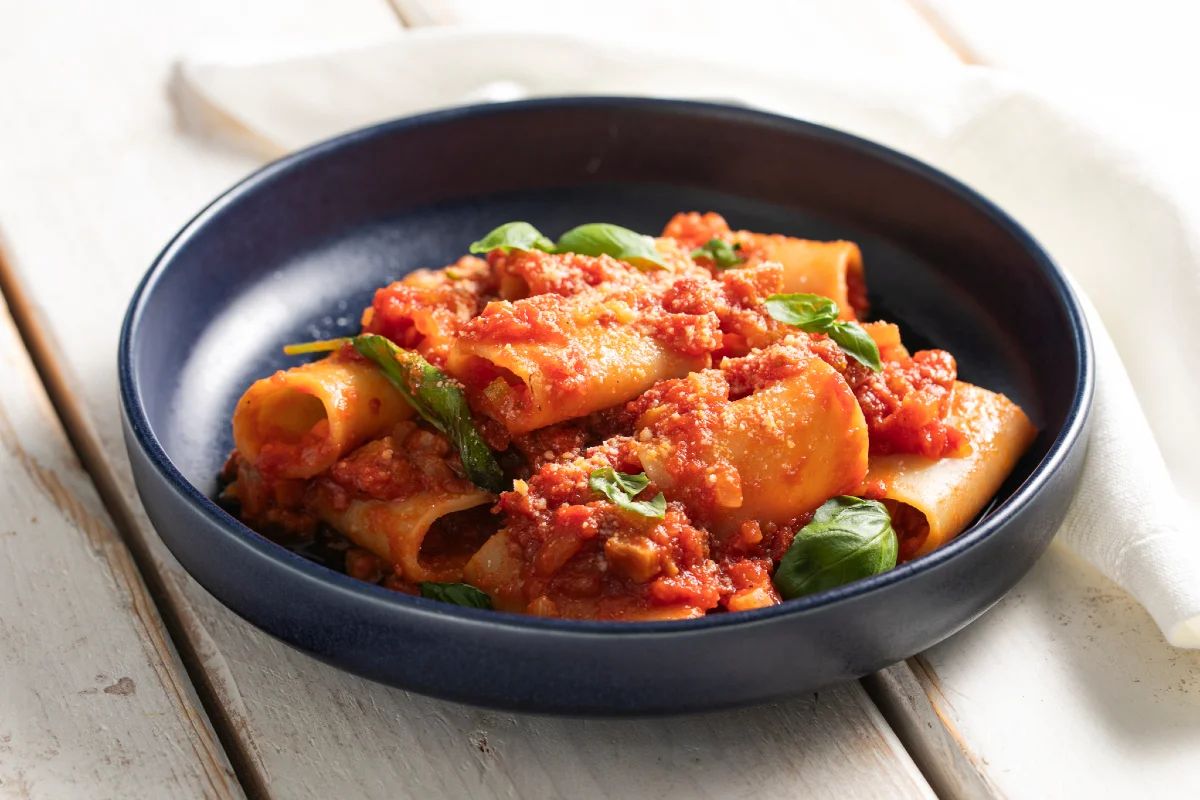
Neapolitan paccheri pairs large pasta tubes with a slow-cooked tomato sauce enriched with guanciale, pecorino and basil. It is a hearty choice for a leisurely Sunday lunch, with a sauce that clings well to the pasta.
Ingredients
- 320 gpaccheri
- 350 gguanciale
- 800 gtomato pulp
- 100 gonion
- 80 gcarrots
- 70 gcelery
- 30 gtomato purée
- 30 gPecorino Romano
- to tastebasil
- to tastefine salt
Instructions
- 1
Prepare guanciale
Remove the rind from the guanciale, slice it, then cut it into 2 cm cubes. Put the pieces in a saucepan and turn on the heat.
- 2
Render the guanciale
Cook over a medium-low heat for 15 minutes, stirring occasionally so the guanciale browns evenly. Meanwhile, finely chop the onion.
- 3
Chop the vegetables
Finely chop the carrots and celery too. After the guanciale has cooked for 15 minutes and is browned, add the chopped vegetables and fry for 5 minutes.
- 4
Make the sauce
Once the vegetables have browned, add the tomato purée and tomato pulp. Stir well, scraping up any browned bits from the bottom of the pan if needed, then cook the sauce for 20 minutes, stirring occasionally.
- 5
Combine pasta sauce
Once the sauce is thick, drain the paccheri al dente and add them to the sauce. Season with almost all of the grated pecorino.
- 6
Finish the pasta
Add fresh basil leaves and gently toss everything together so the paccheri stay intact. Turn off the heat and leave the pasta to rest for 1 minute, adjusting the salt if needed.
- 7
Serve with pecorino
Divide between plates and finish with another sprinkling of Pecorino Romano and a few fresh basil leaves.
What is Neapolitan paccheri?
Paccheri are broad, tube-shaped pasta associated with southern Italy, and their generous size makes them a good match for a substantial tomato sauce. This version builds flavour by rendering guanciale first, then cooking the vegetables and tomato in the same pan.
The recipe takes its name from Naples and combines a slow-simmered sauce with Pecorino Romano and basil. The finished pasta is rich, aromatic and well suited to a shared Sunday meal.
Nutrition and macros by portion
The nutrition label shows one serving as written: 926 calories, 24g protein, 79g carbs, 56g fat.
| Portion | Adjustment | kcal | Protein | Carbs | Fat |
|---|---|---|---|---|---|
| Lighter | Smaller pasta portion | 648 kcal | 17g | 55g | 39g |
| This serving | As written | 926 kcal | 24g | 79g | 56g |
| Hungry | Larger pasta portion | 1389 kcal | 36g | 119g | 84g |
Most of the carbohydrates come from the paccheri, while guanciale and pecorino contribute much of the fat and protein. Tomato and vegetables add a smaller share of the carbohydrates and fibre; serve with a green salad or vegetables to add freshness and balance the plate.
Build flavour in the pan
Guanciale first: cutting it into 2 cm cubes gives the pieces room to render and brown over the 15-minute cooking time. Keep the heat medium-low and stir occasionally to encourage even browning without scorching.
Vegetable base: finely chopped onion, carrot and celery cook in the fat released by the guanciale. Give them the full 5 minutes before adding the tomato so they have time to soften and take on flavour.
Let the sauce thicken
Tomato purée: stir it in with the tomato pulp so it disperses through the sauce rather than sitting in one concentrated patch. Scrape the bottom of the pan as you stir if browned bits have collected there.
Simmer: cook the sauce for 20 minutes, stirring from time to time. It is ready for the pasta when it looks noticeably thick rather than watery.
Keep the paccheri intact
Pasta doneness: drain the paccheri al dente before adding them to the sauce, as they will be tossed with the hot mixture. The method does not specify a separate pasta-cooking time, so follow the packet guidance and check for a firm centre.
Gentle finish: fold the pasta through the sauce carefully instead of stirring vigorously. This helps keep the large tubes whole while coating them evenly.
Balance the cheese and basil
Pecorino Romano: add most of it after combining the pasta and sauce, then keep the remainder for the plates. Its salty, savoury flavour complements the tomato and guanciale.
Basil: use fresh leaves in the pan and a few more to finish each serving. Adding them near the end preserves their fresh aroma.
Plan the cooking time
The sauce takes 40 minutes of stated cooking time: 15 minutes for the guanciale, 5 minutes for the vegetables and 20 minutes for the tomato. The pasta is left to rest for 1 minute after mixing.
Chop the vegetables while the guanciale cooks to make good use of that time. Cook and drain the paccheri so they are ready to add when the sauce has thickened.
What to serve alongside
Serve the paccheri hot, straight from the pan, while the sauce coats the pasta well. A simple green salad or lightly dressed vegetables make a fresh contrast to the rich sauce.
The dish already has a substantial combination of pasta, guanciale and cheese, so a modest side is usually enough. Put any extra pecorino on the table for those who would like more.
Recipe notes & tips
- Cut the guanciale into even 2 cm cubes so it browns at a similar rate.
- Keep the heat medium-low while rendering the guanciale to avoid scorching it.
- Stir the tomato sauce occasionally during its 20-minute simmer.
- Drain the paccheri when they are al dente, as they will be tossed in the hot sauce.
- Fold the pasta through the sauce gently to help prevent the tubes from breaking.
- Reserve some pecorino and basil for the final garnish.
Variations
- More basil: add a few extra fresh leaves at the table for a brighter finish.
- Peppery finish: grind black pepper over each serving just before eating.
- Extra pecorino: offer additional grated Pecorino Romano for a saltier, more savoury finish.
- Smoother sauce: crush the tomato pulp with a spoon as it simmers for a less chunky texture.
Common mistakes to avoid
- High heat for guanciale: it can brown too quickly; keep the pan at medium-low and stir occasionally.
- Uneven vegetable pieces: larger chunks may stay firm; chop the onion, carrot and celery finely.
- Rushing the tomato sauce: it may remain thin; give it the full 20 minutes and stir now and then.
- Overcooking the pasta: it can turn soft when mixed with the hot sauce; drain it al dente.
- Rough tossing: paccheri can break; fold them through the sauce gently.
How to store
Refrigerate leftovers in an airtight container for up to 3 days. Reheat gently in a pan, adding a small splash of water if the sauce has thickened; the pasta may soften further as it warms.
Frequently asked questions
What does al dente mean for paccheri?
The pasta should be cooked through but still have a slight firmness at the centre. Check it near the end of the packet's suggested cooking time.
Can I prepare the sauce ahead?
Yes. Make the sauce, let it cool and refrigerate it, then warm it gently before adding freshly cooked paccheri.
How do I know when the sauce is ready?
After the 20-minute simmer, it should look thick rather than watery and coat a spoon.
Can I use another pasta shape?
A large tube-shaped pasta is the closest fit because it holds the thick sauce well. Follow the cooking instructions for the shape you choose.
When should I add the basil?
Add fresh leaves after the pasta has been combined with the sauce, then use a few more as a garnish just before serving.
Cook it from the original
This recipe comes from giallozafferano.es. Their page has the author’s own photos, notes and tips — the best place to cook it from.
Open the recipe on giallozafferano.es