
Pasta with chickpea cream and peppers
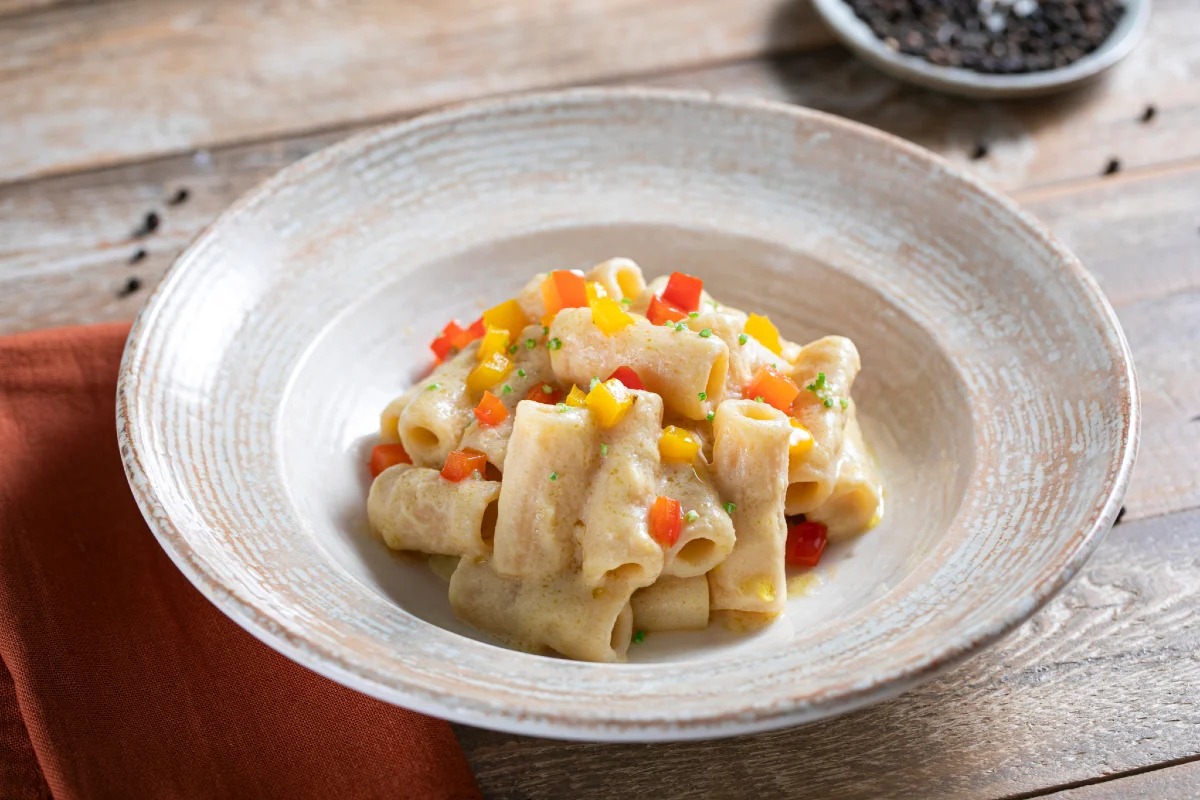
Rigatoni is coated in a smooth chickpea sauce and tossed with sweet, lightly crunchy peppers, lemon and chives. It makes a comforting weeknight dinner with a bright finish and plenty of texture.
Ingredients
- 320 grigatoni
- 150 gred peppers
- 150 gyellow peppers
- 20 gextra-virgin olive oil
- to tastefine salt
- 1lemon, zest
- 1lemon, juice
- to tastechives
- 300 gcooked chickpeas, drained
- 20 gextra-virgin olive oil
- 2 clovesgarlic
- ½ gblack pepper
- 150 gwater
Instructions
- 1
Start the chickpeas
Warm a little of the olive oil in a frying pan and brown the two peeled garlic cloves. Add the well-drained chickpeas, season with salt and pepper, then pour in just enough water to barely cover them, taking care not to add too much.
- 2
Blend the cream
Cook over a medium heat for about 10 minutes, then remove the garlic cloves. Transfer the chickpeas to a jug and blend with a hand blender until smooth and even. Set aside.
- 3
Prepare the peppers
Meanwhile, remove the stalks and inner membranes from the peppers and cut both colours into pieces about 1 cm across. Warm a little olive oil in the same pan and add the peppers.
- 4
Cook the peppers
Season the peppers with salt and cook over a medium heat for about 10 minutes, stirring from time to time. Bring a large pan of salted water to the boil and cook the rigatoni.
- 5
Combine pasta and sauce
When the rigatoni is al dente, drain it straight into the pan with the peppers. Add the chickpea cream, followed by the lemon juice.
- 6
Finish and serve
Add the lemon zest and, if needed, a few spoonfuls of pasta cooking water to loosen the sauce. Toss the rigatoni until the sauce coats it evenly, then divide between plates and finish with chopped fresh chives to taste. Serve straight away.
What is pasta with chickpea cream?
This is a pasta dish built around a smooth purée of chickpeas, rather than a dairy-based cream sauce. Chickpeas are a familiar staple in Italian cooking, and here they turn into a savoury, filling coating for rigatoni.
The version works because the peppers bring sweetness and a little bite, while lemon keeps the chickpea sauce tasting fresh. The ridged pasta also helps catch the thick sauce.
Nutrition and macros by portion
The nutrition label shows one serving as written: 520 calories, 18g protein, 83g carbs, 13g fat.
| Portion | Adjustment | kcal | Protein | Carbs | Fat |
|---|---|---|---|---|---|
| Lighter | Use less olive oil | 364 kcal | 13g | 58g | 9g |
| This serving | As written | 520 kcal | 18g | 83g | 13g |
| Hungry | Serve a larger portion | 780 kcal | 27g | 125g | 20g |
Most of the carbohydrates come from the rigatoni and chickpeas, while the olive oil supplies most of the fat. The chickpeas also contribute protein, with a smaller amount from the pasta. Pair a serving with a green salad or extra non-starchy vegetables to add freshness and balance the plate.
Building the chickpea cream
Garlic first: browning the peeled cloves in oil gives the chickpeas a mellow savoury base. Remove them before blending so the garlic flavours the cream without becoming a strong, lingering piece in the sauce.
Blend smoothly: the chickpeas cook briefly with only enough water to cover them. Blend until no grainy pieces remain, adding pasta water later if the purée needs loosening.
Keeping the peppers lively
Even pieces: cut the red and yellow peppers into roughly 1 cm dice so they cook at a similar pace and sit neatly among the rigatoni.
Gentle cooking: ten minutes over a medium heat softens the peppers while letting them keep some texture. Stir now and then, rather than cooking them until completely collapsed.
Getting the sauce to cling
Pasta water: drain the rigatoni directly into the pepper pan and keep some cooking water within reach. A few spoonfuls help the chickpea cream loosen and cling to the pasta instead of sitting in a dense layer.
Final toss: combine the pasta and sauce over the heat until the rigatoni is coated evenly. Add the lemon juice and zest as directed for a bright, fragrant finish.
Choosing and cooking the pasta
Rigatoni is a sturdy choice for the thick chickpea sauce, and its ridges help hold the coating. Other short, ridged pasta shapes can work too, though the cooking time may differ.
Cook the pasta in plenty of salted boiling water and check it near the time stated on the packet. It should be al dente before it goes into the pan, as it will be tossed briefly with the sauce.
Serving the dish
Serve the pasta as soon as it is coated, while the sauce is smooth and warm. Chopped chives add a fresh, onion-like note; use as much as you like.
A crisp green salad or simply dressed vegetables make a fresh side alongside the pasta. Serve any extra lemon at the table if you prefer a sharper finish.
Recipe notes & tips
- Drain the chickpeas thoroughly so the cream does not become watery.
- Keep the garlic cloves whole so they are easy to remove before blending.
- Cut the peppers into similar-sized pieces for more even cooking.
- Reserve some pasta cooking water before draining the rigatoni.
- Add the cooking water a spoonful at a time so the sauce does not become too thin.
- Chop the chives just before serving to keep their flavour fresh.
Variations
- Add chilli: stir in a pinch of chilli flakes with the peppers for gentle heat.
- Use another pasta shape: choose a short, ridged shape that can hold the chickpea cream.
- Add herbs: finish with chopped parsley in place of, or alongside, the chives.
- Deepen the garlic flavour: blend one of the cooked garlic cloves into the chickpea cream.
- Make it more lemony: add a little extra lemon zest at the table.
Common mistakes to avoid
- Adding too much water to the chickpeas: use only enough to barely cover them so the purée stays thick.
- Leaving the garlic in the blender: remove the cloves after cooking unless you deliberately want a stronger garlic flavour.
- Cutting uneven pepper pieces: aim for pieces around 1 cm so they cook at a similar rate.
- Overcooking the peppers: stop after about 10 minutes when they are softened but still have some bite.
- Draining away all the pasta water: save some before draining so you can adjust the sauce.
- Adding too much pasta water at once: stir in a few spoonfuls at a time and check the coating.
How to store
Refrigerate leftovers in an airtight container for up to 3 days. Reheat gently in a pan with a splash of water, stirring until the sauce loosens; the pasta is best freshly made, as it will continue to absorb the sauce while stored.
Frequently asked questions
Can I use dried chickpeas?
Yes, cook them fully before using them and measure out 300 g, drained. The recipe's short simmer is for already-cooked chickpeas.
Can I make the chickpea cream ahead?
You can blend it ahead and refrigerate it in a covered container. Warm it gently before combining, adding a little water if it has thickened.
What can I use instead of rigatoni?
Use another short pasta shape, ideally one with ridges or grooves that catch the sauce. Follow the cooking time on its packet.
How do I keep the peppers crunchy?
Cut them into roughly 1 cm pieces and cook over a medium heat for about 10 minutes, stirring occasionally. Avoid extending the cooking time if you want them to retain some bite.
How do I stop the chickpea sauce becoming too thick?
Add reserved pasta cooking water a few spoonfuls at a time while tossing the pasta. Stop once the sauce coats the rigatoni smoothly.
Can I leave out the chives?
Yes. They are a finishing touch, so the dish will still work without them; chopped parsley is another fresh option.
Cook it from the original
This recipe comes from giallozafferano.es. Their page has the author’s own photos, notes and tips — the best place to cook it from.
Open the recipe on giallozafferano.es