
Bread omelette
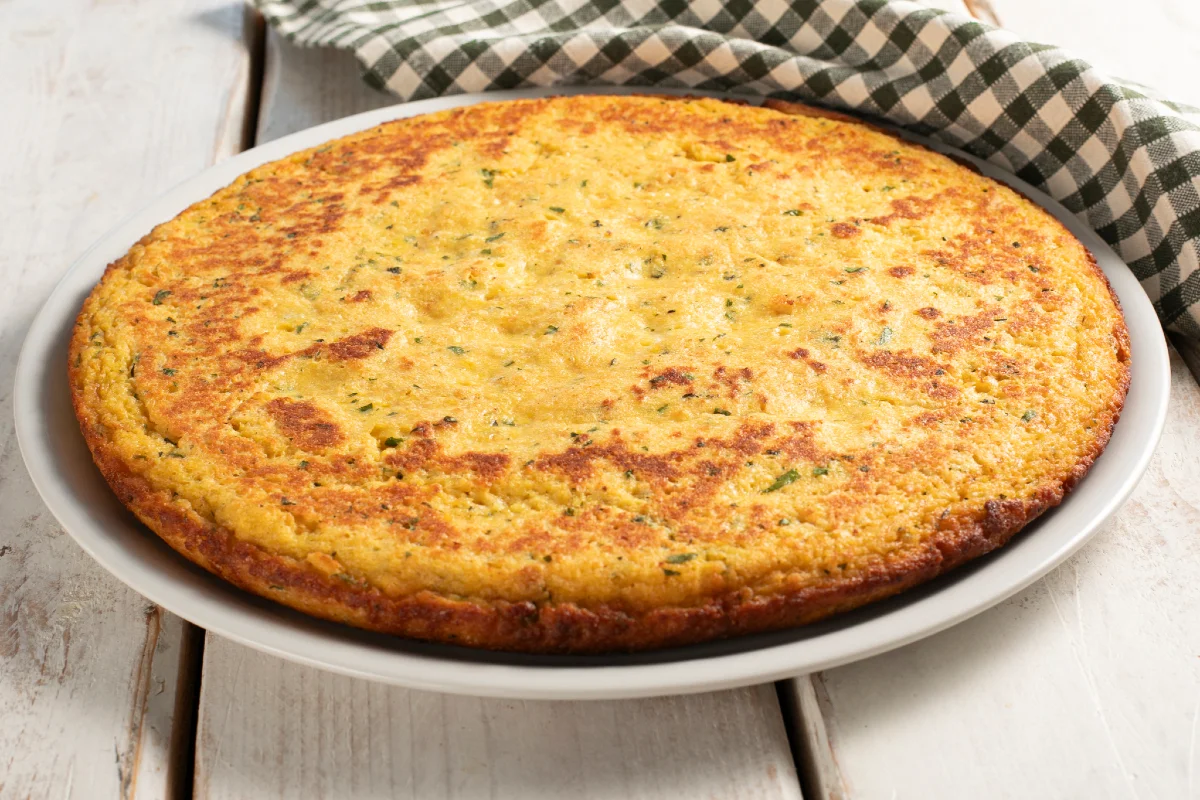
This bread omelette turns stale bread into a substantial, savoury dish with Parmesan, herbs and eggs. It is a practical way to use up leftovers and works as a main course or a sliceable dish to share.
Ingredients
- 180 gStale bread
- 160 gParmigiano Reggiano DOP
- 1 cloveGarlic
- 1 bunchMint
- 1 bunchParsley
- 1 teaspoonFine salt
- 1 pinchBlack pepper
- 200 gLightly sparkling white wine
- 100 gWhole milk
- 8Eggs
- As neededExtra-virgin olive oil
Instructions
- 1
Prepare the bread
Cut the stale bread into pieces, then grate it into crumbs. Chop the mint leaves and parsley.
- 2
Chop the garlic
Finely chop the garlic. Put the breadcrumbs in a bowl and add the grated Parmesan, followed by the chopped herbs.
- 3
Season the mixture
Add the salt, black pepper and chopped garlic. Mix everything together well with a spoon.
- 4
Add wet ingredients
Pour in the sparkling wine, then the milk, and finally the beaten eggs.
- 5
Fill the pan
Mix again. Heat a wide frying pan with enough olive oil to cover the bottom, add the mixture and smooth the surface with a spoon.
- 6
Cook the first side
Cover the pan and cook over medium heat for 10–15 minutes, or until the base is golden and the top is set enough to turn. Place a flat lid or pizza plate over the pan.
- 7
Turn and finish
With a decisive movement, turn the omelette onto the plate or lid. Slide it back into the pan and cook uncovered for about 5 minutes more. When cooked through, cut into portions and serve.
What is a bread omelette?
A bread omelette is a homely, filling dish that combines stale bread with eggs and other ingredients, rather than relying on eggs alone. This version pairs the bread with Parmesan, garlic, mint and parsley for a savoury, aromatic result.
It is presented as a family-style, fridge-clear-out recipe, though its specific regional origin is not given. The bread absorbs the wine, milk and beaten eggs, helping the mixture hold together as it cooks.
Nutrition and macros by portion
The nutrition label shows one serving as written: 370 calories, 20g protein, 24g carbs, 20g fat.
| Portion | Adjustment | kcal | Protein | Carbs | Fat |
|---|---|---|---|---|---|
| Lighter | Use less olive oil | 259 kcal | 14g | 17g | 14g |
| This serving | As written | 370 kcal | 20g | 24g | 20g |
| Hungry | Serve a larger slice | 555 kcal | 30g | 36g | 30g |
The bread provides most of the carbohydrates, while the eggs and Parmesan contribute protein; the cheese and olive oil are the main sources of fat. Pair a portion with salad or other vegetables for a more balanced plate. Nutrition is estimated because the amount of oil used is not specified.
Choose the right bread
Stale bread: use bread that is dry enough to grate into crumbs. If it is still soft, let it dry out before grating so it does not turn into a paste.
Crumb size: grate the bread as directed, aiming for fairly even crumbs. This helps the liquid distribute throughout the mixture.
Build the flavour
Parmesan: finely grated cheese mixes evenly through the crumbs and adds a salty, savoury flavour. Taste the mixture before adding extra salt, as the cheese is already seasoned.
Herbs and garlic: chop the mint, parsley and garlic finely so they are spread through each portion. Keep to the stated quantities for the intended balance of flavours.
Get the mixture ready
Liquids first: stir in the sparkling white wine and milk before adding the beaten eggs. This gives the dry ingredients a chance to take up some liquid.
Even mixing: fold and stir until the breadcrumbs are moistened and the ingredients are distributed throughout. Smooth the top once the mixture is in the pan so it cooks evenly.
Cook gently, then turn
First side: cook covered over medium heat for 10–15 minutes. Look for a golden base and a surface that has set enough to hold together when turned.
Turning: use a flat lid or a plate wider than the omelette, and turn it decisively. Slide the omelette back into the pan and cook uncovered for about 5 minutes more.
Serve it as a meal
Rest briefly after cooking so the omelette is easier to portion. Serve it warm, cut into slices or wedges.
A crisp green salad or simply dressed tomatoes make a fresh contrast to the rich, cheesy omelette. The recipe is substantial enough to serve as the centre of a meal.
Recipe notes & tips
- Grate the stale bread into crumbs before measuring out the other ingredients.
- Chop the herbs and garlic finely so they disperse through the mixture.
- Use a wide frying pan so the omelette cooks in a reasonably even layer.
- Keep the heat at medium and check the base before attempting to turn it.
- Choose a flat lid or plate that fully covers the pan for a steadier turn.
Variations
- Add spring onions: finely slice them and mix them in with the herbs.
- Use another hard cheese: replace the Parmesan with a similarly savoury grated cheese.
- Change the herbs: use a smaller amount of another fresh herb in place of some of the mint or parsley.
- Add cooked vegetables: fold in well-drained leftovers before adding the eggs.
- Make it pepperier: add a little more black pepper to the breadcrumb mixture.
Common mistakes to avoid
- Using soft bread: it can clump rather than form crumbs; use stale bread as directed.
- Uneven crumbs: large pieces may stay dry; grate the bread into fairly even crumbs.
- Under-mixing: dry patches may remain; stir thoroughly after adding each ingredient.
- Cooking too hot: the base can brown before the top sets; keep the heat at medium.
- Turning too early: a loose surface may break apart; wait until it is sufficiently set.
- Using too little oil: the omelette may stick; use enough to cover the bottom of the pan.
How to store
Cool leftovers promptly, cover and refrigerate for up to 3 days. Reheat in a frying pan over low heat or in the microwave until hot throughout.
Frequently asked questions
Can I use fresh bread?
The recipe calls for stale bread because it is easier to grate into crumbs. Fresh bread may be too soft; dry it out first if that is what you have.
What can I use instead of sparkling white wine?
The recipe specifies lightly sparkling white wine. A still white wine can be used, though the result may differ slightly; no exact substitute is given in the method.
How do I know when the first side is ready?
After 10–15 minutes covered over medium heat, the base should be golden and the surface set enough to turn. If the top is still very loose, give it more time.
How do I turn the omelette without breaking it?
Place a flat lid or a plate over the pan, hold it firmly, and turn the pan decisively. Slide the omelette back into the pan to cook the other side.
Can I make the mixture ahead?
The method does not specify advance preparation. For the best texture, mix the ingredients and cook the omelette as directed.
Can I freeze leftover slices?
Freezing is not specified in the recipe. Refrigerating leftovers and reheating them before serving is the straightforward option.
Cook it from the original
This recipe comes from giallozafferano.es. Their page has the author’s own photos, notes and tips — the best place to cook it from.
Open the recipe on giallozafferano.es