
Pasta with Parmesan cream and speck
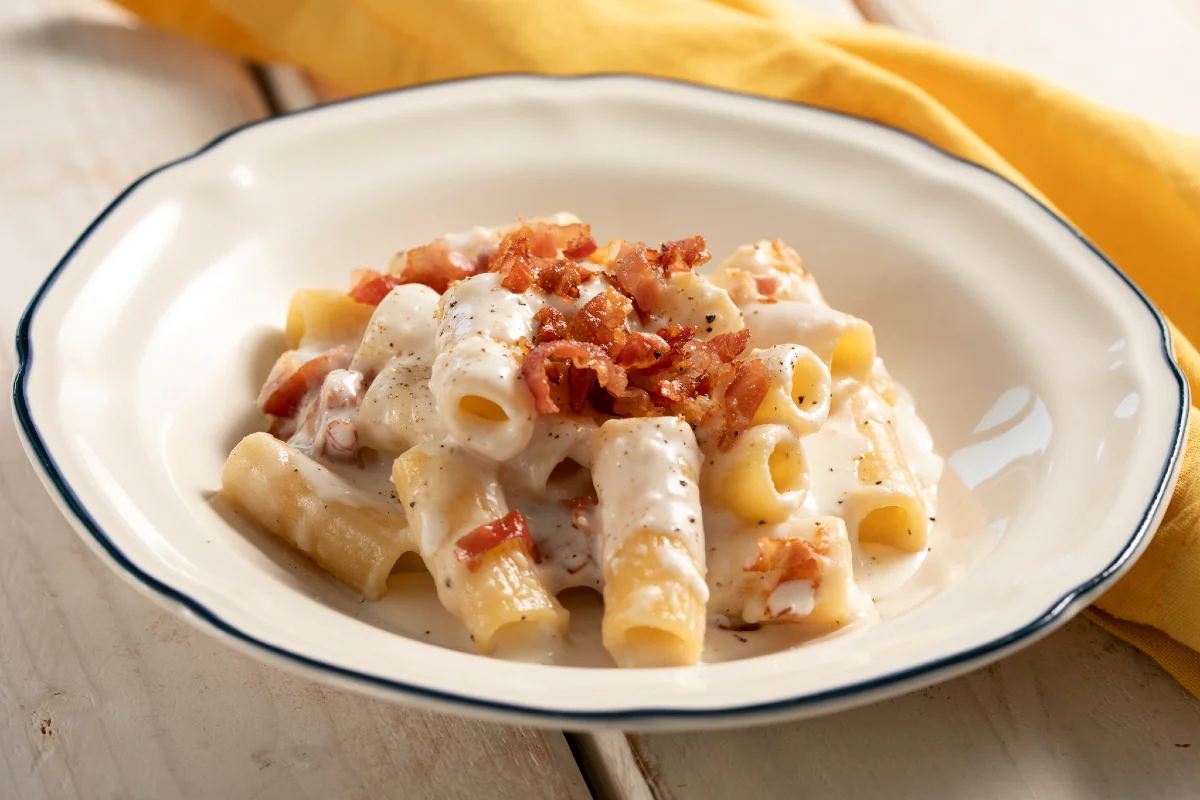
Rigatoni is coated in a simple Parmesan and milk cream, then topped with crisp, savoury speck. It comes together in about 25 minutes and makes a satisfying first course with a rich, salty finish.
Ingredients
- 320 grigatoni
- 80 gspeck, sliced
- 100 gParmigiano Reggiano DOP
- 200 gwhole milk
- to tasteblack pepper
- to tastefine salt
Instructions
- 1
Crisp the speck
Stack the speck slices and cut them into strips about 1 cm wide. Heat a non-stick frying pan over a high heat and cook the speck for about 5 minutes, stirring occasionally so it does not burn. Once browned and crisp, transfer it to kitchen paper.
- 2
Cook the pasta
Bring salted water to the boil and cook the rigatoni according to the packet instructions. Meanwhile, pour the milk into the same pan used for the speck.
- 3
Make the cream
When the milk is just about to boil, turn off the heat and add the grated Parmesan. Stir with a spoon until it forms a cream, then drain the pasta straight into the pan.
- 4
Combine the pasta
Add a little pasta cooking water if needed, followed by a pinch of freshly ground black pepper. Stir in a couple of spoonfuls of the crisp speck.
- 5
Serve the dish
Mix everything well, then divide between plates. Finish each serving with more crisp speck.
What is pasta with Parmesan cream and speck?
This is an Italian-style pasta dish that brings together Parmesan, milk and crisp speck for a quick, savoury sauce. Speck is a cured, lightly smoked ham associated with South Tyrol in northern Italy.
Here, rigatoni’s ridges and hollow centres help catch the creamy sauce. The recipe keeps the sauce simple, using pasta water to help it coat the pasta.
Nutrition and macros by portion
The nutrition label shows one serving as written: 471 calories, 27g protein, 63g carbs, 15g fat.
| Portion | Adjustment | kcal | Protein | Carbs | Fat |
|---|---|---|---|---|---|
| Lighter | Less speck, more greens | 330 kcal | 19g | 44g | 11g |
| This serving | As written | 471 kcal | 27g | 63g | 15g |
| Hungry | Larger pasta portion | 707 kcal | 41g | 95g | 23g |
Most of the carbohydrates come from the rigatoni, while Parmesan, milk and speck contribute much of the fat; the cheese and speck also provide much of the protein. Serve a moderate portion with a green salad or vegetables to balance the meal.
Choosing the ingredients
Pasta shape: Rigatoni works well because its sturdy tubes hold onto the cream. Other short, ridged pasta shapes can also suit the sauce.
Parmesan: Parmigiano Reggiano gives the cream its savoury flavour. Grate it finely so it is easier to stir into the warm milk.
Speck: Slicing the speck into narrow strips gives you crisp pieces to mix through the pasta and scatter on top.
Getting the sauce smooth
Milk temperature: Take the pan off the heat as soon as the milk is close to boiling. Stir in the cheese then, rather than letting the milk boil with it.
Pasta water: Add it a little at a time if the sauce seems too thick. The starchy water helps loosen the cream so it can coat the rigatoni.
Crisping the speck
Pan heat: Start with a hot non-stick pan and cook the speck for about 5 minutes, stirring now and then. Keep an eye on it, as the narrow strips can brown quickly.
Texture cue: The speck should be browned and crisp before you lift it out. Set it on kitchen paper so it stays crisp while you prepare the pasta.
Timing the pasta and sauce
Pasta timing: Cook the rigatoni for the time stated on its packet, as cooking times vary by brand. Drain it directly into the pan with the Parmesan cream.
Final toss: Add the speck and pepper once the pasta is in the sauce, then mix well before serving. Keep some crisp speck aside to finish each plate.
What to serve alongside
A simple green salad or lightly dressed leafy vegetables provide a fresh contrast to the creamy pasta. Serve them alongside rather than mixing them into the sauce.
This is a filling first course, so modest portions with a vegetable side work well for a larger meal.
Recipe notes & tips
- Grate the Parmesan finely so it stirs into the milk more readily.
- Stir the speck occasionally as it cooks to help it brown without burning.
- Keep a little pasta cooking water handy before draining the rigatoni.
- Add pasta water gradually so the cream does not become too thin.
- Reserve some crisp speck for the final topping.
Variations
- Use another pasta shape: Choose a short, ridged shape that can hold the cream.
- Add extra pepper: Grind more black pepper over the finished plates for a sharper finish.
- Make it meat-free: Leave out the speck and season the Parmesan cream to taste.
- Add a green side: Serve with leafy salad or vegetables for a fresh contrast.
Common mistakes to avoid
- Boiling the milk: It can make the sauce harder to bring together; turn off the heat when it is close to boiling.
- Adding Parmesan over high heat: The cheese may not melt smoothly; take the pan off the heat first.
- Cooking the speck unattended: Thin strips can burn; stir them occasionally and watch for browning.
- Adding too much pasta water: The cream can turn runny; add a little at a time.
- Forgetting to reserve speck: Keep some aside so each plate gets a crisp topping.
How to store
Refrigerate leftovers in a covered container and eat within 2 days. Reheat gently in a pan, adding a splash of milk or water to loosen the sauce; the speck will soften in storage.
Frequently asked questions
Can I use another pasta shape?
Yes. Choose a short pasta shape that can hold the sauce, such as penne or rigatoni.
Can I use a different cured meat?
You can use another thinly sliced cured ham, though the flavour and texture may differ from speck. Cook it until crisp in the same way.
How do I stop the Parmesan cream becoming lumpy?
Grate the Parmesan finely and stir it into the milk after taking the pan off the heat. Add a little pasta water if the sauce needs loosening.
Can I make the sauce ahead?
It is best made while the pasta cooks, so it can be combined and served straight away. The sauce may thicken as it stands.
How can I tell when the speck is ready?
It should be browned and crisp after about 5 minutes, with occasional stirring. Cooking time can vary, so use the texture as your guide.
Cook it from the original
This recipe comes from giallozafferano.es. Their page has the author’s own photos, notes and tips — the best place to cook it from.
Open the recipe on giallozafferano.es