
Berry charlotte
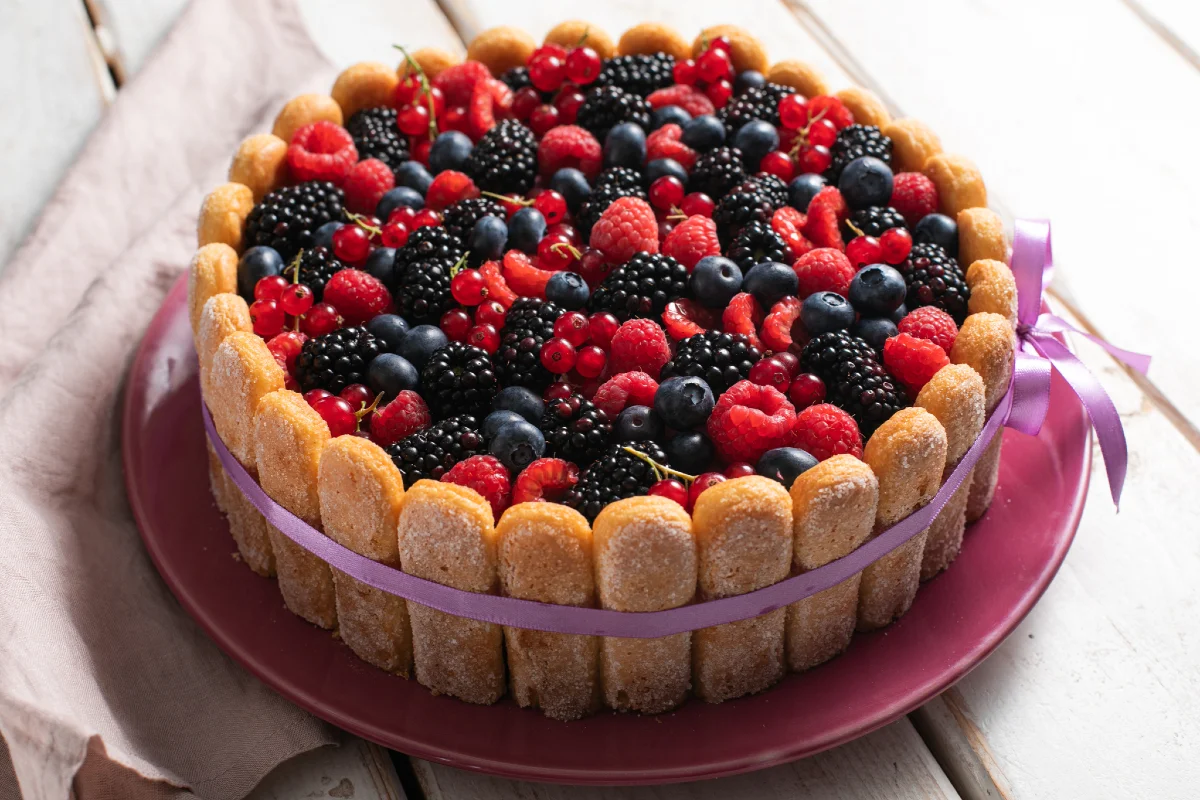
Berry charlotte is a chilled, no-bake dessert layered with syrup-soaked savoiardi, berry mousse and fresh fruit. It makes an impressive centrepiece, with a soft, creamy filling and a neat ring of biscuits around the edge.
Ingredients
- 30savoiardi biscuits
- 150 gberries for the filling
- 400 gwater
- 120 gsugar
- 20 gmaraschino liqueur
- 500 gberries
- 150 gsugar
- 14 gleaf gelatine
- 500 gwhipping cream
- 24savoiardi biscuits
- as neededberries
Instructions
- 1
Make the syrup
Bring the 400 g water and 120 g sugar to the boil. Leave the syrup to cool until lukewarm, then stir in the 20 g maraschino liqueur and set aside to cool.
- 2
Soften the gelatine
Soak the leaf gelatine in cold water for 10 minutes. Meanwhile, boil the 500 g berries with the 150 g sugar for 2–3 minutes.
- 3
Purée the berries
Once the berries have softened, blend them while still hot with a hand blender. Immediately pass the purée through a sieve.
- 4
Prepare the gelatine
Weigh the sieved purée and check that you have exactly 500 g; if there is less, add water to reach that amount. Warm a small portion of the purée, drain the softened gelatine and dissolve it in the warm purée.
- 5
Cool the purée
Stir until the gelatine has dissolved completely. Mix the warm portion into the remaining cold purée and leave the fruit mixture to cool until lukewarm.
- 6
Whip the cream
Whip the liquid cream with electric beaters. Fold it into the berry purée one spoonful at a time.
- 7
Build the base
Fold gently from the bottom up so the mixture stays light. Line the ring of a 22 cm springform tin with baking paper and set it on a serving plate. Dip half of the savoiardi intended for the inner layers in the cooled syrup, arrange them over the base and trim them to fit.
- 8
Add the filling
Arrange the dipped biscuits to cover the base completely. Spread half of the mousse over them, then fill it with mixed fresh berries.
- 9
Layer the charlotte
Dip the remaining inner-layer biscuits in the syrup and arrange them over the berry-filled mousse. Pour the remaining mousse into the tin.
- 10
Chill and unmould
Smooth the surface carefully. Refrigerate the cake for 4–5 hours to set, then carefully remove it from the tin and transfer it to a serving plate.
- 11
Decorate the cake
Quickly dip the remaining savoiardi on one side only and press them around the edge of the cake. Tie a ribbon around the biscuits to help hold them in place, then decorate the top with more mixed berries.
What is a berry charlotte?
A charlotte is a chilled, moulded dessert traditionally formed with a lining of sponge or biscuits around a soft filling. This version uses Italian savoiardi and a berry mousse, with no oven needed.
Syrup-dipped biscuits form the base and outer wall, while fresh berries add contrast inside the creamy filling and on top.
Nutrition and macros by portion
The nutrition label shows one serving as written: 605 calories, 9g protein, 84g carbs, 24g fat.
| Portion | Adjustment | kcal | Protein | Carbs | Fat |
|---|---|---|---|---|---|
| Lighter | Smaller slice, extra berries | 424 kcal | 6g | 59g | 17g |
| This serving | As written | 605 kcal | 9g | 84g | 24g |
| Hungry | Larger slice | 908 kcal | 14g | 126g | 36g |
The savoiardi and sugar provide most of the carbohydrates, while the whipping cream contributes most of the fat; the berries add fruit sugars and fibre, and the gelatine contributes some protein. Serve a modest slice with extra fresh berries to balance the plate without adding another rich accompaniment.
The berry purée
Cooked berries: boiling them with sugar for just 2–3 minutes softens the fruit before it is blended. Sieving the hot purée removes the seeds for a smoother mousse.
Weighing the purée: the recipe calls for exactly 500 g after sieving. Add water if needed to bring it up to that amount, so the gelatine and cream are mixed into the intended quantity.
Getting the gelatine right
Cold soak: leave the leaf gelatine in cold water for 10 minutes so it softens evenly, then drain it before use.
Warm purée: dissolve the gelatine in a small warmed portion rather than adding it straight to the cold mixture. Stir that portion into the remaining purée and let it cool until lukewarm before folding in the cream.
Keeping the mousse light
Whipped cream: beat the cream until whipped, then add it to the purée a spoonful at a time. This makes it easier to combine without losing too much air.
Gentle folding: use an upward, folding motion rather than stirring briskly. Stop once the colour looks even and no streaks of cream remain.
Dipping and layering
Syrup: allow it to cool before dipping the biscuits. Work quickly so the savoiardi take on flavour without becoming soggy.
Layers: cover the base with biscuits, then add half the mousse and the fresh berries before topping with another biscuit layer and the remaining mousse. Trim the base biscuits so they sit neatly inside the 22 cm ring.
Setting and serving
Chilling: give the charlotte 4–5 hours in the fridge to firm up before unmoulding. The mousse should hold its shape when the ring is removed.
To serve: attach the outer biscuits only after chilling, dipping them briefly on one side. A ribbon around the edge helps keep them upright; finish with berries on top.
What to serve alongside
The mousse and syrup make this a sweet, rich dessert, so modest slices pair well with tea or coffee. For a lighter finish to a meal, serve with extra fresh berries rather than another creamy accompaniment.
Recipe notes & tips
- Let the syrup cool fully before dipping the savoiardi.
- Sieve the berry purée while it is still hot, as directed, to remove the seeds more easily.
- Check the sieved purée weighs 500 g before mixing in the gelatine.
- Fold the whipped cream in gently to keep the mousse airy.
- Dip the biscuits briefly so they soften without turning mushy.
- Chill for the full 4–5 hours before removing the ring.
Variations
- Mixed berries: use a combination of berries for a varied colour and flavour.
- Berry topping: arrange the finishing berries in a ring or a simple central pile.
- Syrup flavour: leave out the maraschino for a syrup without liqueur.
- Individual portions: assemble the layers in small glasses instead of one large mould.
- Extra fruit: add more fresh berries between the mousse layers for a fruitier filling.
Common mistakes to avoid
- Hot purée and cream: adding the cream before the purée has cooled can reduce its volume; let the purée become lukewarm first.
- Undissolved gelatine: stir the gelatine into the warm purée until no pieces remain before combining it with the rest.
- Skipping the sieve: berry seeds affect the mousse's smooth texture; pass the hot purée through a sieve.
- Soggy biscuits: leaving savoiardi in the syrup too long makes them fragile; dip them quickly.
- Rushing the chill: unmoulding before the mousse has set can make the cake slump; allow 4–5 hours in the fridge.
- Loose outer biscuits: attach the dipped edge biscuits after chilling and secure them with a ribbon.
How to store
Keep the charlotte covered in the fridge and eat it within 2 days for the best texture. Store any leftover slices chilled; the biscuits will soften as they stand.
Frequently asked questions
Can I make the charlotte ahead?
Yes. The mousse needs 4–5 hours to set, so you can chill the assembled cake before decorating it with the outer biscuits and topping berries.
How long should I dip the savoiardi?
Dip them briefly in the cooled syrup. They should take on some syrup but remain firm enough to arrange.
Why does the recipe weigh the berry purée?
It specifies 500 g of sieved purée for the mousse. If you have less after sieving, add water until the weight reaches 500 g.
Can I use frozen berries?
Frozen berries can be used for the cooked purée, but the recipe calls for fresh mixed berries for the filling and decoration.
How can I tell when the charlotte is set?
After 4–5 hours in the fridge, the mousse should be firm enough to hold its shape when the ring is removed.
Do the outside biscuits go on before chilling?
No. Chill and unmould the cake first, then quickly dip the remaining biscuits on one side and press them around the edge.
Cook it from the original
This recipe comes from giallozafferano.es. Their page has the author’s own photos, notes and tips — the best place to cook it from.
Open the recipe on giallozafferano.es