
Sour Cream Pound Cake Recipe
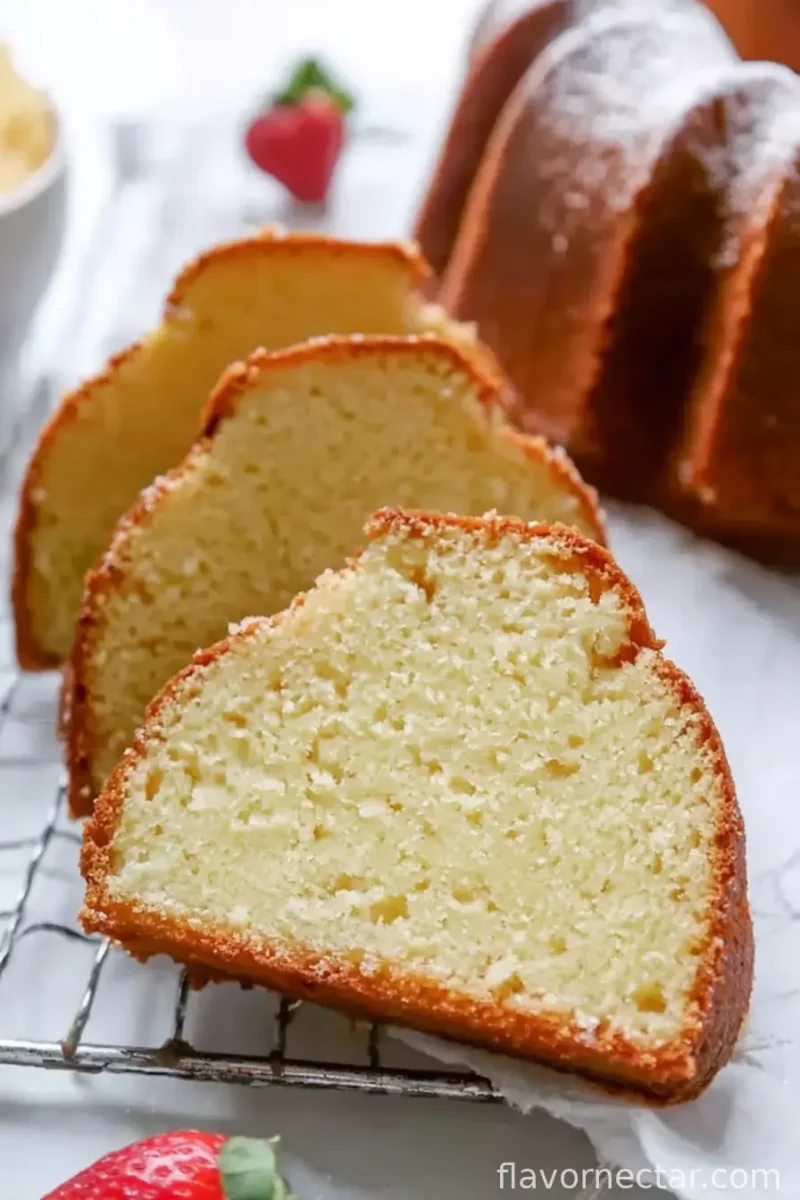
This American-style sour cream pound cake is a rich, tender bake with a fine crumb and a hint of vanilla. Serve it as a dessert or cut a slice to enjoy with coffee.
Ingredients
- 375 g (3 cups)plain flour
- 500 g (2 1/2 cups)granulated sugar
- 227 g (1 cup)unsalted butter, softened
- 240 ml (1 cup)sour cream
- 6 largeeggs
- 2.5 g (1/2 teaspoon)bicarbonate of soda
- 3 g (1/2 teaspoon)salt
- 10 ml (2 teaspoons)vanilla extract
Instructions
- 1
Prepare the pan
Heat the oven to 163°C (325°F). Grease and flour a 25 cm (10-inch) Bundt or tube pan.
- 2
Cream butter sugar
In a large bowl, beat the softened butter and sugar together until the mixture looks light and fluffy.
- 3
Add eggs vanilla
Mix in the eggs one at a time, beating well after each addition. Stir in the vanilla extract.
- 4
Combine dry ingredients
In a separate bowl, whisk together the flour, bicarbonate of soda and salt.
- 5
Mix the batter
Add the dry mixture and sour cream to the butter mixture in turns, beginning and ending with the flour mixture. Mix only until combined.
- 6
Bake and cool
Pour the batter into the prepared pan and smooth the top. Bake for 1 hour 15 minutes, or until a skewer inserted in the centre comes out clean. Leave the cake in the pan for 10 minutes, then transfer it to a wire rack to cool completely.
What is sour cream pound cake?
Pound cake is a dense, buttery cake with roots in the traditional style of using equal weights of basic ingredients. This American version uses sour cream, which brings a gentle tang and helps keep the crumb tender.
The long bake in a ring-shaped pan gives the cake time to cook through while creating a generous surface for serving. Vanilla keeps the flavour familiar and simple.
Nutrition and macros by portion
The nutrition label shows one serving as written: 425 calories, 6g protein, 55g carbs, 20g fat.
| Portion | Adjustment | kcal | Protein | Carbs | Fat |
|---|---|---|---|---|---|
| Lighter | Smaller cake slice | 298 kcal | 4g | 39g | 14g |
| This serving | As written | 425 kcal | 6g | 55g | 20g |
| Hungry | Larger cake slice | 638 kcal | 9g | 83g | 30g |
The flour and sugar provide most of the carbohydrates, while butter and sour cream contribute much of the fat. Eggs add protein as well as richness; serve a slice with fruit or alongside a protein-rich yoghurt if you want a more balanced plate.
Why sour cream matters
Sour cream: its richness and acidity contribute to a moist, soft-textured cake. Use it as listed rather than substituting a thinner dairy product, which can change the batter.
Cream the butter and sugar well
Butter and sugar: beat them until visibly light and fluffy before adding anything else. This step helps give the cake a lighter texture within its characteristically rich crumb.
Add the eggs gradually
Eggs: add them one at a time and mix well after each one. This gives the mixture time to come together before the next egg goes in.
Alternate flour and sour cream
Order: add the flour mixture and sour cream in turns, starting and finishing with flour as directed. Mix just until combined to avoid working the batter more than necessary.
Check the centre for doneness
Timing: bake for 1 hour 15 minutes at 163°C, then check with a skewer in the centre. It should come out clean; if batter clings to it, the cake needs more time in the oven.
Cool before serving
Release: let the cake rest in its pan for 10 minutes before turning it out onto a wire rack. Allow it to cool completely so the shape and slices hold together.
To serve: offer plain slices with coffee or tea, or add fresh fruit for a brighter contrast to the buttery cake.
Recipe notes & tips
- Bring the butter and eggs to room temperature before mixing so they are easier to incorporate.
- Measure the flour carefully and avoid packing it into the measuring cup.
- Scrape down the bowl as needed while creaming and mixing so the batter stays even.
- Grease and flour the Bundt or tube pan thoroughly, including the centre tube.
- Begin checking the cake at the stated bake time with a skewer in the centre.
Variations
- Citrus zest: Add finely grated lemon or orange zest for a fresh aromatic note.
- Almond flavour: Replace part of the vanilla with almond extract for a different flavour.
- Berry side: Serve slices with fresh berries for a tart contrast.
- Simple glaze: Drizzle a thin icing sugar glaze over the fully cooled cake.
- Spiced version: Add a little ground cinnamon to the dry ingredients for a warm flavour.
Common mistakes to avoid
- Cold butter: It will not cream smoothly; soften it before beginning.
- Adding eggs together: The mixture may be harder to combine evenly; add them one at a time.
- Overmixing: The cake can become less tender; stop once the ingredients are combined.
- Under-preparing the pan: The cake may stick; grease and flour the entire pan carefully.
- Turning out too soon: The warm cake may break; leave it in the pan for 10 minutes first.
How to store
Once completely cool, keep the cake in an airtight container at room temperature for up to 3 days. Reheat individual slices briefly in the microwave if you prefer them warm.
Frequently asked questions
Can I use a loaf pan instead of a Bundt pan?
The recipe specifies a 25 cm (10-inch) Bundt or tube pan. A loaf pan has a different shape and capacity, so the baking time may not match.
How do I know when the cake is baked?
Insert a skewer into the centre; it should come out clean. The recipe gives a baking time of 1 hour 15 minutes, but use the skewer as the doneness check.
Why does the recipe start and end with flour?
Alternating the dry mixture with sour cream helps combine them into the butter mixture. Following the stated order also ensures the final addition is flour.
Can I serve the cake before it is completely cool?
It is best to cool it fully on a wire rack so it is easier to slice and serve. Let it sit in the pan for 10 minutes before transferring it.
What goes well with sour cream pound cake?
It is lovely with coffee or tea. Fresh berries also make a good accompaniment to its rich, buttery flavour.
Cook it from the original
This recipe comes from flavornectar.com. Their page has the author’s own photos, notes and tips — the best place to cook it from.
Open the recipe on flavornectar.com