
Butter Cookies Recipe
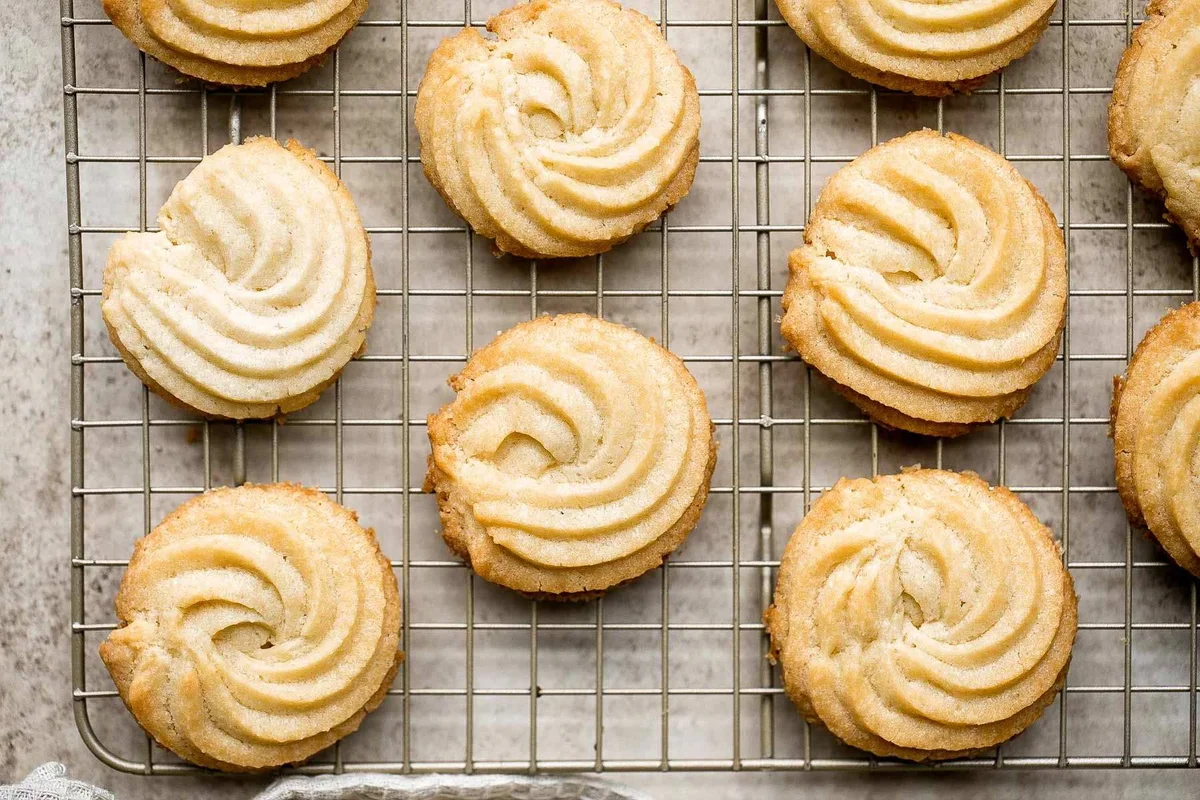
These American-style butter cookies are crisp at the edges and tender inside, with a simple buttery flavour and a fork-pressed pattern. They come together with a short list of pantry staples, making them a straightforward bake for sharing or serving with tea.
Ingredients
- 227 g (1 cup)butter, softened
- 200 g (1 cup)sugar
- 240 g (2 cups)plain flour
- 5 ml (1 tsp)vanilla extract
- 1.5 g (1/4 tsp)salt
Instructions
- 1
Preheat the oven
Heat the oven to 175°C (350°F).
- 2
Cream butter and sugar
In a mixing bowl, beat the softened butter and sugar together until pale, light and fluffy.
- 3
Add the vanilla
Mix the vanilla extract into the creamed butter and sugar.
- 4
Mix in dry ingredients
Add the flour and salt gradually, mixing until the dough is combined.
- 5
Shape the dough
Roll the dough into small balls and arrange them on a baking sheet.
- 6
Press with a fork
Flatten each ball with a fork, pressing twice to make a criss-cross pattern.
- 7
Bake the cookies
Bake for 10–12 minutes, until the edges are golden brown.
- 8
Cool on a rack
Transfer the cookies to a wire rack and leave them to cool.
What are butter cookies?
Butter cookies are small, sweet biscuits built around a rich, buttery dough. They are a familiar American-style home bake, though similar butter-rich biscuits are enjoyed in many places.
This version keeps the ingredient list simple and uses a fork to press a quick criss-cross pattern into each cookie. The result is a tender centre with lightly browned edges.
Nutrition and macros by portion
The nutrition label shows one serving as written: 100 calories, 1g protein, 12g carbs, 5g fat.
| Portion | Adjustment | kcal | Protein | Carbs | Fat |
|---|---|---|---|---|---|
| Lighter | Make smaller cookies | 70 kcal | 1g | 8g | 4g |
| This serving | As written | 100 kcal | 1g | 12g | 5g |
| Hungry | Serve a larger portion | 150 kcal | 2g | 18g | 8g |
The flour and sugar provide most of the carbohydrates, while butter supplies most of the fat; the recipe contains only a small amount of protein. Serve a few cookies alongside fruit or yoghurt for a more rounded snack.
The ingredients that matter
Softened butter: it should yield to a gentle press but not look melted. This makes it easier to cream evenly with the sugar.
Flour and salt: add them gradually so they distribute through the dough without leaving dry pockets. The salt helps balance the sweetness.
Vanilla: mix it in before the flour so its flavour spreads through the butter and sugar mixture.
Creaming the butter and sugar
Beat the butter and sugar until the mixture looks lighter and fluffy, rather than stopping as soon as it is combined. Scrape down the sides of the bowl if some butter remains there.
If the butter is too cold, it will be difficult to cream smoothly; if it is very soft or oily, the mixture may not hold as much air. Let it soften at room temperature until pliable.
Shaping the criss-cross pattern
Roll the dough into small, evenly sized balls so they bake at a similar rate. Set them on the baking sheet with room around each one.
Press gently with the fork to flatten each ball and leave a clear pattern. Avoid pressing so hard that the dough spreads thinly across the tray.
When the cookies are done
Begin checking at 10 minutes. The edges should be golden brown, while the centres may still look pale and soft.
The cookies firm as they cool, so do not wait for the whole surface to turn deeply golden. Let them cool on a wire rack before serving.
Serving and timing
The stated total time is 25 minutes, including the brief mixing and shaping stages as well as baking. Work in batches if the baking sheet cannot hold all the cookies at once.
Serve the cooled cookies with tea, coffee or a glass of milk. Their mild vanilla flavour also pairs well with fresh fruit.
Recipe notes & tips
- Measure the flour without packing it tightly into the cup before weighing or measuring.
- Use softened rather than melted butter for a dough that is easy to cream and shape.
- Mix in the flour only until the dough comes together to avoid overworking it.
- Keep the dough balls a similar size so the batch bakes evenly.
- Check the first tray at 10 minutes because oven performance can vary.
- Let the cookies cool on the rack before moving them into a storage container.
Variations
- Citrus note: add finely grated lemon zest to the butter and sugar.
- Almond flavour: replace the vanilla with almond extract, using it sparingly.
- Chocolate dip: dip the cooled cookies in melted chocolate and let it set.
- Cinnamon sugar: sprinkle the shaped dough lightly with cinnamon sugar before baking.
- Sprinkle finish: add a few small sprinkles to the tops before baking.
Common mistakes to avoid
- Using melted butter: the dough can become greasy; start with butter that is soft but still holds its shape.
- Adding flour all at once: dry patches may remain; mix it in gradually.
- Overmixing the dough: the cookies may turn firm; stop once the flour is incorporated.
- Flattening too much: thin cookies can bake too quickly; press only until the fork pattern appears.
- Waiting for dark centres: the cookies may overbake; take them out when the edges are golden.
- Moving them while hot: they can break before firming; cool them on the wire rack first.
How to store
Once completely cool, store the cookies in an airtight container at room temperature for up to 5 days. If you want to refresh them, warm them briefly in a low oven and let them cool before serving.
Frequently asked questions
Can I make the dough ahead?
Yes. Cover it and refrigerate it, then let it soften enough to roll into balls before shaping and baking.
Do I need to chill the dough?
The method does not call for chilling. If the dough feels too soft to shape, a short chill can make it easier to handle.
Can I use salted butter?
Yes, though the cookies may taste a little saltier. You can omit the added salt if you prefer.
Why are my cookies still soft when they come out?
They firm as they cool. Look for golden edges, then transfer them to a wire rack rather than baking until the centres are hard.
Can I freeze the cookies?
Freeze fully cooled cookies in a sealed, freezer-safe container. Thaw them at room temperature before serving.
Cook it from the original
This recipe comes from dirtydishesmessykisses.com. Their page has the author’s own photos, notes and tips — the best place to cook it from.
Open the recipe on dirtydishesmessykisses.com