
The Best 100% Fresh-Milled Sourdough Sandwich Bread
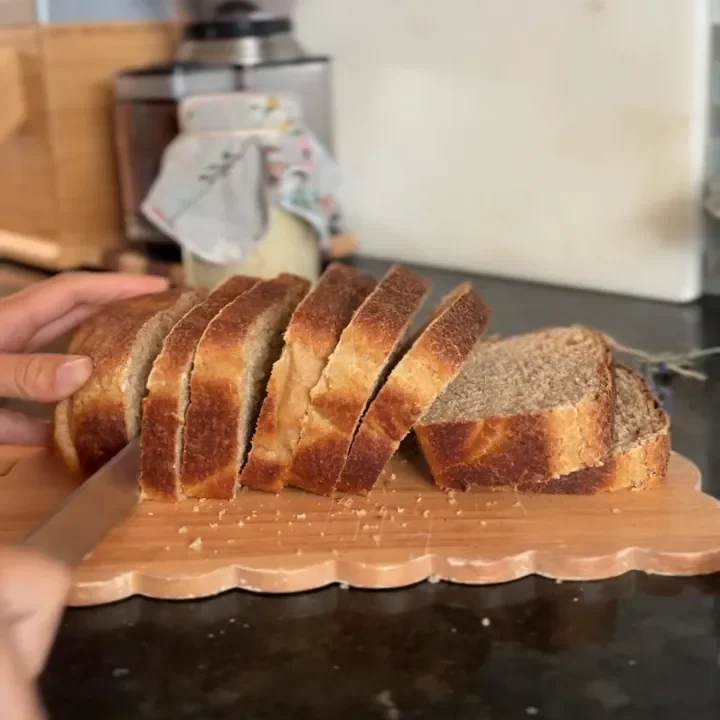
A soft, naturally leavened sandwich loaf made with freshly milled hard white wheat, sourdough starter, honey, milk, egg and butter. Its mild sweetness and tender crumb make it suited to sandwiches, toast and everyday baking.
Ingredients
- 210 gactive sourdough starter
- 430 gfreshly milled hard white wheat flour, finely milled
- 175 gwarm filtered water
- 75 gwhole milk
- 55 graw honey
- 1 largeegg
- 8 gfine sea salt
- 42 gunsalted butter, softened
Instructions
- 1
Check the dough
If the dough springs back immediately when tested, give it more time to rise.
- 2
Check readiness
If the dough springs back slowly and leaves a slight indentation, it is ready to bake.
- 3
Spot over-proofing
If the indentation stays without recovering, the dough has likely over-proofed.
What is fresh-milled sourdough sandwich bread?
This is a soft sandwich loaf made with freshly milled hard white wheat and leavened with active sourdough starter. Sourdough bread belongs to a long baking tradition built around natural fermentation; this version combines that method with honey, milk, egg and butter for a richer, gentler loaf.
The recipe begins with a fermentolyse, then adds the enrichments and salt. Freshly milled flour gives the loaf its whole-wheat character, while the additions are intended to make it tender enough for sandwiches and toast.
Nutrition and macros by portion
The nutrition label shows one serving as written: 601 calories, 20g protein, 108g carbs, 15g fat.
| Portion | Adjustment | kcal | Protein | Carbs | Fat |
|---|---|---|---|---|---|
| Lighter | Use a smaller slice | 421 kcal | 14g | 76g | 11g |
| This serving | As written | 601 kcal | 20g | 108g | 15g |
| Hungry | Serve an extra slice | 902 kcal | 30g | 162g | 23g |
The wheat flour and starter contribute most of the carbohydrates, while butter, egg and whole milk provide much of the fat; flour, starter and egg contribute protein. Balance a slice with a protein-rich sandwich filling and vegetables, or serve it alongside soup.
The flour and starter
Freshly milled flour: the recipe specifies hard white wheat flour milled finely, so a fine texture is important to the loaf’s crumb.
Active starter: use starter that is lively and ready to leaven dough. Its activity affects how quickly the dough rises, so the rise cues matter more than a fixed clock.
Why the dough is enriched
Honey and milk: these bring sweetness and dairy richness to the dough. The honey also distinguishes the loaf from a plain sourdough bread.
Egg and butter: these enrich the mixture and contribute to a soft, supple crumb. The butter is specified softened, making it easier to incorporate after the fermentolyse.
Use the indentation test
A quick rebound: if the dough springs back immediately, it needs longer to rise.
A slow rebound: a slight indentation that recovers slowly indicates that the dough is ready to bake.
No rebound: an indentation that remains suggests the dough may have over-proofed. The recipe provides these cues rather than a rise time for this stage.
Pay attention to timing
The stated total time is 560 minutes, but sourdough fermentation can vary with starter activity and room conditions. Follow the dough’s response to the indentation test instead of relying on the total time alone.
The supplied method gives proofing checks but does not include instructions for mixing, shaping or baking. Use the original recipe’s full directions for those stages.
Serving the loaf
The soft crumb and mild sweetness work well with savoury sandwich fillings, or simply sliced and toasted. For a more filling plate, pair a slice with eggs, soup or a protein-rich sandwich filling.
Let the loaf cool before slicing so the crumb has time to set. This also helps slices hold together for sandwiches.
Recipe notes & tips
- Use finely milled hard white wheat flour as specified for the recipe.
- Have the butter softened before adding it after the fermentolyse.
- Judge the rise by how the dough responds to an indentation, not by appearance alone.
- If the dough springs back immediately, allow it more time before baking.
- Cool the loaf before slicing for neater pieces.
Variations
- Toast it: slice and toast the loaf for a crisp surface and warm centre.
- Make sandwiches: use savoury fillings to balance the honey’s mild sweetness.
- Serve with soup: pair slices with a bowl of soup for a more substantial meal.
- Add a topping: spread toasted slices with butter, jam or another favourite topping.
Common mistakes to avoid
- Baking too soon: if the dough springs back immediately, give it longer to rise.
- Missing the ready cue: bake when a test indentation recovers slowly and leaves a slight mark.
- Waiting too long: an indentation that remains may indicate the dough has over-proofed.
- Slicing while hot: allow the loaf to cool first so the crumb can set.
- Using cold butter: soften it as specified so it is easier to add after the fermentolyse.
How to store
Once completely cool, store the loaf in an airtight bread bag or container at room temperature and use within about 3 days. Reheat slices in a toaster, or freeze sliced bread for longer storage and toast from frozen.
Frequently asked questions
How can I tell when the dough is ready to bake?
Press it gently: a slow return that leaves a slight indentation means it is ready. If it springs back straight away, let it rise longer.
What if the indentation stays in the dough?
The dough has likely over-proofed, according to the recipe’s cue. Avoid leaving it to rise further.
Can I use a different flour?
The recipe is written for finely milled fresh hard white wheat flour. Changing the flour may alter how the dough handles and rises.
Why does the recipe add some ingredients later?
The starter, flour, water and milk are grouped for the fermentolyse; honey, egg, salt and softened butter are added afterwards.
Can I make the dough rise faster?
The recipe does not give a faster-rise method. Allow the dough to rise until it reaches the stated indentation cue.
How should I serve this loaf?
Use it for sandwiches or toast, or serve slices with soup. Let the loaf cool before cutting.
Cook it from the original
This recipe comes from flourishingmotherhood.com. Their page has the author’s own photos, notes and tips — the best place to cook it from.
Open the recipe on flourishingmotherhood.com