
Buttermilk Fried Chicken
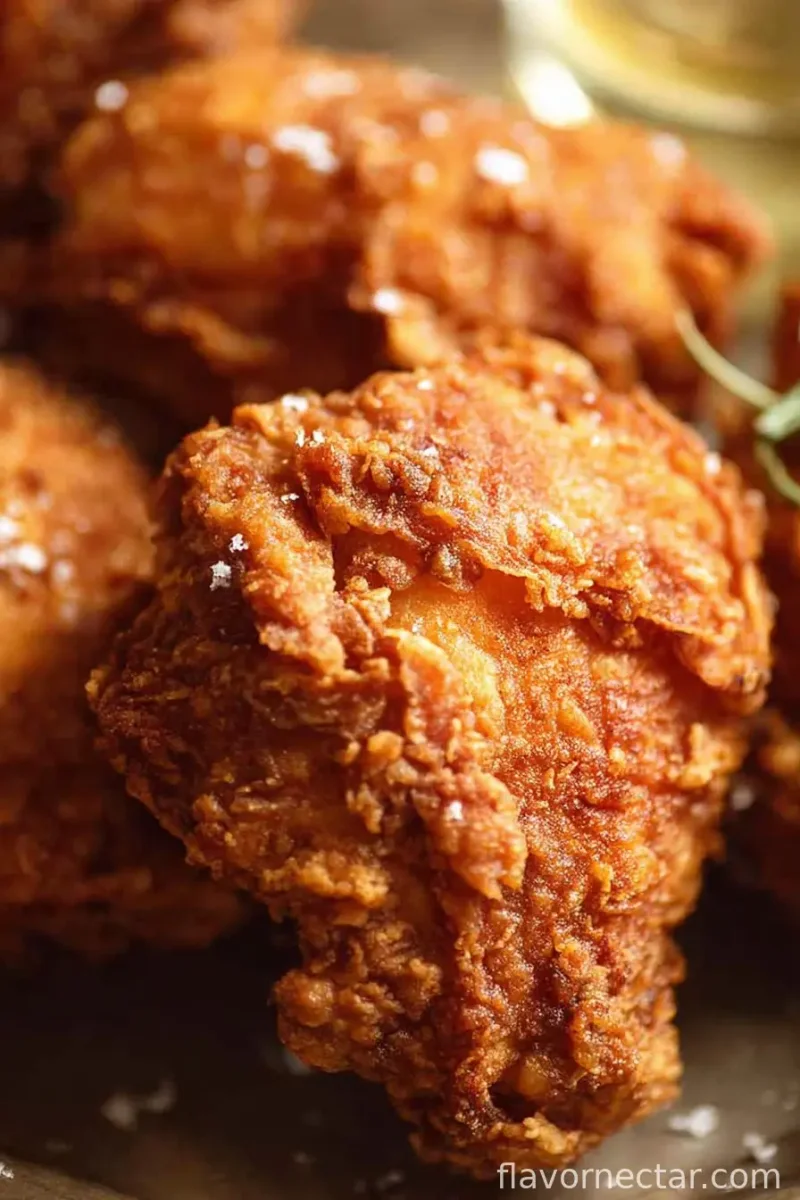
Buttermilk-soaked chicken is coated in seasoned flour and fried until crisp and golden. This Southern-style favourite makes a hearty dinner, with a tangy marinade and a spiced crust.
Ingredients
- 8bone-in, skin-on chicken pieces (thighs or drumsticks)
- 480 ml (2 cups)buttermilk
- 250 g (2 cups)plain flour
- 1 tablespoonpaprika
- 2 teaspoonsgarlic powder
- 2 teaspoonssalt
- 1 teaspoonblack pepper
- 1 teaspooncayenne pepper
- for fryingvegetable oil
Instructions
- 1
Marinate the chicken
Put the chicken pieces in a large bowl and pour over the buttermilk. Cover and refrigerate for at least 2 hours, or overnight for the best flavour.
- 2
Mix the coating
In another large bowl, whisk together the flour, paprika, garlic powder, salt, black pepper and cayenne pepper.
- 3
Coat each piece
Lift the chicken from the buttermilk and let the excess drip away. Dredge each piece thoroughly in the seasoned flour, pressing the coating onto the surface.
- 4
Heat the oil
Pour vegetable oil to a depth of 2.5 cm into a large frying pan or Dutch oven. Heat it to 175°C (350°F).
- 5
Fry in batches
Fry the chicken in batches, turning it occasionally, until golden brown and cooked through, about 12–15 minutes per batch.
- 6
Drain and serve
Transfer the chicken to a wire rack or paper towels to drain, then serve hot.
What is buttermilk fried chicken?
Fried chicken is a Southern American classic: pieces of chicken are seasoned, coated and cooked in hot oil. The buttermilk version adds a tangy soak before frying.
Here, paprika, garlic, black pepper and cayenne season a simple flour coating. Bone-in, skin-on pieces bring plenty of flavour and make a substantial, crisp-edged centrepiece.
Nutrition and macros by portion
The nutrition label shows one serving as written: 560 calories, 36g protein, 28g carbs, 34g fat.
| Portion | Adjustment | kcal | Protein | Carbs | Fat |
|---|---|---|---|---|---|
| Lighter | Smaller piece, extra vegetables | 392 kcal | 25g | 20g | 24g |
| This serving | As written | 560 kcal | 36g | 28g | 34g |
| Hungry | Add a chicken piece | 840 kcal | 54g | 42g | 51g |
The flour coating supplies most of the carbohydrates, while the frying oil and chicken skin contribute much of the fat. Chicken provides the protein, with the exact amount depending on the size and cut of the pieces. Balance the plate with salad or vegetables and choose a side portion to suit your appetite.
Why use buttermilk?
The buttermilk coats the chicken and gives it time to take on a gentle tang. The recipe calls for at least 2 hours in the fridge, or an overnight rest for best results.
Keep the bowl covered and chilled while the chicken marinates. Before coating, let excess buttermilk drip away so the flour forms a layer rather than a wet paste.
Build an even crust
Seasoned flour: whisk the spices through the flour before dredging so they are distributed across the coating.
Firm pressure: press the flour onto each piece, covering it thoroughly. Shake off loose excess before frying to help prevent clumps in the oil.
Frying and doneness
Oil temperature: heat the oil to 175°C before adding the chicken. A steady temperature helps the coating brown while the meat cooks through.
Work in batches and turn the pieces occasionally, allowing about 12–15 minutes per batch. The recipe describes the finish as golden brown and cooked through; for a food-safety check, the thickest part should reach 74°C without touching the bone.
Keep the coating crisp
Drain the cooked pieces on a wire rack if you have one; it lets air circulate around the crust. Paper towels also work, though the underside may soften where it rests.
Avoid stacking the chicken while it is hot. Serve it soon after frying for the best contrast between the crisp coating and juicy meat.
What to serve alongside
A crisp salad, slaw or steamed green vegetables bring freshness alongside the rich fried coating. Corn, mashed potatoes or biscuits make the meal more filling.
For a lighter plate, serve one chicken piece with plenty of vegetables. For a more substantial meal, add a starchy side such as potatoes or cornbread.
Recipe notes & tips
- Marinate the chicken overnight if you have time, keeping it covered in the fridge.
- Let excess buttermilk drip away before dredging so the coating does not become pasty.
- Press the seasoned flour onto all sides of each piece for an even crust.
- Heat the oil to 175°C before frying and allow it to return to temperature between batches.
- Fry in batches rather than crowding the pan, which can make the oil temperature drop.
- Use a wire rack to drain the chicken while helping the crust stay crisp.
Variations
- Milder coating: Leave out the cayenne for less heat.
- Extra spice: Increase the cayenne slightly to make the crust hotter.
- Thighs only: Use eight bone-in, skin-on thighs for evenly sized portions.
- Drumsticks only: Choose drumsticks for easy-to-hold pieces.
- Herby flour: Add dried thyme to the flour for an earthy note.
Common mistakes to avoid
- Skipping the marinade: Give the chicken at least 2 hours in the buttermilk as the recipe directs.
- Wet flour coating: Let the excess buttermilk drip off before dredging.
- Patchy coating: Press the seasoned flour onto every side of each piece.
- Cool oil: Bring the oil to 175°C before adding the chicken and let it recover between batches.
- Crowded pan: Fry in batches so the pieces have room and the oil stays hot.
- Relying on colour alone: Check that the thickest part is cooked through, ideally reaching 74°C away from the bone.
How to store
Refrigerate cooled chicken in a covered container for up to 3 days. Reheat in an oven until hot throughout; the coating is usually less crisp after storage and reheating.
Frequently asked questions
Can I marinate the chicken overnight?
Yes. The recipe recommends refrigerating it overnight for best results, with the bowl covered.
Can I use boneless chicken?
The recipe specifies bone-in, skin-on thighs or drumsticks. Boneless pieces may cook faster, so check doneness rather than relying on the listed frying time.
How do I know when the chicken is cooked through?
The recipe says to fry until golden brown and cooked through. For a reliable check, measure the thickest part without touching the bone; it should reach 74°C.
Can I prepare the flour mixture ahead?
Yes. Mix the flour and seasonings ahead and keep them covered at room temperature until you are ready to coat the chicken.
How can I keep the chicken crisp after frying?
Drain it on a wire rack and avoid stacking the pieces. Serve soon after cooking for the crispest coating.
Cook it from the original
This recipe comes from flavornectar.com. Their page has the author’s own photos, notes and tips — the best place to cook it from.
Open the recipe on flavornectar.com