
Mississippi Pot Roast
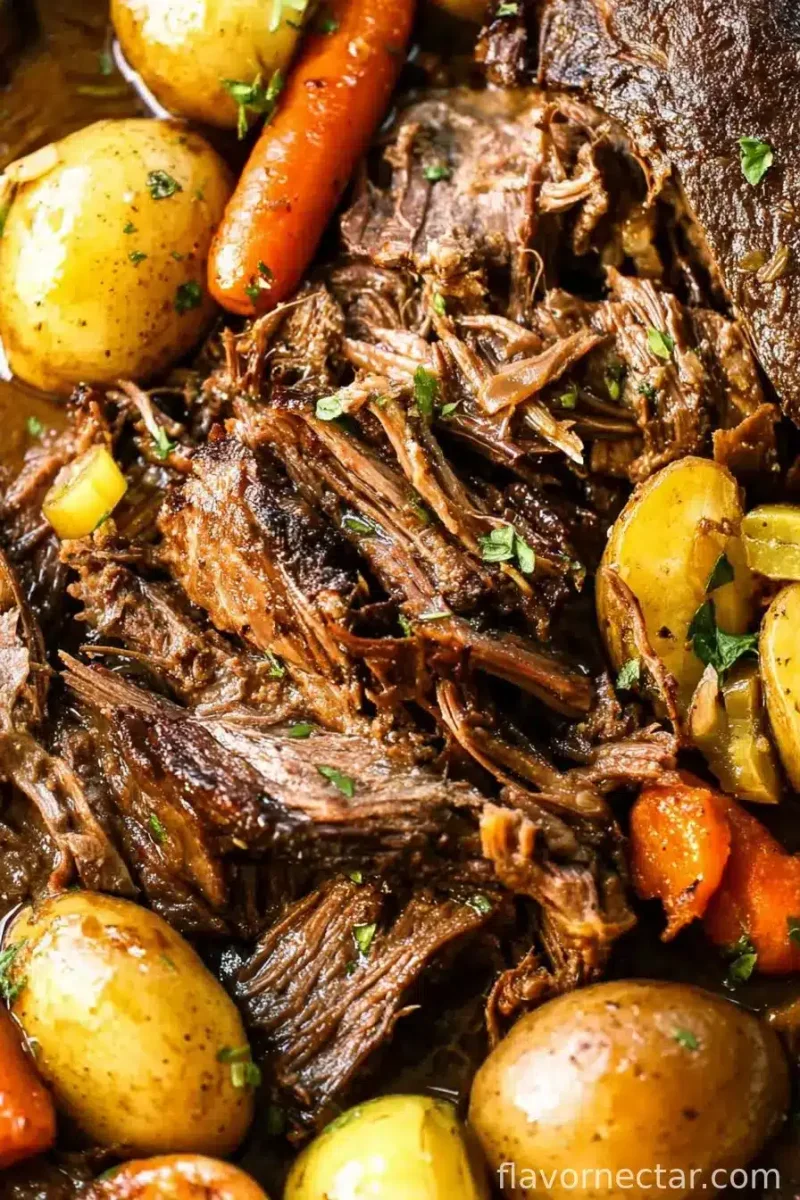
Mississippi pot roast is a slow-cooked beef joint flavoured with ranch seasoning, au jus mix, butter and tangy pepperoncini. It takes little hands-on work and turns into tender, easy-to-shred meat with savoury cooking juices for spooning over the top.
Ingredients
- 1.36–1.81 kg (3–4 lb)chuck roast
- 28 g (1 oz)ranch seasoning mix
- 28 g (1 oz)au jus gravy mix
- 113 g (½ cup)unsalted butter
- 8pepperoncini peppers
- 60 ml (¼ cup)pepperoncini juice
- 2.5 ml (½ teaspoon)black pepper
- to tastesalt
Instructions
- 1
Add the beef
Place the chuck roast in the bottom of a slow cooker.
- 2
Add the seasonings
Sprinkle the ranch seasoning mix and au jus gravy mix evenly over the roast.
- 3
Add butter and peppers
Put the butter and pepperoncini peppers on top of the roast, then pour over the pepperoncini juice.
- 4
Season the roast
Add the black pepper and, if you like, a pinch of salt.
- 5
Cook until tender
Cover and cook on low for 8 hours, or until the roast is tender and shreds easily with a fork.
- 6
Shred and serve
Shred the roast and spoon some of the cooking juices over it to serve.
What is Mississippi pot roast?
This American slow-cooker dish is made by cooking beef with ranch and au jus seasoning, butter and pepperoncini. It is known for its rich, savoury juices and meat that pulls apart easily.
This version relies on a short list of flavourful ingredients and a long, gentle cook, so the beef needs little attention once the slow cooker is covered.
Nutrition and macros by portion
The nutrition label shows one serving as written: 420 calories, 37g protein, 4g carbs, 29g fat.
| Portion | Adjustment | kcal | Protein | Carbs | Fat |
|---|---|---|---|---|---|
| Lighter | Trim visible beef fat | 294 kcal | 26g | 3g | 20g |
| This serving | As written | 420 kcal | 37g | 4g | 29g |
| Hungry | Serve a larger portion | 630 kcal | 56g | 6g | 44g |
The beef provides most of the protein, while the butter contributes much of the fat. The seasoning mixes and pepperoncini juice add flavour and a small amount of carbohydrate; serve the roast with vegetables and a modest portion of potato or rice for a more complete plate.
Choosing the beef and seasonings
Chuck roast: this cut is suited to slow cooking and becomes tender enough to shred after several hours. Keep it whole while it cooks, as in the method.
Seasoning mixes: the ranch and au jus packets provide most of the seasoning and savoury flavour. Check their labels if you want to know how much salt they contain before adding any extra.
Why pepperoncini matter
Peppers and juice: the peppers add a mild tang, while their juice carries that flavour into the cooking liquid. Use both as listed for the intended balance.
Butter: placed on top of the roast, it melts during cooking and enriches the juices. The method does not call for browning the beef first.
The slow-cooking stage
Low heat: cook covered on low for 8 hours, allowing the roast to soften gradually. Avoid lifting the lid unnecessarily, as the recipe depends on a covered, steady cook.
Doneness: the roast is ready when a fork can pull the meat apart easily. If it is still firm, it needs more time; follow the recipe's tenderness cue rather than relying on appearance alone.
Shredding and serving
Shred the beef once it is tender, then spoon some of the cooking juices over the meat so it stays moist and carries the seasoning to the table.
Serve it with potatoes, rice or bread to make use of the juices, and add a green vegetable for freshness alongside the rich beef.
Seasoning to taste
The seasoning mixes, pepperoncini and their juice all contribute flavour, so the recipe makes added salt optional. Taste the cooking juices before adding more salt at the table.
Keep the black pepper in the recipe for a gentle peppery note. The pepperoncini bring tang rather than a strong chilli heat.
Recipe notes & tips
- Use a slow cooker large enough to hold the roast without forcing it into place.
- Measure the pepperoncini juice rather than estimating it, so the amount matches the recipe.
- Keep the lid on during the 8-hour cook unless checking whether the beef is tender.
- Use a fork to test the roast; it should pull apart easily before you shred it.
- Spoon the cooking juices over the shredded meat just before serving.
Variations
- Serve in sandwiches: pile the shredded beef into soft rolls and add a little cooking juice.
- Add a vegetable side: serve with steamed green beans or carrots for contrast.
- Serve over potatoes: spoon the beef and juices over boiled or mashed potatoes.
- Adjust the tang: serve extra pepperoncini at the table for anyone who wants more sharpness.
- Use the leftovers in wraps: add shredded beef and a little juice to a wrap for an easy next-day meal.
Common mistakes to avoid
- Adding salt automatically: the seasoning mixes are already part of the dish, so taste the juices before adding extra.
- Stopping while the beef is firm: continue cooking until a fork pulls it apart easily.
- Leaving out the pepperoncini juice: include it with the peppers to carry their tang through the cooking liquid.
- Shredding too early: wait until the roast is tender, or it will be harder to pull apart.
- Serving the meat dry: spoon some of the cooking juices over the shredded beef.
How to store
Refrigerate leftover beef and cooking juices in a covered container for up to 3–4 days. Reheat gently in a covered pan or in the microwave with some of the juices, until piping hot.
Frequently asked questions
Can I cook Mississippi pot roast on high?
This recipe specifies 8 hours on low. Follow that setting and use the fork-tenderness cue for doneness.
How do I know when the roast is ready?
It should be tender enough to shred easily with a fork. If it still resists, continue cooking until it reaches that point.
Do I need to add salt?
Salt is optional in the recipe. Taste the cooking juices first, as the ranch and au jus mixes contribute seasoning.
What can I serve with Mississippi pot roast?
Potatoes, rice or bread work well for serving with the juices. A green vegetable can balance the rich beef.
Can I make it ahead?
Yes. Refrigerate the cooked beef with its juices, then reheat gently until piping hot. Keeping the juices with the meat helps it stay moist.
Cook it from the original
This recipe comes from flavornectar.com. Their page has the author’s own photos, notes and tips — the best place to cook it from.
Open the recipe on flavornectar.com