
French Toast Casserole
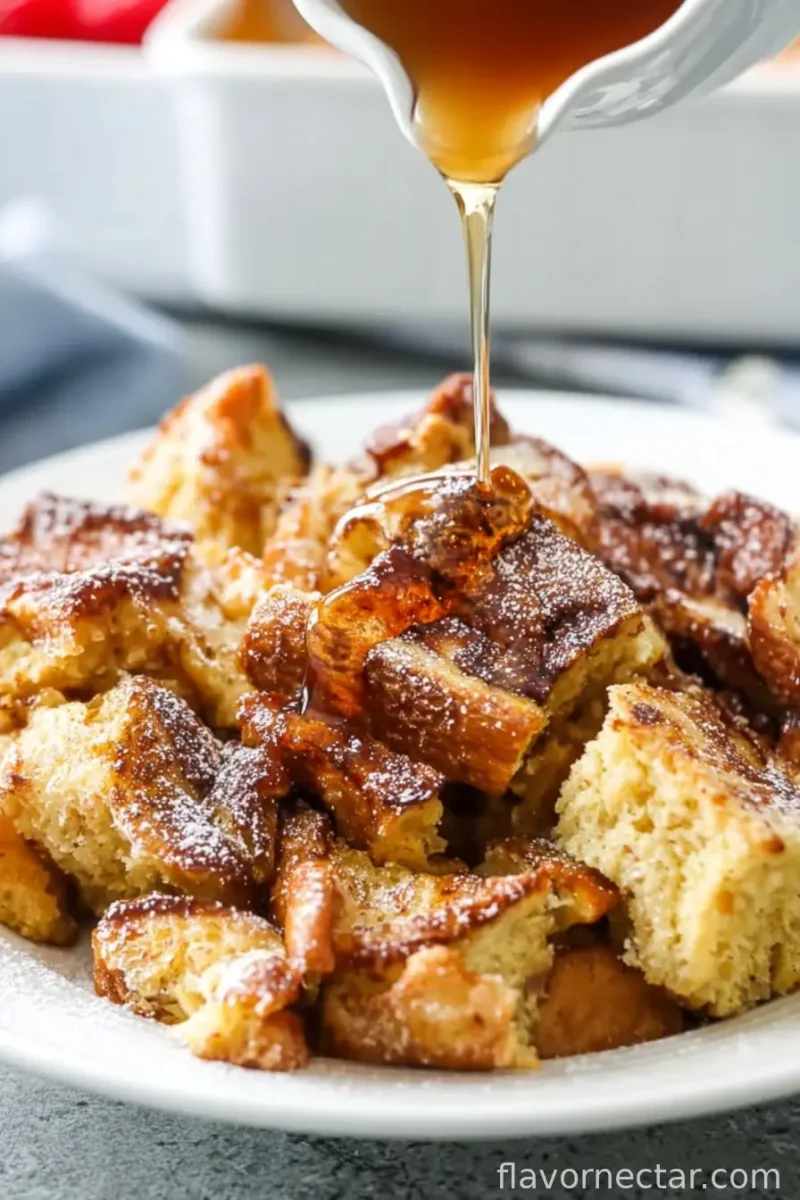
This French toast casserole turns buttery bread into a soft, cinnamon-scented bake with a golden top. Assemble it ahead, then bake it for an easy breakfast or brunch centrepiece.
Ingredients
- 1 loafbrioche or challah bread, cut into 2.5 cm cubes
- 8 largeeggs
- 480 ml (2 cups)whole milk
- 120 ml (½ cup)double cream
- 100 g (½ cup)granulated sugar
- 10 ml (2 teaspoons)pure vanilla extract
- 4 g (1½ teaspoons)ground cinnamon
- 1.5 g (¼ teaspoon)salt
- 28 g (2 tablespoons)unsalted butter, melted
- to tasteicing sugar and maple syrup, for serving
Instructions
- 1
Arrange the bread
Grease a 23 x 33 cm baking dish with butter. Spread the bread cubes evenly in the dish.
- 2
Whisk the custard
In a large bowl, whisk the eggs, milk, double cream, sugar, vanilla, cinnamon and salt until smooth.
- 3
Soak the bread
Pour the custard evenly over the bread, gently pressing down so all the cubes soak it up. Cover and refrigerate for at least 30 minutes or overnight.
- 4
Heat the oven
Preheat the oven to 175°C (350°F). Just before baking, drizzle the melted butter over the casserole.
- 5
Bake until set
Bake uncovered for 45 minutes, until the top is golden brown and the custard has set.
- 6
Finish and serve
Leave the casserole to cool slightly, then dust with icing sugar and serve warm with maple syrup.
What is French toast casserole?
It is a baked take on French toast: bread is soaked in an egg-and-milk custard, then cooked in one dish rather than fried slice by slice. Despite its name, this casserole is best understood as a brunch-style adaptation of French toast, not a claim about a traditional French casserole.
This version uses enriched brioche or challah, whose soft crumb absorbs the cinnamon-vanilla custard while keeping the bake tender. The overnight option makes it convenient to prepare ahead.
Nutrition and macros by portion
The nutrition label shows one serving as written: 320 calories, 11g protein, 38g carbs, 14g fat.
| Portion | Adjustment | kcal | Protein | Carbs | Fat |
|---|---|---|---|---|---|
| Lighter | Less syrup, smaller portion | 224 kcal | 8g | 27g | 10g |
| This serving | As written | 320 kcal | 11g | 38g | 14g |
| Hungry | Larger portion | 480 kcal | 17g | 57g | 21g |
The bread and sugar supply most of the carbohydrates, while the eggs contribute protein. The eggs, whole milk, double cream and butter provide much of the fat. Pair a portion with fresh fruit or plain yoghurt for a more balanced plate.
Choosing the bread
Brioche: its buttery, tender crumb makes a rich, soft casserole. Cut it into even cubes so the custard can soak through consistently.
Challah: this is a good alternative with a slightly firmer texture. Either bread works best when the cubes can hold their shape rather than turning to mush.
Getting the custard right
Whisk thoroughly: make sure the eggs, milk, cream and flavourings are combined into a smooth mixture before pouring. This helps avoid patches of egg white or concentrated seasoning.
Soak evenly: pour the custard across the whole dish and press the bread down gently. The recipe calls for at least 30 minutes in the fridge, with overnight soaking as an option.
Watching the bake
The top should turn golden brown, and the custard should look set rather than liquid when the casserole is ready. Bake uncovered for the stated 45 minutes, as the exposed bread needs to brown.
Ovens and dishes can vary, so use the colour and set texture as well as the stated time. Let it cool slightly before serving so the portions are easier to lift.
Making it ahead
You can assemble the casserole, cover it and refrigerate it overnight, as the method allows. Add the melted butter just before it goes into the oven.
If you prepare it only 30 minutes ahead, keep it covered in the fridge during that soaking time. Avoid leaving the egg-and-dairy mixture at room temperature while it waits.
Serving ideas
Serve it warm with icing sugar and maple syrup, as suggested in the recipe. Add the syrup at the table so everyone can choose how much they want.
For a more balanced brunch plate, pair a portion with fresh fruit or plain yoghurt. Their freshness works well alongside the sweet, rich casserole.
Recipe notes & tips
- Cut the bread into similarly sized cubes so they soak at a similar rate.
- Press the bread down gently after adding the custard, without crushing the cubes.
- Cover the dish during its chilling time to keep the surface from drying out.
- Add the melted butter just before baking, as directed.
- Let the casserole cool slightly before cutting and serving.
Variations
- Add berries: scatter fresh berries over the soaked bread before baking.
- Use nutmeg: add a little alongside the cinnamon for a warmer spice note.
- Try citrus: add finely grated orange zest to the custard for a bright aroma.
- Serve with yoghurt: offer plain yoghurt alongside the casserole instead of extra syrup.
- Choose challah: use challah in place of brioche for a slightly firmer texture.
Common mistakes to avoid
- Uneven cubes: very different sizes soak inconsistently; cut the bread into even pieces.
- Dry patches: custard may miss some bread; pour it evenly and press the cubes down gently.
- Skipping the soak: the centre may not absorb enough custard; chill for at least 30 minutes.
- Browning too soon: if the top colours before the custard sets, check the bake closely rather than relying on colour alone.
- Cutting it straight away: very hot portions can be difficult to lift; allow the casserole to cool slightly first.
How to store
Refrigerate leftovers in a covered container and eat within 3 days. Reheat portions in the oven or microwave until hot throughout; the top may be softer after storage.
Frequently asked questions
Can I assemble French toast casserole the night before?
Yes. Cover it and refrigerate overnight, then drizzle over the melted butter just before baking.
What bread works best?
Brioche or challah are both suitable. Brioche gives a particularly buttery, soft result, while challah is a little firmer.
Can I use ordinary milk instead of whole milk?
The recipe specifies whole milk. Lower-fat milk may make the custard less rich, but it can still be used.
How do I know when it is cooked?
Look for a golden-brown top and custard that has set rather than appearing liquid. The method gives a baking time of 45 minutes at 175°C.
Can I freeze leftovers?
The recipe does not specify freezing. For best texture, store leftovers in the fridge and reheat within 3 days.
What can I serve with it?
Icing sugar and maple syrup are the suggested toppings. Fresh fruit or plain yoghurt also makes a good accompaniment.
Cook it from the original
This recipe comes from flavornectar.com. Their page has the author’s own photos, notes and tips — the best place to cook it from.
Open the recipe on flavornectar.com