
Madrid-style pork
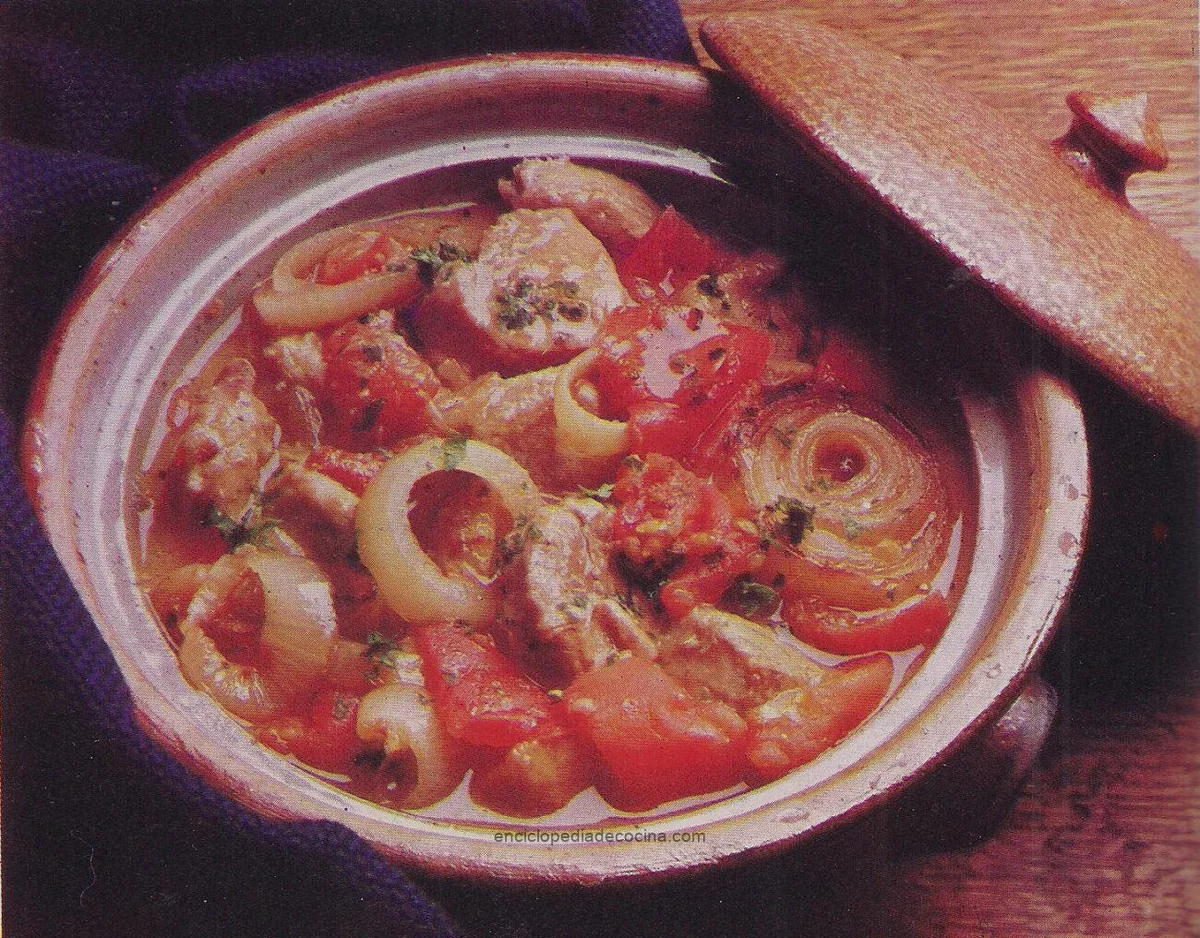
Madrid-style pork is a stovetop casserole of browned pork loin simmered with onions, garlic, tomatoes, white wine and herbs. It suits relaxed dinners because it can be made ahead and served with saffron-seasoned rice.
Ingredients
- 6 tablespoons (about 48 g)plain flour
- 1.5 kgpork loin, sliced
- 4 tablespoons (60 ml)oil
- 2onions
- 2 clovesgarlic
- Not specifiedtomatoes
- 1½ cups (360 ml)white wine
- 1 teaspoondried basil
- 1 tablespoonparsley
Instructions
- 1
Coat the pork
Season the flour on a plate, then coat both sides of each pork loin slice in it.
- 2
Brown the slices
Warm the oil in a large frying pan over a moderate heat. Add the pork and brown it for 3–4 minutes on each side. Use tongs to transfer the meat to a flameproof casserole or saucepan.
- 3
Fry the aromatics
Add the onions and garlic to the frying pan and fry for 12–15 minutes, until well browned.
- 4
Add wine and herbs
Stir in the tomatoes, wine and dried basil, then cook for a further 2–3 minutes.
- 5
Simmer the casserole
Pour the sauce over the pork. Cover the casserole or saucepan and cook over a low heat for 1 hour.
- 6
Finish and serve
Take the pan off the heat and scatter the parsley over the pork. Serve straight from the casserole.
What is Madrid-style pork?
This is a Spanish-style pork casserole: slices of meat are browned, then gently cooked in a sauce of onion, garlic, tomato, wine and herbs. The recipe’s Madrid-style name points to a home-cooked, saucy dish rather than a precisely defined regional formula.
Flour on the pork helps the slices brown and gives the sauce a little body as it simmers. The wine and herbs bring savoury depth, while saffron-seasoned rice makes a fitting accompaniment.
Nutrition and macros by portion
The nutrition label shows one serving as written: 650 calories, 63g protein, 20g carbs, 25g fat.
| Portion | Adjustment | kcal | Protein | Carbs | Fat |
|---|---|---|---|---|---|
| Lighter | Less oil, more vegetables | 455 kcal | 44g | 14g | 18g |
| This serving | As written | 650 kcal | 63g | 20g | 25g |
| Hungry | Add a larger rice portion | 975 kcal | 95g | 30g | 38g |
The pork supplies most of the protein, while the oil contributes much of the fat. Flour, onions, tomatoes and wine contribute carbohydrates; serving it with rice adds more. For a balanced plate, pair a moderate portion of pork and sauce with rice and a generous serving of vegetables.
The pork and flour
Pork loin: slice it evenly so the pieces brown at a similar rate and finish cooking together. The method uses slices, so avoid cutting the loin into cubes.
Flour coating: season the flour before coating the meat, as directed. Shake off any thick excess so the coating browns rather than forming clumps in the pan.
Build the sauce
Onion and garlic: give them the full 12–15 minutes to brown well, stirring as needed to prevent scorching. This step creates much of the casserole’s savoury base.
Tomatoes and wine: the recipe does not specify a tomato quantity, so add the amount you have chosen for your sauce. Let the mixture cook for 2–3 minutes before pouring it over the pork.
Keep the simmer gentle
Low heat: once covered, the casserole should simmer quietly for an hour, not boil vigorously. A hard boil can make the pork less tender and the sauce reduce too quickly.
Check the pan occasionally: if the sauce is bubbling strongly, lower the heat. If it looks very thick before the pork is tender, add a small splash of water.
How to tell it is ready
Tenderness: after an hour, check a slice with a fork; it should be cooked through and easy to cut. If it is still firm, continue simmering gently and check again shortly.
Sauce: expect a spoonable sauce that clings lightly to the pork. The exact consistency will vary because the recipe gives no quantity for the tomatoes.
Make-ahead timing
The casserole can be prepared at least an hour before guests arrive, as the recipe description suggests. Cool it promptly if you are holding it for longer, then refrigerate and reheat gently until piping hot.
Add the parsley just before serving for a fresher finish. Serve the pork in its cooking dish, with saffron-seasoned rice alongside.
Recipe notes & tips
- Cut the pork into evenly sized slices so they brown and cook at a similar pace.
- Brown the pork in batches if the pan is crowded; it needs space to colour properly.
- Scrape any browned bits from the frying pan into the sauce when you add the tomatoes and wine.
- Keep the casserole covered during its hour of gentle cooking to limit moisture loss.
- Since the tomato amount is unspecified, add enough to make a sauce that will cover the pork when poured over it.
- Cook the saffron-seasoned rice separately and serve it alongside the casserole.
Variations
- Add mushrooms: brown sliced mushrooms with the onions for an earthier sauce.
- Use chicken: replace the pork with chicken thighs and check that they are cooked through before serving.
- Add smoked paprika: stir a little into the sauce with the basil for a smoky note.
- Include peppers: fry sliced red pepper with the onions for extra sweetness and colour.
- Finish with lemon: add a small squeeze just before serving to brighten the rich sauce.
Common mistakes to avoid
- Crowding the pan: the pork will steam rather than brown; cook it in batches if needed.
- Cooking the onions too quickly: they can scorch before browning; keep the heat moderate and stir regularly.
- Boiling the casserole hard: this can toughen the pork and reduce the sauce too far; use a low heat.
- Adding too much flour: a heavy coating can turn pasty; shake off excess before browning.
- Assuming a tomato quantity: none is given in the recipe; add tomatoes to suit the amount of sauce you want.
How to store
Refrigerate leftovers in a covered container for up to 3 days. Reheat gently in a covered saucepan until piping hot, adding a splash of water if the sauce has thickened; store rice separately and reheat it thoroughly.
Frequently asked questions
Can I make Madrid-style pork ahead?
Yes. The recipe description says it can be prepared at least an hour before guests arrive. Refrigerate it if holding it for longer, then reheat gently until piping hot.
How much tomato should I use?
The ingredient list does not give a quantity. Add enough chopped or canned tomato to create a sauce that will coat the pork, bearing in mind that the final consistency will depend on how much you use.
What should I serve with it?
Saffron-seasoned rice is the suggested accompaniment. Vegetables or a simple salad can also go alongside.
Can I use a different cut of pork?
Pork shoulder can work, but it may need longer simmering to become tender. Check it as it cooks and keep the heat low.
How do I know the pork is done?
After the hour of gentle simmering, check that a slice is cooked through and tender when tested with a fork. If it is still firm, continue cooking gently and check again.
Cook it from the original
This recipe comes from enciclopediadecocina.com. Their page has the author’s own photos, notes and tips — the best place to cook it from.
Open the recipe on enciclopediadecocina.com