
1-Hour Soft and Buttery Dinner Rolls
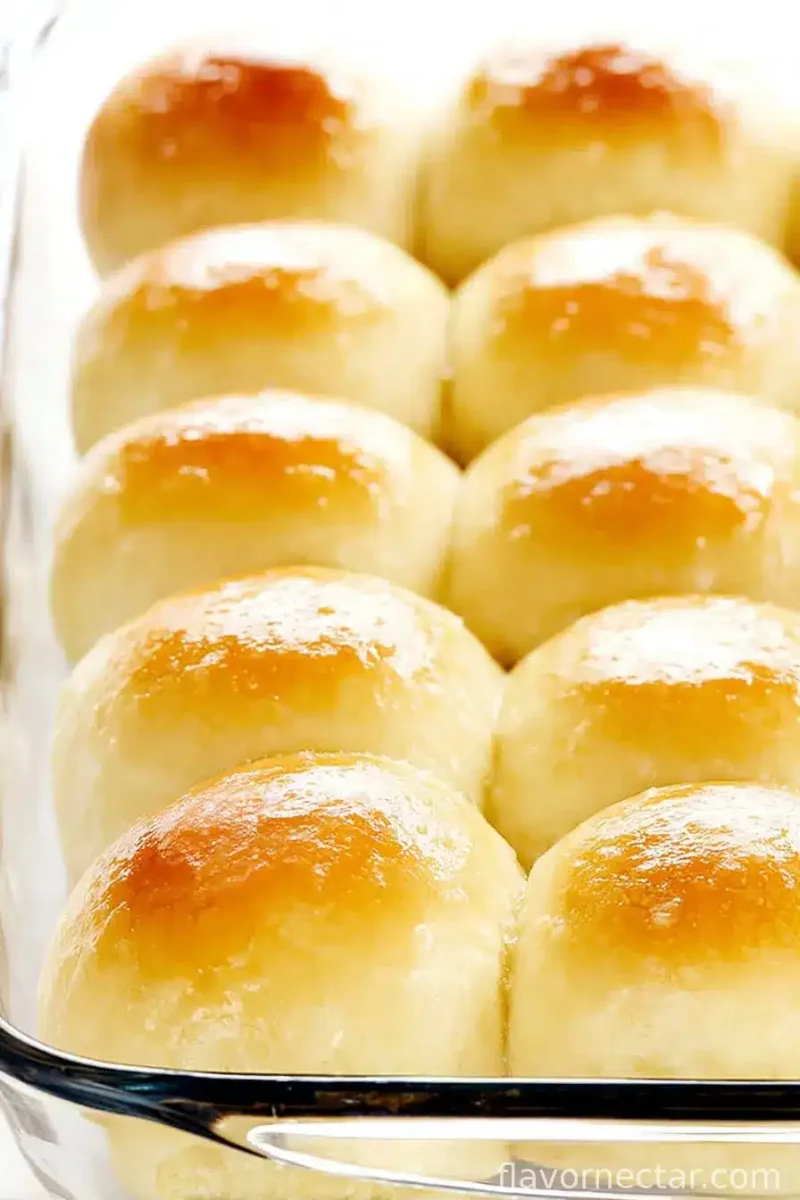
These soft, buttery American dinner rolls are made with a quick yeast dough and bake in about an hour. Serve them warm alongside a meal, or use them to mop up sauces and gravy.
Ingredients
- 440 g (3½ cups)plain flour
- 7 g (1 packet; 2¼ tsp)active dried yeast
- 240 ml (1 cup), warmed to about 43°C (110°F)milk
- 50 g (¼ cup)granulated sugar
- 57 g (¼ cup), melted, plus extra for brushingunsalted butter
- 1 largeegg
- 1 tspsalt
- As needednon-stick cooking spray or extra flour, for dusting
Instructions
- 1
Activate the yeast
In a large mixing bowl, combine the warm milk, sugar and yeast. Leave for 5 minutes, until foamy.
- 2
Add wet ingredients
Add the melted butter, egg and salt to the yeast mixture, then stir to combine.
- 3
Mix and knead
Gradually mix in the flour until a soft dough forms. Knead on a lightly floured surface for 5–7 minutes, until smooth and elastic.
- 4
Shape the rolls
Divide the dough into 12 equal pieces and shape each into a ball. Arrange them in a greased 23 × 33 cm (9 × 13-inch) baking dish.
- 5
Let the dough rise
Cover with a clean tea towel and leave in a warm place for 20 minutes, or until puffy.
- 6
Bake and brush
Heat the oven to 190°C (375°F). Bake for 18–20 minutes, until golden brown. Brush the warm rolls with extra melted butter before serving.
What are dinner rolls?
Dinner rolls are small, soft bread rolls served alongside a meal, especially in American home cooking. This version uses milk, sugar, egg and butter for a tender crumb and a rich finish.
The quick rise and simple shaping make them practical when you want homemade bread on the table in about an hour.
Nutrition and macros by portion
The nutrition label shows one serving as written: 150 calories, 4g protein, 24g carbs, 4g fat.
| Portion | Adjustment | kcal | Protein | Carbs | Fat |
|---|---|---|---|---|---|
| Lighter | Use less brushing butter | 105 kcal | 3g | 17g | 3g |
| This serving | As written | 150 kcal | 4g | 24g | 4g |
| Hungry | Serve two rolls | 225 kcal | 6g | 36g | 6g |
Flour and sugar provide most of the carbohydrates, while butter contributes much of the fat and the milk, egg and flour supply some protein. Pair a roll with vegetables and a protein-rich main for a more balanced plate.
Working with the yeast
Warm milk: Aim for about 43°C (110°F), as specified; milk that is too hot can stop the yeast working properly.
Foam: Give the milk, sugar and yeast 5 minutes to stand. A foamy surface is the cue to continue with the recipe.
Getting a supple dough
Flour: Add it gradually so you can stop once a soft dough forms; the dough should not become stiff.
Kneading: Work it for 5–7 minutes on a lightly floured surface. It is ready when it feels smooth and elastic.
Shaping and rising
Even pieces: Divide the dough into 12 equal portions so the rolls bake at a similar rate.
Warm spot: Cover the shaped rolls and leave them for 20 minutes. Look for a puffy appearance rather than relying only on the clock.
Checking when they are baked
Colour: Bake at 190°C (375°F) for 18–20 minutes, watching for a golden-brown top.
Butter finish: Brush the rolls with melted butter while they are still warm so it coats the surface easily.
Serving ideas
At the table: Serve the rolls warm with a main meal, particularly one with gravy, soup or a sauce to scoop up.
For a simple snack, split one while warm and add a little butter. Their soft texture also makes them handy for small sandwiches.
Recipe notes & tips
- Measure the milk temperature before mixing it with the yeast.
- Add the flour gradually so the dough stays soft.
- Use only a light dusting of flour while kneading.
- Leave enough room between the dough balls for them to puff.
- Brush the rolls while they are warm for an even buttery coating.
Variations
- Herb butter: Brush the baked rolls with melted butter mixed with finely chopped herbs.
- Garlic finish: Add crushed garlic to the extra melted butter used for brushing.
- Seeded tops: Scatter seeds over the rolls before baking.
- Wholemeal blend: Replace part of the plain flour with wholemeal flour, keeping in mind that the dough may feel firmer.
- Savoury topping: Sprinkle a little grated cheese over the rolls before baking.
Common mistakes to avoid
- Milk too hot: It can hinder the yeast; use milk at about 43°C (110°F).
- Rushing the foam: Let the yeast mixture stand for the full 5 minutes before adding the other ingredients.
- Adding flour too quickly: Mix it in gradually to avoid making a stiff dough.
- Uneven portions: Divide the dough into 12 equal pieces so the rolls bake consistently.
- Overbaking: Check at 18 minutes and take the rolls out when they are golden brown.
How to store
Keep cooled rolls in an airtight container at room temperature and eat within 2 days. Rewarm briefly in the oven or microwave; freeze for longer storage and thaw before reheating.
Frequently asked questions
Can I make the dough ahead?
This recipe is written for a quick rise and baking in the same session. For best results, follow the method and bake the rolls after their 20-minute rise.
How can I tell if the yeast is active?
After 5 minutes, the milk, sugar and yeast mixture should look foamy. If it does not, check that the yeast is in date and the milk was not too hot.
Can I use instant yeast?
The recipe specifies active dried yeast, which is first mixed with warm milk and sugar. Instant yeast may behave differently, so follow the packet guidance if substituting.
Can I prepare these without a stand mixer?
Yes. The method calls for mixing in a bowl and kneading by hand on a lightly floured surface.
What should the rolls look like when done?
They should have golden-brown tops after 18–20 minutes at 190°C (375°F).
Can I freeze the rolls?
Yes. Freeze them once cooled, then thaw and reheat before serving.
Cook it from the original
This recipe comes from flavornectar.com. Their page has the author’s own photos, notes and tips — the best place to cook it from.
Open the recipe on flavornectar.com