
Maple Glazed Salmon Recipe
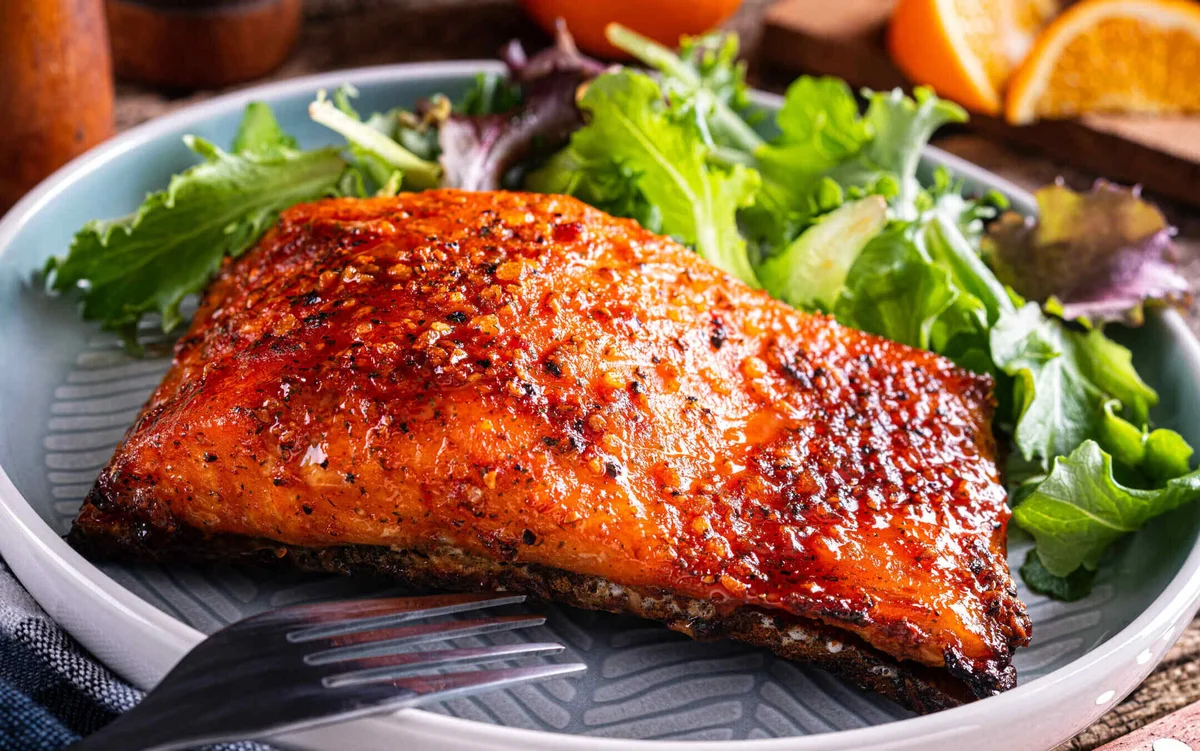
Maple glazed salmon pairs tender oven-baked fillets with a sweet, savoury glaze sharpened with Dijon mustard and garlic. It is a straightforward American-inspired dinner that comes together in about 30 minutes.
Ingredients
- 4 fillets (about 170 g each [6 oz])salmon
- 60 ml (¼ cup)maple syrup
- 30 ml (2 tbsp)soy sauce
- 15 ml (1 tbsp)Dijon mustard
- 2 clovesgarlic, minced
- ½ tspblack pepper
Instructions
- 1
Preheat the oven
Heat the oven to 200°C (400°F).
- 2
Mix the glaze
In a mixing bowl, whisk together the maple syrup, soy sauce, Dijon mustard, minced garlic and black pepper.
- 3
Arrange the salmon
Set the salmon fillets on a baking sheet lined with parchment paper.
- 4
Brush with glaze
Brush the maple mixture over the salmon fillets.
- 5
Bake until flaky
Bake in the preheated oven for 20 minutes, or until the salmon is cooked through and flakes easily with a fork.
What is maple glazed salmon?
Maple glazed salmon is an oven-baked fish dish with a sweet and savoury coating. Maple syrup is a familiar North American ingredient, and its sweetness works naturally with salmon’s rich flavour.
This version combines the syrup with soy sauce, Dijon mustard, garlic and black pepper. The glaze is quick to mix and gives the fillets a flavourful finish without a separate pan sauce.
Nutrition and macros by portion
The nutrition label shows one serving as written: 350 calories, 30g protein, 20g carbs, 15g fat.
| Portion | Adjustment | kcal | Protein | Carbs | Fat |
|---|---|---|---|---|---|
| Lighter | More vegetables, less rice | 245 kcal | 21g | 14g | 11g |
| This serving | As written | 350 kcal | 30g | 20g | 15g |
| Hungry | Add a hearty side | 525 kcal | 45g | 30g | 23g |
The salmon provides most of the protein and fat, while the maple syrup contributes much of the carbohydrate. Serve a fillet with vegetables and a modest portion of rice or potatoes for a balanced plate.
The glaze ingredients
Maple syrup: it brings sweetness and helps the glaze cling to the fish. Use pure maple syrup for its distinctive flavour.
Soy and mustard: soy sauce adds savoury depth, while Dijon gives the mixture a mild tang. Whisk them thoroughly with the syrup so each brushful is evenly mixed.
Garlic and pepper: minced garlic distributes through the glaze, and black pepper adds a little warmth. Whisking helps avoid concentrated patches of either.
Brushing the fillets
Glaze coverage: brush the mixture over the top of each fillet before baking. Spread it evenly rather than leaving a pool in one spot.
Parchment: lining the baking sheet makes it easier to lift off the cooked fish and deal with the sticky glaze. Leave a little space between fillets so they are not crowded.
How to tell when it is done
Flaking: the recipe’s main cue is salmon that flakes easily with a fork and is cooked through. Check the thickest part of a fillet, as thinner pieces may finish sooner.
Timing: bake for 20 minutes at 200°C, but use the texture cue as well as the stated time. Fillet thickness and oven performance can affect how quickly the fish cooks.
Keeping the fish tender
Even portions: fillets of similar thickness are likely to cook at a similar pace. If yours vary noticeably, check the thinner ones first.
Gentle handling: salmon can break apart once cooked, so lift it carefully from the lined tray. A wide spatula can help keep each fillet intact.
What to serve with it
Fresh sides: serve the salmon with green vegetables or a crisp salad to contrast with the sweet glaze. These add freshness without competing with the fish.
Heartier sides: rice or potatoes make the meal more substantial and can take up any glaze left on the plate. Add a squeeze of lemon at the table if you like a brighter finish.
Recipe notes & tips
- Pat the salmon dry before placing it on the lined baking sheet so the glaze coats the surface more evenly.
- Whisk the glaze again just before brushing if its ingredients have started to separate.
- Use a brush to spread the glaze across the top of each fillet.
- Check the thickest fillet with a fork near the end of baking.
- Lift the cooked salmon carefully, as tender flakes can separate from the fillet.
Variations
- Add citrus: serve with lemon wedges for a fresh, tangy contrast.
- Use wholegrain mustard: swap it for Dijon for a more textured glaze.
- Add chilli: mix a little chilli into the glaze for gentle heat.
- Finish with herbs: scatter chopped parsley over the cooked salmon before serving.
- Serve with greens: pair the fish with steamed green vegetables for a simple side.
Common mistakes to avoid
- Uneven glaze: whisk the mixture well and brush it across each fillet rather than leaving it in one spot.
- Crowded tray: leave space between the fillets so they are easier to handle and check.
- Relying only on the timer: check that the thickest part is cooked through and flakes easily.
- Overhandling the fish: use a wide spatula to lift the tender fillets without breaking them.
- Uneven portions: check thinner fillets earlier, as they may finish before thicker ones.
How to store
Refrigerate leftover salmon in an airtight container and eat within 3 days. Reheat gently in a low oven or microwave until warmed through, taking care not to overcook it.
Frequently asked questions
Can I use frozen salmon?
Thaw it completely in the refrigerator first, then pat it dry before adding the glaze. The recipe’s baking time is written for thawed fillets.
Can I prepare the glaze ahead?
Yes. Mix it ahead and keep it covered in the refrigerator, then whisk it again before brushing it over the salmon.
How do I know the salmon is cooked?
The method’s cue is that it is cooked through and flakes easily with a fork. Check the thickest section of a fillet.
Can I cook the salmon without parchment?
Parchment is specified to line the baking sheet and helps with sticky glaze and serving. If you do not use it, use a suitable baking sheet and take care when lifting the fish.
What can I serve with maple glazed salmon?
Green vegetables or salad bring a fresh contrast, while rice or potatoes make the meal more substantial.
Cook it from the original
This recipe comes from dirtydishesmessykisses.com. Their page has the author’s own photos, notes and tips — the best place to cook it from.
Open the recipe on dirtydishesmessykisses.com