
Garlic Bread Recipe
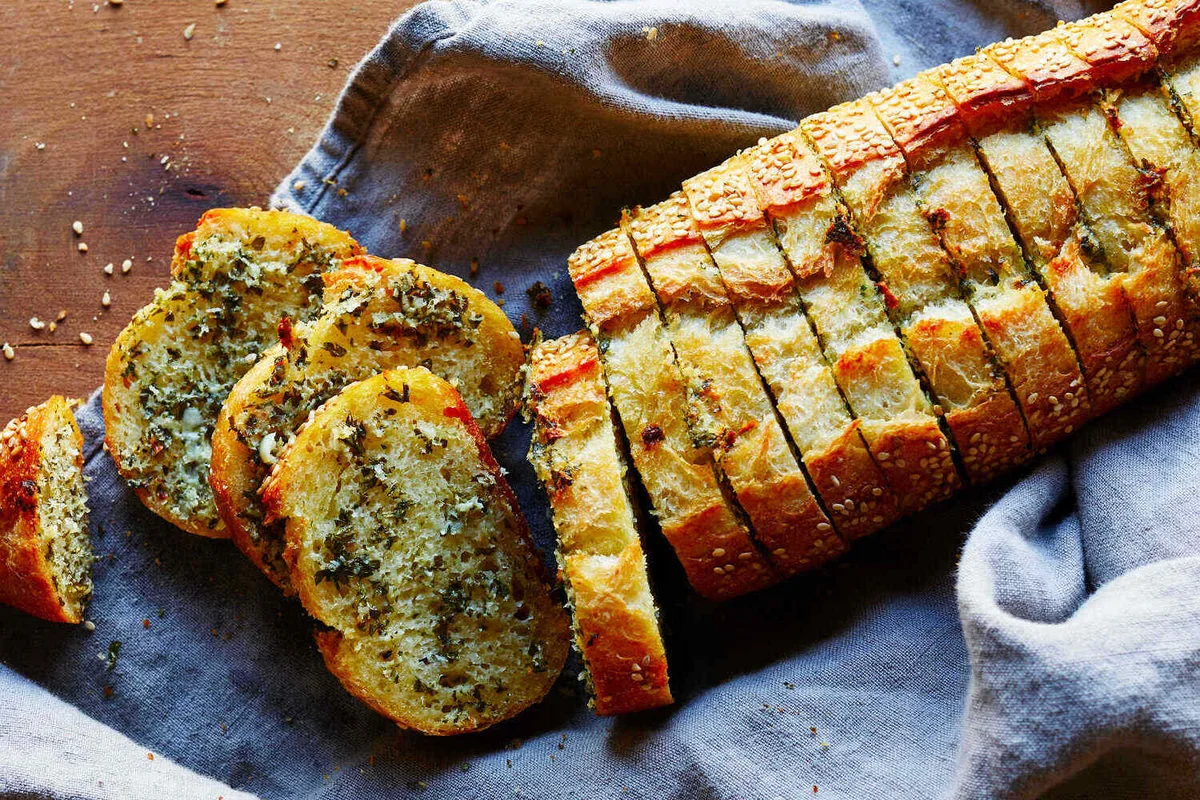
This garlic bread pairs a crisped French loaf with soft butter, fresh garlic, parsley and Parmesan. It is quick to prepare and works well alongside pasta, soup or a salad.
Ingredients
- 1 loafFrench bread
- 115 g (1/2 cup)unsalted butter, softened
- 4 clovesgarlic, minced
- 8 g (2 tablespoons)fresh parsley, chopped
- 25 g (1/4 cup)grated Parmesan cheese
Instructions
- 1
Preheat the oven
Heat the oven to 190°C (375°F).
- 2
Halve the loaf
Slice the French bread horizontally into two halves.
- 3
Mix the butter
In a bowl, combine the softened butter, minced garlic and chopped parsley.
- 4
Spread the mixture
Spread the garlic butter evenly over the cut sides of the bread.
- 5
Add the Parmesan
Sprinkle the grated Parmesan over the garlic butter.
- 6
Arrange the bread
Set the bread halves on a baking sheet with their cut sides facing up.
- 7
Bake until crisp
Bake in the preheated oven for 10–15 minutes, until the bread is golden and crisp.
- 8
Slice and serve
Take the bread out of the oven and leave it to cool briefly, then slice and serve warm.
What is garlic bread?
Garlic bread is bread flavoured with garlic and fat, then heated until fragrant and crisp at the edges. This version uses a French loaf, parsley and Parmesan for a simple, savoury side.
It is often associated with Italian-American cooking, while its flavours recall Italian preparations such as bruschetta. Here, spreading the topping over the cut loaf makes it easy to bake and share.
Nutrition and macros by portion
The nutrition label shows one serving as written: 250 calories, 6g protein, 30g carbs, 12g fat.
| Portion | Adjustment | kcal | Protein | Carbs | Fat |
|---|---|---|---|---|---|
| Lighter | Use less garlic butter | 175 kcal | 4g | 21g | 8g |
| This serving | As written | 250 kcal | 6g | 30g | 12g |
| Hungry | Serve a larger slice | 375 kcal | 9g | 45g | 18g |
The bread supplies most of the carbohydrates, while butter contributes much of the fat; Parmesan adds some fat and protein. Serve a slice with a vegetable-rich salad or soup to round out the plate.
Choosing the bread
The loaf: French bread gives you a sturdy crust and a soft interior that can hold the butter mixture. Cut it horizontally so each half has a broad surface for topping.
The texture: A fresh loaf will stay tender inside, while a slightly day-old loaf can give a crisper result. Avoid slicing it into individual pieces before baking, as the halves are easier to spread and handle.
Making the garlic butter
Softened butter: It should be pliable enough to mix and spread without tearing the bread. If it is too firm, give it a little more time at room temperature.
Even flavour: Minced garlic and chopped parsley should be mixed through the butter so the topping is distributed across both halves. Spread it right to the edges for an even finish.
Getting the bake right
Oven heat: Bake at 190°C (375°F) for 10–15 minutes, keeping an eye on the bread towards the end. Ovens and loaf sizes vary, so use the colour and texture as your guide.
Doneness: Look for golden edges and a crisp surface, with the butter melted into the bread. The Parmesan should be warmed and lightly coloured rather than deeply browned.
Serving it warm
Rest briefly: A short pause after baking makes the loaf easier to slice while it is still warm. Use a bread knife to cut through the crust without crushing the soft centre.
Pairing: Serve it alongside pasta, tomato soup or a green salad. Its buttery, savoury topping also works well for mopping up a sauce.
Timing and preparation
The stated total time is 25 minutes, including the 10–15 minutes in the oven. Mixing the topping and spreading it over the loaf are the main preparation tasks.
For the best texture, bake shortly before serving. Once baked, the crust gradually softens as the bread cools.
Recipe notes & tips
- Let the butter soften before mixing so it spreads easily.
- Chop the garlic finely to distribute its flavour throughout the topping.
- Spread the mixture evenly over both cut surfaces.
- Start checking the bread at 10 minutes, as browning can happen quickly.
- Slice with a serrated bread knife to keep the loaf from compressing.
Variations
- Extra herbs: Add chopped basil alongside the parsley for a different herbal note.
- More garlic: Increase the minced garlic if you prefer a stronger flavour.
- Cheese swap: Use another finely grated hard cheese in place of Parmesan.
- Chilli heat: Mix a pinch of chilli flakes into the butter for a gentle kick.
- Crispier slices: Cut the bread into thick slices before topping and baking, keeping an eye on them as they may cook faster.
Common mistakes to avoid
- Cold butter: It is difficult to spread and can tear the loaf; soften it before mixing.
- Uneven topping: Bare patches bake differently; spread the butter mixture over the full cut surface.
- Oven distraction: The edges can overbrown; check the bread from the 10-minute mark.
- Slicing too soon: The loaf may squash while very hot; let it cool briefly before cutting.
- Serving it late: The crust softens as the bread sits; bring it to the table soon after baking.
How to store
Keep leftover garlic bread in an airtight container in the fridge for up to 2 days. Reheat in an oven until warmed through and crisp; the microwave will soften the crust.
Frequently asked questions
Can I prepare the garlic butter ahead?
Yes. Mix the butter, garlic and parsley ahead and keep it covered in the fridge. Let it soften enough to spread before topping the bread.
Can I use another type of bread?
Yes, a similar sturdy loaf will work. The baking time may vary depending on its size and thickness, so check for golden, crisp edges.
How do I know when the bread is done?
It should be golden at the edges and crisp on the surface, with the butter melted into the bread. Begin checking at 10 minutes.
Can I freeze garlic bread?
You can freeze the prepared, unbaked halves, wrapped well. Bake from frozen until golden and crisp, allowing extra time and checking the centre is hot.
Can I make this without Parmesan?
Yes. Leave it out and bake the bread with the garlic butter as directed; the result will be less cheesy.
Cook it from the original
This recipe comes from dirtydishesmessykisses.com. Their page has the author’s own photos, notes and tips — the best place to cook it from.
Open the recipe on dirtydishesmessykisses.com