
Salmon With Lemon Butter Sauce
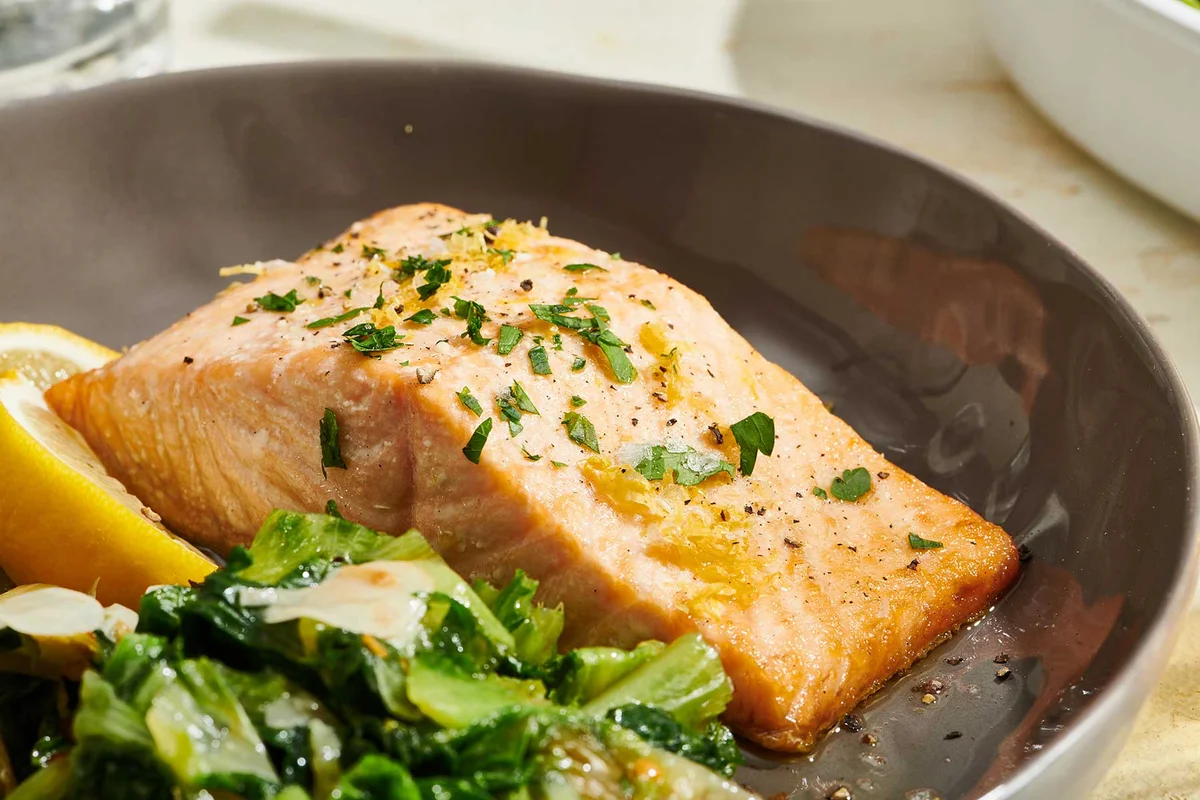
Pan-seared salmon is served with a quick, tangy sauce of butter, garlic and lemon. It makes a straightforward main course that is ready in about 25 minutes.
Ingredients
- 4 fillets (about 170 g each; 6 oz each)salmon
- 15 ml (1 tbsp)olive oil
- 30 g (2 tbsp)butter
- 1 clove, mincedgarlic
- 1lemon, juiced and zested
- 15 ml (1 tbsp)chopped parsley
- to tastesalt and pepper
Instructions
- 1
Season the salmon
Season the salmon fillets on both sides with salt and pepper.
- 2
Cook the fillets
Heat the olive oil in a skillet over medium-high heat. Cook the salmon for 4–5 minutes on each side, until golden brown and cooked through. Lift the fillets out of the skillet and set them aside.
- 3
Cook the garlic
Add the butter and garlic to the same skillet. Cook for about 1 minute, until fragrant.
- 4
Add the lemon
Add the lemon juice and zest to the skillet, then stir to combine.
- 5
Coat the salmon
Return the salmon to the skillet and spoon the sauce over the fillets. Cook for another 1–2 minutes.
- 6
Garnish and serve
Scatter over the chopped parsley and serve immediately.
What is salmon with lemon butter sauce?
This is a simple American-style preparation of salmon, seared in a pan and finished with a bright butter sauce. It draws on familiar home-cooking ingredients rather than one specific regional tradition.
Here, the fish browns first, then returns to the skillet so the lemon, garlic and butter can coat it without masking the salmon's flavour.
Nutrition and macros by portion
The nutrition label shows one serving as written: 350 calories, 34g protein, 2g carbs, 22g fat.
| Portion | Adjustment | kcal | Protein | Carbs | Fat |
|---|---|---|---|---|---|
| Lighter | Use less butter | 245 kcal | 24g | 1g | 15g |
| This serving | As written | 350 kcal | 34g | 2g | 22g |
| Hungry | Add potatoes or rice | 525 kcal | 51g | 3g | 33g |
Salmon provides most of the protein and some of the fat, while the butter and olive oil contribute much of the remaining fat. The small amount of carbohydrate comes mainly from the lemon and garlic; serve with vegetables and a suitable portion of potatoes or rice for a more complete plate.
Choosing the salmon
Fillet size: The recipe calls for four fillets of about 170 g each. Similar thickness helps them cook at roughly the same pace.
Skin: Skin-on or skinless fillets both work. If using skin-on salmon, start skin-side down and let it release from the pan before turning.
Getting a good sear
Hot pan: Heat the oil over medium-high heat before adding the fish, and leave space around each fillet. A crowded skillet can cool down and make browning harder.
Turning: Let the first side cook undisturbed for 4–5 minutes, then turn carefully and cook the other side for the same time, as directed.
Making the lemon butter sauce
Garlic: Cook it in the butter for about 1 minute, stirring and watching closely so it becomes fragrant without browning too much.
Lemon: Stir the juice and zest into the skillet, then return the salmon and spoon the sauce over it. The final 1–2 minutes warm the fish with the sauce.
How to tell when it is done
Doneness: The recipe times are a guide; fillet thickness and pan heat affect how quickly salmon cooks. The fish should be cooked through and separate into flakes when gently tested.
Carryover: Serve as soon as the sauce has warmed over the salmon. Leaving the fillets in the hot skillet longer can make them dry.
What to serve with it
Sides: Serve with potatoes, rice or crusty bread to catch the lemon butter sauce. Steamed or roasted green vegetables make a fresh, simple accompaniment.
Timing: Prepare the sides while the salmon cooks, since the fish is best served straight from the pan.
Recipe notes & tips
- Pat the salmon dry before seasoning to help it brown in the skillet.
- Use a skillet large enough to hold the fillets without crowding.
- Have the lemon juiced and zested before you start cooking the salmon.
- Keep the garlic moving in the butter and take care not to let it burn.
- Spoon the sauce over the fish just before serving so each fillet is coated.
Variations
- Add capers: Stir a spoonful into the lemon sauce for a salty, briny note.
- Use dill: Swap the parsley for chopped dill for a different fresh herb flavour.
- Add chilli: Sprinkle in a pinch of chilli flakes with the garlic for gentle heat.
- Try lime: Replace the lemon with lime juice and zest for a sharper citrus variation.
- Include greens: Serve the salmon over wilted spinach and spoon the sauce over both.
Common mistakes to avoid
- Crowding the skillet: The pan can lose heat and the fish may not brown well; cook in batches if needed.
- Turning too soon: The salmon may stick or break; give it time to form a browned surface before turning.
- Burning the garlic: It can turn bitter quickly; cook it for about 1 minute and keep an eye on it.
- Overcooking the fish: Salmon can become dry; use the stated cooking times as a guide and check for doneness.
- Leaving the salmon in the pan: Residual heat continues cooking it; serve promptly after the final 1–2 minutes.
How to store
Refrigerate leftovers in a covered container within 2 hours and eat within 3 days. Reheat gently in a covered pan over low heat until hot, adding a small splash of water if the sauce needs loosening.
Frequently asked questions
Can I use frozen salmon?
Yes, thaw it completely in the refrigerator first, then pat it dry before seasoning and cooking.
How do I know when the salmon is cooked through?
It should be opaque and separate into flakes when gently tested with a fork. Thicker fillets may need more time than the recipe's guide.
Can I make the sauce without garlic?
Yes. Leave it out and proceed with the butter, lemon juice and zest.
Can I use dried parsley?
Fresh parsley is best for the garnish, but a smaller amount of dried parsley can be used if that is what you have.
Can I prepare this ahead?
The lemon can be juiced and zested in advance, but cook the salmon shortly before serving for the best texture.
Cook it from the original
This recipe comes from dirtydishesmessykisses.com. Their page has the author’s own photos, notes and tips — the best place to cook it from.
Open the recipe on dirtydishesmessykisses.com