
Vegetable Panini Recipe
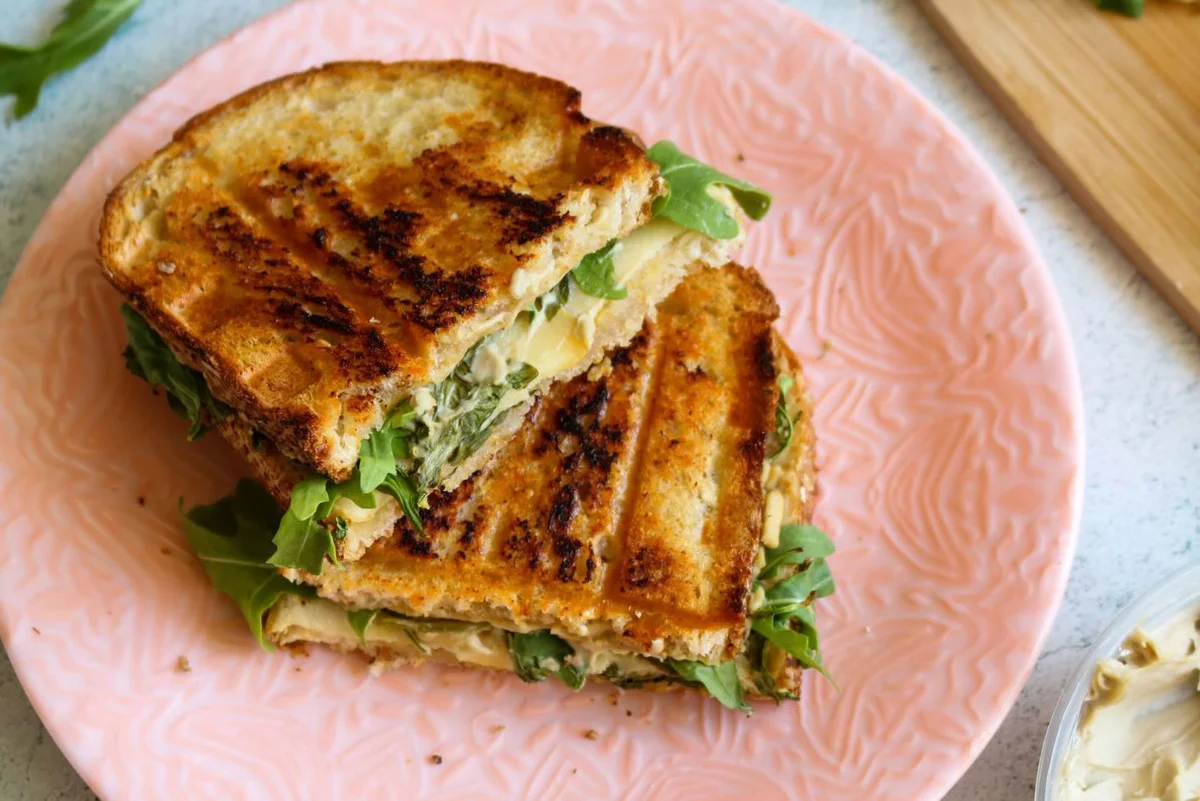
This vegetable panini layers colourful vegetables, pesto and mozzarella between slices of wholegrain or sourdough bread, then presses them until crisp and melted. It makes a quick, warm lunch or light dinner.
Ingredients
- 4 slicesbread (wholegrain or sourdough)
- 150 g (1 cup)sliced bell peppers
- 124 g (1 cup)sliced courgette
- 30 g (1 cup)fresh spinach
- 30 ml (2 tbsp)pesto
- 2 slicesmozzarella
Instructions
- 1
Preheat the press
Preheat the panini press.
- 2
Spread the pesto
Spread pesto over one side of each slice of bread.
- 3
Layer the filling
Arrange the vegetables and mozzarella on two of the bread slices.
- 4
Close the sandwiches
Place the remaining bread slices on top, with the pesto sides facing down.
- 5
Press until golden
Put the sandwiches in the panini press and cook for 5–7 minutes, until the bread is golden and the cheese has melted.
- 6
Serve hot
Serve the panini while hot.
What is a vegetable panini?
A panini is a pressed Italian-style sandwich, usually cooked until the bread is toasted and the filling warmed through. This version pairs pesto and mozzarella with bell peppers, courgette and spinach.
The press browns both sides while bringing the cheese and vegetables together, making it a handy way to turn simple sandwich ingredients into a hot meal.
Nutrition and macros by portion
The nutrition label shows one serving as written: 350 calories, 15g protein, 40g carbs, 15g fat.
| Portion | Adjustment | kcal | Protein | Carbs | Fat |
|---|---|---|---|---|---|
| Lighter | Use less pesto | 245 kcal | 11g | 28g | 11g |
| This serving | As written | 350 kcal | 15g | 40g | 15g |
| Hungry | Add another sandwich | 525 kcal | 23g | 60g | 23g |
The bread supplies most of the carbohydrates, while pesto contributes much of the fat and mozzarella provides protein and fat. The vegetables add volume and colour; serve a panini with a side salad or extra vegetables to round out the plate.
Choosing the bread and pesto
Bread: Wholegrain gives the sandwich a hearty texture, while sourdough brings a firmer crust and tangier flavour. Use slices that are sturdy enough to hold the filling.
Pesto: Spread it across the bread rather than piling it in one spot, so its flavour is distributed through each bite.
Layering the vegetables
Bell peppers and courgette: Slice them so they sit neatly inside the bread and are easy to bite through. Keeping the layers reasonably even helps the sandwiches press uniformly.
Spinach: Add the fresh leaves with the other vegetables; they will soften as the panini cooks.
Getting the cheese to melt
Mozzarella: Place the slices among the vegetables so the cheese can soften through the filling. The method relies on the press being preheated before the sandwiches go in.
Doneness: The panini is ready after 5–7 minutes when the bread is golden and the cheese has melted. Check towards the end of cooking, as presses can brown at different rates.
Serving the panini
Serve it hot, while the bread is crisp and the mozzarella is soft. A simple green salad or a bowl of soup makes a natural side without competing with the pesto.
Timing and texture
The stated total time is 20 minutes, including preparation and cooking. The press cooks the sandwiches in 5–7 minutes, so assemble them before placing them inside.
A golden exterior and melted cheese are the cues to follow; avoid judging by the clock alone if your press runs hotter or cooler.
Recipe notes & tips
- Preheat the press before assembling the sandwiches so they can start cooking as soon as they go in.
- Spread the pesto evenly over the bread to distribute its flavour.
- Keep the vegetable layers even so the sandwiches press consistently.
- Check the panini near the end of the 5–7 minute cooking time for golden bread and melted cheese.
- Serve as soon as they come out of the press for the crispest texture.
Variations
- Try sourdough: Use sourdough slices for a tangy flavour and sturdy crust.
- Use wholegrain: Choose wholegrain bread for a more robust sandwich.
- Change the pesto: Swap in a different pesto to give the filling a new flavour.
- Add more spinach: Increase the fresh leaves for a greener filling.
- Use another cheese: Replace the mozzarella with a cheese that melts well.
Common mistakes to avoid
- Cold press: The bread may not brown evenly; preheat the panini press first.
- Uneven pesto: Some bites can taste much stronger than others; spread it over the whole slice.
- Overfilled bread: The filling may shift while pressing; keep the layers within the edges of the bread.
- Cooking by time alone: The press may brown faster or slower; look for golden bread and melted cheese.
- Waiting to serve: The bread can lose its crispness; serve the sandwiches hot.
How to store
These panini are best eaten freshly pressed. If you have leftovers, refrigerate them in a covered container and reheat in a panini press until hot and crisp.
Frequently asked questions
Can I make this without a panini press?
The recipe specifies a panini press. For the same pressed result, use one if available.
How do I know when the panini is ready?
Cook for 5–7 minutes, checking for golden bread and melted mozzarella.
Can I use sourdough instead of wholegrain bread?
Yes. The recipe allows either wholegrain or sourdough bread.
Can I prepare the sandwiches ahead?
You can assemble them shortly before cooking, but they are best pressed and served hot so the bread stays crisp.
What can I serve with vegetable panini?
A green salad or soup works well alongside the warm sandwich.
Cook it from the original
This recipe comes from dirtydishesmessykisses.com. Their page has the author’s own photos, notes and tips — the best place to cook it from.
Open the recipe on dirtydishesmessykisses.com