
Vegetarian Lasagne – Ostomy-Friendly Recipe
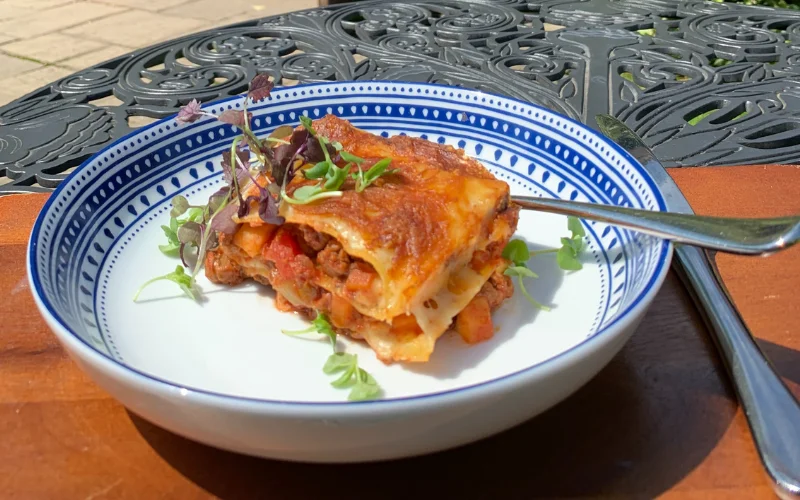
A comforting baked lasagne layered with soy mince, vegetables, tomato sauce and a creamy mozzarella sauce. It is a useful make-ahead supper, with familiar flavours and a soft, tender finish.
Ingredients
- 250 gsoy mince
- 1carrot
- 1parsnip
- 1onion
- 1 clovegarlic
- 300 gchopped tomatoes
- 1 tbsptomato purée
- 1 tsporegano
- 6lasagne sheets
- 25 gbutter
- 25 gflour
- 300 mlmilk
- 200 ggrated mozzarella
- a littleolive oil
- to tastesalt and pepper
Instructions
- 1
Prepare vegetables
Peel the onion, garlic, carrot and parsnip, then dice them.
- 2
Soften vegetables
Put the diced ingredients in a frying pan with a little olive oil. Cook until soft and browned, then add the soy mince and cook for 1 minute more.
- 3
Cook tomato sauce
Stir in the tomato purée and simmer for 1 minute. Add the chopped tomatoes and oregano, then cook for 10 minutes. Season with salt and pepper.
- 4
Make butter roux
In a separate saucepan, melt the butter, add the flour and cook, stirring, until combined.
- 5
Thicken cheese sauce
Add the milk to the saucepan and bring it to the boil. Stir until the sauce is smooth and thickened, then mix in half the cheese and season.
- 6
Layer the lasagne
Spoon a third of the vegetable mixture into an oven dish and cover with 2 lasagne sheets. Pour over half the cheese sauce, then repeat the layers of mince mixture and lasagne sheets until the dish is nearly full.
- 7
Add final topping
Cover the top with the remaining cheese sauce and the remaining grated cheese.
- 8
Bake until golden
Bake at 180°C for 30 minutes, or until golden brown on top.
What is vegetarian lasagne?
Lasagne is an Italian baked pasta dish made by layering sheets with sauce and other fillings. This meat-free version uses soy mince and vegetables in a tomato sauce, finished with a milk-based cheese sauce.
The layers give the dish its familiar soft, substantial texture, while the separate sauces keep the filling moist. The recipe’s finely diced vegetables cook down into the mince mixture rather than forming bulky pieces.
Nutrition and macros by portion
The nutrition label shows one serving as written: 490 calories, 35g protein, 58g carbs, 20g fat.
| Portion | Adjustment | kcal | Protein | Carbs | Fat |
|---|---|---|---|---|---|
| Lighter | Use less mozzarella | 343 kcal | 25g | 41g | 14g |
| This serving | As written | 490 kcal | 35g | 58g | 20g |
| Hungry | Serve a larger slice | 735 kcal | 53g | 87g | 30g |
The pasta sheets and flour provide much of the carbohydrate, while mozzarella, butter and milk contribute much of the fat; soy mince and cheese provide most of the protein. Serve with a side of vegetables or salad that suits your preferences to balance the plate.
Build flavour in the filling
Even-sized dice: cut the carrot, parsnip, onion and garlic into small, similar pieces so they soften at about the same pace.
Tomato base: briefly simmering the tomato purée before adding the chopped tomatoes gives it time to cook in the pan. Let the mixture simmer for the full 10 minutes so the flavours come together.
Keep the white sauce smooth
Butter and flour: stir them together over the heat until evenly combined before adding the milk. This helps avoid pockets of dry flour.
Milk: add it while stirring, then bring the sauce to the boil and continue mixing as it thickens. Take care not to let it catch on the bottom of the saucepan.
Layer without overfilling
First layer: spread the vegetable mixture across the base so the pasta has sauce underneath it. Arrange the sheets in a single layer and break them if needed to fit the dish.
Final layer: leave enough room for the cheese sauce and grated mozzarella on top. The recipe uses a third of the filling first, then repeats the filling and pasta layers with the remaining cheese sauce inside.
Check the bake
Colour: the top should be golden brown after about 30 minutes at 180°C. If it needs longer to brown, keep an eye on it so the cheese does not become too dark.
Pasta: check that the sheets are tender before serving, especially if the dish is deep or the sheets are not fully covered with sauce.
Serve and adapt
Rest the lasagne briefly after baking so the layers are easier to serve. A simple side of cooked vegetables or a salad can round out the meal.
This recipe is described as ostomy-friendly, but tolerance varies from person to person. If you follow an individual food plan, adjust the vegetables or portion to suit the guidance you have been given.
Recipe notes & tips
- Dice the vegetables evenly so they soften at a similar rate.
- Stir the flour into the melted butter before adding the milk.
- Keep stirring the milk mixture as it heats to help the sauce thicken smoothly.
- Make sure the lasagne sheets sit in contact with sauce rather than remaining dry on top.
- Use an oven dish with enough space for the final cheese topping.
- Check the pasta sheets for tenderness as well as looking for a golden top.
Variations
- Add mushrooms: finely dice them and cook with the vegetables.
- Use dried herbs: replace the oregano with another dried herb you enjoy.
- Try another cheese: swap some or all of the mozzarella for a cheese that melts well.
- Make it meatier: increase the soy mince and reduce the diced vegetables to suit.
- Add spinach: stir it into the tomato filling near the end of its simmer.
Common mistakes to avoid
- Large vegetable pieces: they may stay firm, so dice them small and evenly.
- Lumpy white sauce: add the milk while stirring and keep mixing as it heats.
- Scorched sauce: stir regularly and avoid leaving the pan unattended as it thickens.
- Dry pasta edges: arrange the sheets so they are covered by the filling or cheese sauce.
- Overfilled dish: leave space for the sauce and grated cheese topping.
- Cutting too soon: let the lasagne settle briefly after baking for neater portions.
How to store
Cool leftovers, cover and refrigerate for up to 3 days. Reheat until piping hot throughout, in the oven or microwave; add a splash of milk if the sauce seems dry.
Frequently asked questions
Can I assemble the lasagne ahead?
Yes. Assemble it, cover and refrigerate, then bake when ready. If baking straight from the fridge, allow extra time and check that the centre is hot and the pasta tender.
Can I use fresh lasagne sheets?
Yes, fresh sheets can be used. Check the packet guidance and the pasta’s tenderness during baking, as cooking times can vary.
How do I know the cheese sauce is thick enough?
It should look smooth and coat the back of a spoon. Keep stirring as it heats so it thickens evenly.
Can I freeze the leftovers?
Yes. Cool the portions, wrap or cover them well and freeze. Defrost in the fridge before reheating until piping hot throughout.
What can I serve with this lasagne?
Serve it with a simple salad or cooked vegetables. Choose sides that suit your tastes and any individual dietary guidance you follow.
Cook it from the original
This recipe comes from fittleworth.com. Their page has the author’s own photos, notes and tips — the best place to cook it from.
Open the recipe on fittleworth.com