
How to make fresh, tender cheese without rennet in a Thermomix
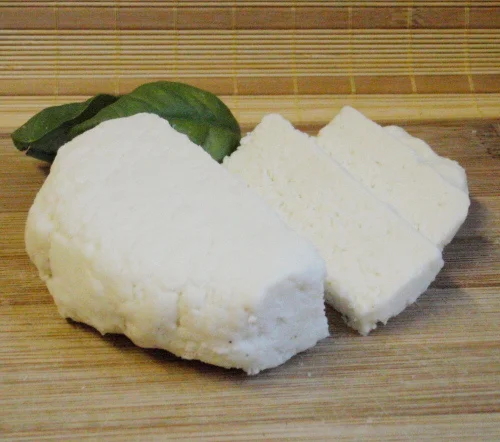
This mild, soft fresh cheese is made in a Thermomix from chilled whole milk, natural yoghurt and lemon juice, without rennet. It takes little active work, though the curds need time to drain and set in the fridge.
Ingredients
- 1 litrefresh whole cow’s milk, not UHT-treated (the refrigerated kind)
- 1plain, unsweetened yoghurt (not bifidus, Greek-style or similar)
- Juice of ½lemon
- 1thin cloth or piece of absorbent cotton gauze
- 1bowl
- 1, about 12 cm in diametermould
Instructions
- 1
Heat the milk
Heat the milk in the Thermomix for 15 minutes at 90°C, speed 2.
- 2
Mix the cultures
Add the yoghurt and lemon juice, then mix for 30 seconds at speed 4.
- 3
Heat and rest
Set the Thermomix to 90°C, speed 2, for 2 minutes. Leave the mixture in the bowl until the whey separates and turns yellowish; this usually takes about 3 hours.
- 4
Drain the curds
Separate the solids from the liquid whey using the gauze or a similar cloth. Drain off as much liquid as possible.
- 5
Press and chill
Wrap the curds in the gauze or cloth and refrigerate for about 30 minutes, with a weight on top to compact them and help more whey drain away.
- 6
Mould and set
Remove the curds from the fridge, press them firmly into the mould and refrigerate for at least 8 hours. Add a little salt or sugar if you prefer.
What is fresh, rennet-free cheese?
Fresh cheese is a young, mild cheese that is eaten without ageing. Versions made by acid-setting milk are found in many food traditions, and this recipe uses lemon juice and yoghurt rather than rennet.
The Thermomix handles the heating and mixing, while draining and chilling give the curds their shape. The result is a simple cheese with a tender texture.
Nutrition and macros by portion
The nutrition label shows one serving as written: 61 calories, 0g protein, 0g carbs, 5g fat.
| Portion | Adjustment | kcal | Protein | Carbs | Fat |
|---|---|---|---|---|---|
| Lighter | Smaller cheese portion | 43 kcal | 0g | 0g | 4g |
| This serving | As written | 61 kcal | 0g | 0g | 5g |
| Hungry | Larger cheese portion | 92 kcal | 0g | 0g | 8g |
The listed nutrition per serving is 61 kcal, with 5.4 g fat and 0 g protein and carbohydrate as provided. Milk and yoghurt are the main contributors to the cheese’s fat; serve a portion with vegetables and a source of fibre to make a more balanced plate.
Choose the right milk and yoghurt
Milk: use refrigerated fresh whole milk, not UHT-treated milk, as specified in the recipe. The milk is the base of the curds and provides much of the cheese’s richness.
Yoghurt: choose plain, unsweetened yoghurt. The recipe rules out Greek-style and bifidus varieties, so avoid substituting them.
Let the whey separate
Heating: follow the stated Thermomix settings, then give the mixture time to stand in the bowl. The recipe says separation usually takes about 3 hours, even though the machine’s heating stages are brief.
Cue: look for distinct solids and yellowish whey before draining. If they have not separated yet, keep waiting rather than rushing to the cloth.
Drain without losing the curds
Cloth: line your draining setup with thin cloth or absorbent cotton gauze so the liquid can pass through while the curds stay together. Handle the mixture carefully as you separate the two.
Pressure: drain as much whey as possible, then chill the wrapped curds under a weight for about 30 minutes. This helps compact the cheese before it goes into the mould.
Shape and set the cheese
Mould: press the drained curds firmly into a mould about 12 cm across. A clean takeaway food container can work as the recipe suggests, provided it is suitable for food and fits in your fridge.
Chilling: leave the moulded cheese in the fridge for at least 8 hours. This setting time is separate from the brief Thermomix preparation.
How to serve it
The cheese can be served simply, with a little salt if you prefer a savoury finish. The recipe also allows a little sugar for a sweeter version.
Pair it with bread, tomatoes or fruit for a straightforward snack or light meal. Keep additions separate if you want to track the cheese on its own.
Recipe notes & tips
- Use the specified refrigerated, non-UHT whole milk.
- Choose plain, unsweetened yoghurt rather than Greek-style yoghurt.
- Wait for clearly separated curds and yellowish whey before draining.
- Use a thin cloth that holds the curds while letting whey escape.
- Keep the cheese under a weight during the 30-minute fridge draining stage.
- Allow at least 8 hours for the moulded cheese to set.
Variations
- Savoury finish: add a little salt before pressing the curds into the mould.
- Sweet finish: add a little sugar if you prefer a sweeter cheese.
- Herbs: mix herbs into the drained curds before shaping for a savoury variation.
- Citrus note: serve with a little lemon zest for a brighter flavour.
- Simple pairing: serve with sliced tomatoes or fruit rather than mixing additions into the cheese.
Common mistakes to avoid
- Using UHT milk: choose fresh refrigerated whole milk as specified.
- Choosing Greek-style yoghurt: use plain, unsweetened yoghurt of the type requested.
- Draining too early: wait until the curds have separated and the whey looks yellowish.
- Skipping the weight: press the wrapped curds during the 30-minute chilling stage so they compact and drain further.
- Moulding too soon: drain the curds well before packing them into the mould.
- Serving before it sets: refrigerate the moulded cheese for at least 8 hours.
How to store
Keep the set cheese covered in the fridge and use it within a few days. Serve it cold; reheating is not necessary for this fresh cheese.
Frequently asked questions
Can I use UHT milk?
The recipe specifies fresh, refrigerated whole milk that has not been UHT-treated. Use that type for this method.
How long does the recipe take?
The machine steps take 17 minutes in total, but the mixture usually needs about 3 hours to separate, followed by 30 minutes under a weight and at least 8 hours to set in the mould.
How do I know when the curds are ready to drain?
Look for the solids separating from the liquid and for the whey to become yellowish. The recipe says this commonly takes about 3 hours.
Can I use Greek yoghurt?
The recipe specifically says not to use Greek-style yoghurt or similar varieties. Choose plain, unsweetened yoghurt instead.
Can I make it savoury or sweet?
Yes. The recipe suggests adding a little salt or sugar according to your preference.
Why is my cheese still soft?
It may need more draining or chilling. Drain the curds thoroughly, press them under a weight for about 30 minutes, then leave the moulded cheese in the fridge for at least 8 hours.
Cook it from the original
This recipe comes from elocuencia.org. Their page has the author’s own photos, notes and tips — the best place to cook it from.
Open the recipe on elocuencia.org