
Rogel provincial alfajor
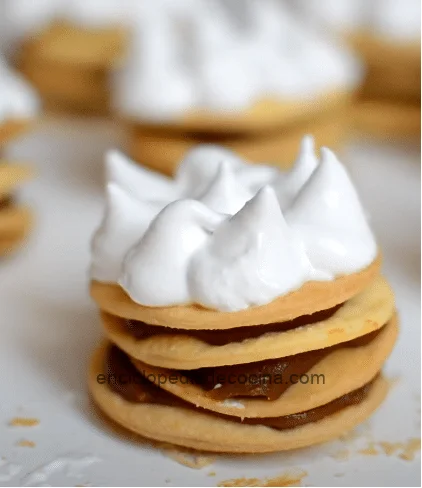
Rogel is a traditional Argentine layered pastry made with thin, crisp discs of dough, dulce de leche and Italian meringue. It makes a festive centrepiece, with a pleasing contrast between the soft filling and delicate pastry.
Ingredients
- 400 gplain flour
- 2 tablespoonsicing sugar
- 8egg yolks
- 1egg
- 2 tablespoonswater
- 1 small glassfine alcohol
- 50 gbutter
- 500 gdulce de leche
- 3 egg whitesItalian meringue
- to tastecoloured sprinkles
Instructions
- 1
Make the dough
Mound the flour on a work surface and make a well in the centre. Add the icing sugar, egg yolks, egg, water mixed with the fine alcohol, and butter to the well. Mix these ingredients first, then gradually work in the flour by hand until the dough is smooth. Cover it with a tea towel and leave it to rest for 30 minutes.
- 2
Shape the discs
Divide the dough into 8 or 10 small balls and roll each one out as thinly as possible. Trim them with a pointed knife to make large, evenly sized discs, then prick them with a fork. Bake on lightly buttered baking sheets in a fairly hot oven.
- 3
Cool the pastry
Once the discs are cooked, take them out of the oven and slide them with a metal spatula onto a marble surface. Leave them to cool.
- 4
Layer and decorate
Stack the pastry discs, spreading a generous layer of dulce de leche between each one. Cover the alfajor with Italian meringue and scatter coloured sprinkles over the top.
What is Rogel?
Rogel is a traditional Argentine pastry, often described as a large layered alfajor. Its defining feature is a stack of thin baked pastry discs held together with dulce de leche and finished with Italian meringue.
This version keeps the layers simple and lets the caramel-like filling stand out. The crisp discs soften a little as they sit with the filling, making the cake easier to slice.
Nutrition and macros by portion
The nutrition label shows one serving as written: 540 calories, 12g protein, 76g carbs, 21g fat.
| Portion | Adjustment | kcal | Protein | Carbs | Fat |
|---|---|---|---|---|---|
| Lighter | Smaller slice, fruit alongside | 378 kcal | 8g | 53g | 15g |
| This serving | As written | 540 kcal | 12g | 76g | 21g |
| Hungry | Larger slice | 810 kcal | 18g | 114g | 32g |
The flour and dulce de leche provide most of the carbohydrates, while the egg yolks, butter and filling contribute much of the fat; the eggs and meringue supply some protein. Serve a modest slice with fresh fruit, or alongside a lighter meal, to balance the rich pastry.
The dough and its rest
Flour: Adding it gradually to the ingredients in the well helps bring the dough together evenly. Knead until smooth, as directed, rather than leaving dry flour pockets.
Rest: Cover the dough for 30 minutes before rolling. This gives it time to relax and makes it easier to shape into thin discs.
Rolling and baking the layers
Thin discs: Roll each piece as thinly as possible so the finished stack has distinct layers. Trim the discs to a similar size for a neater result.
Fork pricks: Pricking the dough before baking helps limit large air pockets. The recipe calls for a fairly hot oven but does not specify a temperature or baking time, so watch the discs closely and remove them when cooked.
Building the stack
Dulce de leche: Spread a generous layer between each cooled disc, reaching close to the edge so the filling holds the stack together. Cool the pastry first so the filling does not soften from residual heat.
Meringue: Cover the assembled alfajor with Italian meringue, then finish with coloured sprinkles. The recipe uses prepared meringue and does not include instructions for making it.
Serving and texture
Let the assembled cake stand briefly before slicing so the filling can settle between the layers. Use a sharp knife and cut with a gentle sawing motion to reduce crumbling.
Serve it in small wedges after a meal or alongside unsweetened coffee. Fresh fruit can add a bright contrast to the rich filling.
Planning the bake
The total time is not stated, and the number of dough balls may be 8 or 10. Either way, aim for discs of consistent thickness and bake them in batches if needed.
Have the dulce de leche and Italian meringue ready before assembling. The recipe does not give an oven temperature or a cooling duration, so use the dough's cooked appearance and a cool touch as your cues.
Recipe notes & tips
- Keep the dough covered while you roll the discs so it does not dry out.
- Use a pointed knife to trim the discs to a consistent size.
- Prick every disc with a fork before baking.
- Let the pastry cool completely before adding the dulce de leche.
- Prepare the work surface and filling before stacking, as the layers are easiest to assemble in sequence.
Variations
- Plain finish: Leave off the coloured sprinkles for a simpler appearance.
- Citrus accent: Add a little finely grated lemon zest to the dough for a fragrant note.
- Chocolate finish: Dust the meringue lightly with cocoa powder instead of using sprinkles.
- Smaller portions: Make more, smaller discs and serve the finished alfajor in petite wedges.
- Coffee pairing: Serve with strong, unsweetened coffee to contrast with the sweet filling.
Common mistakes to avoid
- Thick discs: Roll the dough as thinly as possible so the finished pastry has delicate layers.
- Uneven rounds: Trim each disc to a similar size for a stable, tidy stack.
- Unpricked dough: Prick the discs with a fork before baking to help limit air pockets.
- Warm pastry: Cool the discs before filling so the dulce de leche stays in place.
- Rushing the stack: Spread filling between every disc and keep the layers aligned as you build.
How to store
Keep the assembled alfajor covered in the refrigerator and eat within 3 days. Bring slices briefly towards room temperature before serving; reheating is not recommended because it can soften the meringue and filling.
Frequently asked questions
How many pastry discs should I make?
The method allows for either 8 or 10 dough balls. Choose one count and roll the pieces to a consistent thickness and size.
What does a fairly hot oven mean?
The recipe does not state a temperature. Use your oven's usual moderate-to-hot baking setting and keep a close eye on the thin discs as they cook.
Can I make the pastry discs ahead?
Yes. Bake and cool them, then keep them in an airtight container until you are ready to assemble the alfajor.
Can I use ready-made dulce de leche?
Yes. Use 500 g, as listed, and spread it generously between the cooled discs.
Does this recipe explain how to make Italian meringue?
No. It lists Italian meringue made with 3 egg whites but gives no method or sugar quantity for preparing it, so have the meringue ready for the final step.
How should I cut the layered cake?
Use a sharp knife and cut gently, ideally with a light sawing motion, to avoid pressing the filling out of the layers.
Cook it from the original
This recipe comes from enciclopediadecocina.com. Their page has the author’s own photos, notes and tips — the best place to cook it from.
Open the recipe on enciclopediadecocina.com