
Vegetable Couscous Recipe
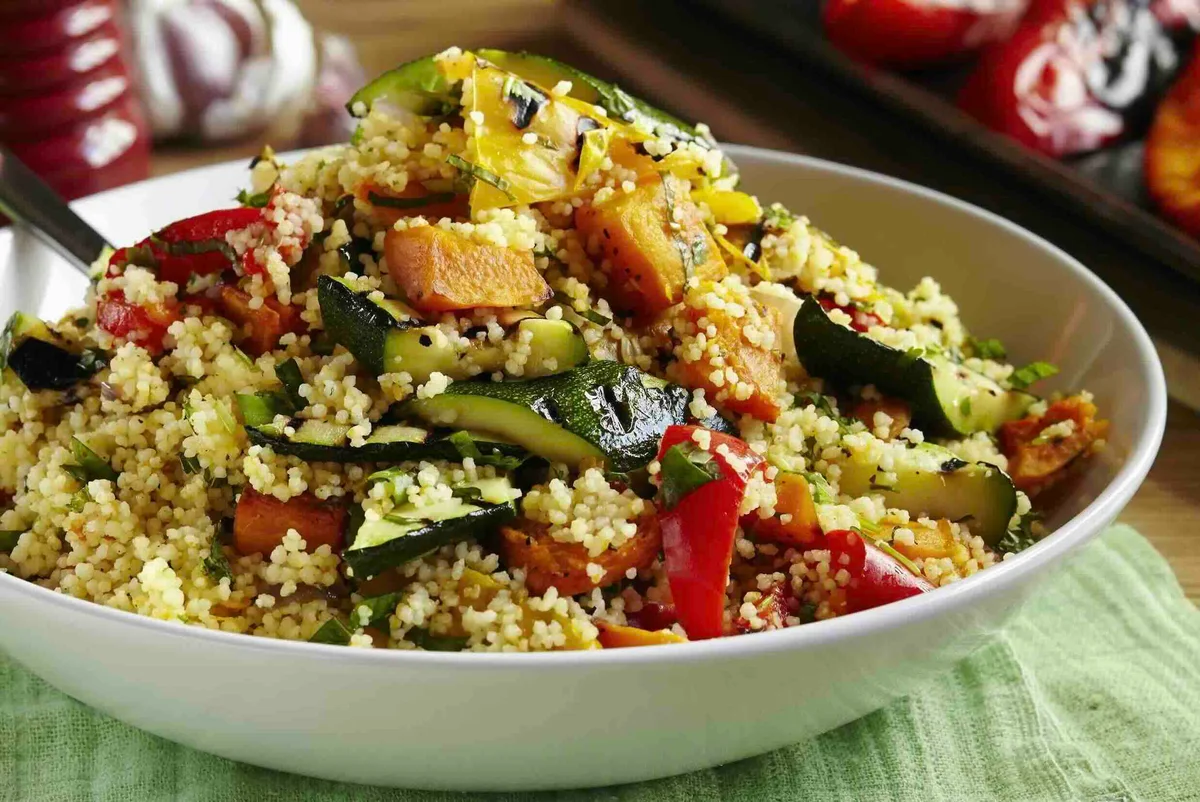
This quick vegetable couscous combines fluffy grains with diced carrot, courgette and red pepper, finished with olive oil and parsley. It makes a simple light meal or an easy side, and can be served warm or at room temperature.
Ingredients
- 170 g (1 cup)couscous
- 240 ml (1 cup)vegetable stock
- 1carrot, diced
- 1courgette, diced
- 1red pepper, diced
- 15 ml (1 tbsp)olive oil
- 5 ml (1 tsp), to tastesalt
- 2.5 ml (0.5 tsp), to tasteblack pepper
- 15 g (0.25 cup), optionalchopped parsley
Instructions
- 1
Boil the stock
Bring the vegetable stock to a boil in a saucepan.
- 2
Soak the couscous
Stir the couscous into the boiling stock, cover the pan and take it off the heat. Leave it for 5 minutes.
- 3
Combine the vegetables
Put the diced carrot, courgette and red pepper in a mixing bowl.
- 4
Fluff and combine
Fluff the couscous with a fork, then add it to the vegetables.
- 5
Season the couscous
Drizzle over the olive oil, add salt and black pepper to taste, and mix well.
- 6
Garnish and serve
Add chopped parsley if you like. Serve warm or at room temperature.
What is vegetable couscous?
Couscous is a North African staple made from granules of semolina, and it is widely used in dishes across the Mediterranean. This quick version pairs the grains with diced vegetables for a straightforward meal or side.
The method relies on soaking rather than simmering the couscous, while the vegetables stay uncooked. That keeps the preparation simple and gives the finished dish a fresh, crisp contrast.
Nutrition and macros by portion
The nutrition label shows one serving as written: 200 calories, 6g protein, 35g carbs, 5g fat.
| Portion | Adjustment | kcal | Protein | Carbs | Fat |
|---|---|---|---|---|---|
| Lighter | Use less olive oil | 140 kcal | 4g | 25g | 4g |
| This serving | As written | 200 kcal | 6g | 35g | 5g |
| Hungry | Add more couscous | 300 kcal | 9g | 53g | 8g |
The couscous is the main source of carbohydrates, while olive oil contributes most of the fat; the vegetables add some carbohydrate and fibre. The listed serving provides 6 g of protein, so pair it with chickpeas, fish or another protein-rich accompaniment to balance the plate.
Choosing the ingredients
Couscous: Use plain, quick-cooking couscous so it can absorb the hot stock off the heat. Check the packet if your variety has different soaking instructions.
Vegetables: Dice the carrot, courgette and red pepper into similarly sized pieces so they are easy to eat alongside the grains.
Stock and seasoning: Vegetable stock provides the soaking liquid and flavour. Taste before adding the full amount of salt, as stocks vary in saltiness.
Getting fluffy couscous
Liquid first: Bring the stock to a boil before adding the couscous so the grains hydrate evenly. Cover the pan and leave it undisturbed for the full 5 minutes.
Fork, not spoon: Separate the grains gently with a fork after soaking. This helps loosen clumps before you mix the couscous with the vegetables.
Keeping the vegetables crisp
Raw vegetables: The recipe adds the diced vegetables directly to the bowl, without cooking them. Cut them small enough to mix through the couscous comfortably.
Mixing: Fold the couscous into the vegetables, then add the oil and seasoning. Mix until the oil and seasonings are distributed without crushing the diced pieces.
Timing and serving
The stated total time is 25 minutes, with 5 minutes set aside for the couscous to absorb the stock. Dicing the vegetables is the main hands-on task.
Serve the dish warm or at room temperature, as directed. It works as a light meal on its own or alongside a more substantial main.
What to serve alongside
For a fuller plate, pair the couscous with chickpeas, grilled fish or chicken. A simple salad can add another fresh element without changing the preparation of the dish.
If serving it as a side, match it with a main that suits the Mediterranean flavours and keep the couscous portion in proportion to the rest of the meal.
Recipe notes & tips
- Bring the stock to a full boil before stirring in the couscous.
- Keep the saucepan covered during the 5-minute resting time.
- Fluff the couscous gently with a fork before combining it with the vegetables.
- Cut the vegetables into small, even pieces for easier mixing.
- Taste the stock before adding salt, then season the finished mixture to your preference.
- Add the parsley just before serving for a fresh finish.
Variations
- Add chickpeas: Fold in drained chickpeas for a more substantial bowl.
- Use lemon: Add a little lemon juice for a brighter finish.
- Change the herbs: Swap parsley for chopped mint or coriander.
- Add spice: Stir in a pinch of cumin or paprika with the seasoning.
- Roast the vegetables: Roast the diced vegetables separately if you prefer a softer, sweeter result.
Common mistakes to avoid
- Skipping the cover: The couscous may not absorb the stock evenly; keep the pan covered for the full 5 minutes.
- Overworking the grains: Vigorous mixing can make them clump; fluff gently with a fork.
- Large vegetable pieces: They can be awkward to mix and eat; dice them small and evenly.
- Adding too much salt: Stock can already be salty; taste it and season gradually.
- Serving straight from the pan: The grains can still be clumped; fluff them before adding them to the vegetables.
How to store
Refrigerate leftovers in a covered container and eat within 3 days. Reheat until hot, adding a small splash of water if the couscous seems dry, or serve it chilled or at room temperature.
Frequently asked questions
Can I serve this couscous cold?
Yes. The recipe can be served at room temperature, and it can also be chilled and served cold.
Are the vegetables cooked?
No. In this method, the diced carrot, courgette and red pepper are mixed in raw, so they stay crisp.
How do I stop the couscous clumping?
Keep it covered while it absorbs the stock, then fluff it with a fork before mixing it with the vegetables.
Can I make it ahead?
Yes. Prepare it ahead and refrigerate it in a covered container. If serving warm, reheat it before serving.
What can I add to make it more filling?
Mix in chickpeas, or serve it alongside fish or chicken. Additions are not part of the listed recipe ingredients.
Cook it from the original
This recipe comes from dirtydishesmessykisses.com. Their page has the author’s own photos, notes and tips — the best place to cook it from.
Open the recipe on dirtydishesmessykisses.com