
Butternut Squash Risotto
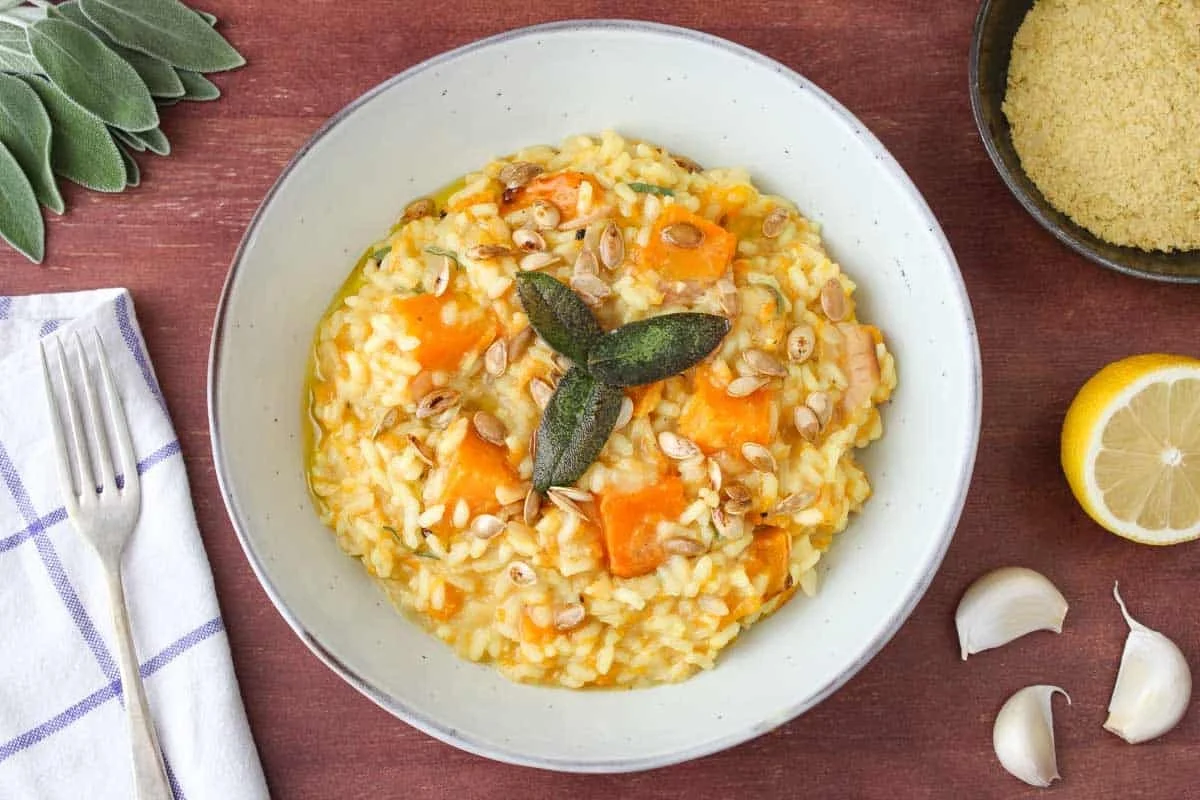
This Italian-style butternut squash risotto combines tender rice and sweet squash in a creamy, Parmesan-finished dish. It makes a warming meal from straightforward ingredients, with regular stirring doing most of the work.
Ingredients
- 200 g (1 cup)Arborio rice
- 300 g (2 cups)butternut squash, diced
- 950 ml (4 cups)chicken or vegetable stock
- 100 g (1 cup)Parmesan, grated
- 1 smallonion, finely chopped
- 2 clovesgarlic, minced
- 30 ml (2 tbsp)olive oil
- 14 g (1 tbsp)butter
- to tastesalt and black pepper
Instructions
- 1
Warm the stock
Heat the stock in a saucepan and keep it warm while you prepare the risotto.
- 2
Soften the aromatics
In a large pot, heat the olive oil and butter over medium heat. Add the onion and garlic and cook until softened.
- 3
Cook the squash
Add the diced butternut squash and cook for about 5 minutes.
- 4
Coat the rice
Stir in the Arborio rice and cook for 1–2 minutes, until the grains are well coated.
- 5
Add the stock
Add the warm stock one ladleful at a time, stirring frequently. Let each addition absorb before adding the next.
- 6
Cook until creamy
Continue adding stock and stirring until the rice is creamy and cooked through, about 20–25 minutes.
- 7
Finish and season
Stir in the grated Parmesan, then season with salt and pepper to taste.
- 8
Serve the risotto
Serve hot.
What is butternut squash risotto?
Risotto is an Italian rice dish, especially associated with northern Italy, where short-grain rice is cooked gradually with stock until the grains become tender and the mixture turns creamy. This version adds diced butternut squash for sweetness and Parmesan for a savoury finish.
Arborio rice releases starch as it cooks, helping create the characteristic texture without cream. The squash cooks in the same pot, so its flavour mingles with the rice and stock.
Nutrition and macros by portion
The nutrition label shows one serving as written: 350 calories, 10g protein, 60g carbs, 10g fat.
| Portion | Adjustment | kcal | Protein | Carbs | Fat |
|---|---|---|---|---|---|
| Lighter | Use less butter and Parmesan | 245 kcal | 7g | 42g | 7g |
| This serving | As written | 350 kcal | 10g | 60g | 10g |
| Hungry | Serve with extra greens | 525 kcal | 15g | 90g | 15g |
The rice supplies most of the carbohydrates, while olive oil, butter and Parmesan contribute much of the fat; the cheese also provides some protein. For a more balanced plate, serve a portion with a generous side of green vegetables.
Choosing the ingredients
Rice: Arborio is a short-grain variety suited to risotto; its starch helps thicken the cooking liquid while the grains retain some bite.
Squash: Cut the pieces to a similar size so they cook at roughly the same rate. Chicken stock gives a savoury result, while vegetable stock keeps the dish meat-free.
Cheese: Finely grated Parmesan is easier to stir through at the end. Parmesan can be salty, so taste before adding much extra salt.
Why the stock goes in gradually
Warm stock is added a ladleful at a time so the rice can absorb liquid steadily while you stir. Keep the stock warm in a separate saucepan; adding it cold can interrupt the cooking.
Let most of each addition absorb before adding more. The rice should stay moist rather than dry out completely between ladlefuls.
Getting the texture right
Rice: The grains should be tender but not mushy, with a little firmness at the centre. Start checking as the 20–25-minute cooking period approaches its end, as the exact time can vary.
Consistency: Finished risotto should be creamy and loose enough to settle gently on the plate, not stiff or soupy. Add a little more warm stock if it becomes too thick before the rice is done.
Timing and stirring
The recipe takes about 45 minutes in total, including warming the stock and preparing the ingredients. Chop the onion and squash before you begin adding stock, so you can stay attentive to the pot.
Stir frequently as directed, especially after each addition of stock, but you do not need to stir constantly. Keep the heat at a steady medium level so the liquid absorbs gradually.
Serving ideas
Serve the risotto as soon as it is ready, while it is creamy and hot. A little extra grated Parmesan at the table works well if you would like a stronger savoury finish.
For a more complete plate, pair it with a crisp green salad or a simple side of greens. Keep additional salty toppings modest, since the Parmesan and stock already contribute seasoning.
Recipe notes & tips
- Keep the stock warm in a separate pan throughout cooking.
- Cut the squash into evenly sized pieces so they cook consistently.
- Stir the rice well when first adding it to coat the grains in oil and butter.
- Add stock gradually and allow each ladleful to absorb before continuing.
- Taste the rice near the end of cooking before deciding whether it needs more time.
- Check the seasoning after adding Parmesan, which can be salty.
Variations
- Vegetable stock: Choose vegetable stock for a meat-free version.
- Fresh herbs: Stir in chopped sage or parsley just before serving.
- Extra squash: Roast some additional squash separately and use it as a topping.
- Peppery finish: Add freshly ground black pepper at the table.
- Cheese swap: Use another hard, finely grated cheese if Parmesan is unavailable, and adjust the salt to taste.
Common mistakes to avoid
- Cold stock: It can slow the cooking; keep the stock warm in a separate pan.
- Adding all the stock at once: The rice may not cook as evenly; add it a ladleful at a time.
- Skipping the stirring: Rice can stick to the base; stir frequently as the stock absorbs.
- Overcooking the rice: It can turn soft and lose its bite; begin checking towards the end of the 20–25-minute cooking time.
- Oversalting early: Parmesan and stock both add salt; season at the end after tasting.
How to store
Refrigerate leftovers in a covered container for up to 3 days. Reheat gently in a saucepan with a splash of stock or water, stirring until piping hot; the rice will thicken as it stands.
Frequently asked questions
Can I make this risotto vegetarian?
Yes. Use vegetable stock instead of chicken stock. Check that your Parmesan suits your dietary preference, as some Parmesan-style cheeses are made with animal rennet.
Can I use a different type of rice?
Arborio is the specified rice and gives the dish its creamy texture. Another short-grain risotto rice can work, but cooking time and the amount of stock needed may vary.
How do I know when the risotto is ready?
The rice should be creamy and cooked through, with a slight firmness at the centre of each grain. Taste it as it approaches the end of the stated 20–25-minute cooking time.
Can I prepare the risotto ahead?
It is best served freshly made, when the texture is at its creamiest. You can chop the onion and squash ahead, but cook the risotto shortly before serving.
Why is my risotto too thick?
Risotto continues to thicken as it sits. Stir in a little warm stock or water until it loosens to the consistency you prefer.
Cook it from the original
This recipe comes from dirtydishesmessykisses.com. Their page has the author’s own photos, notes and tips — the best place to cook it from.
Open the recipe on dirtydishesmessykisses.com