
Sweet Chili Beef Noodles
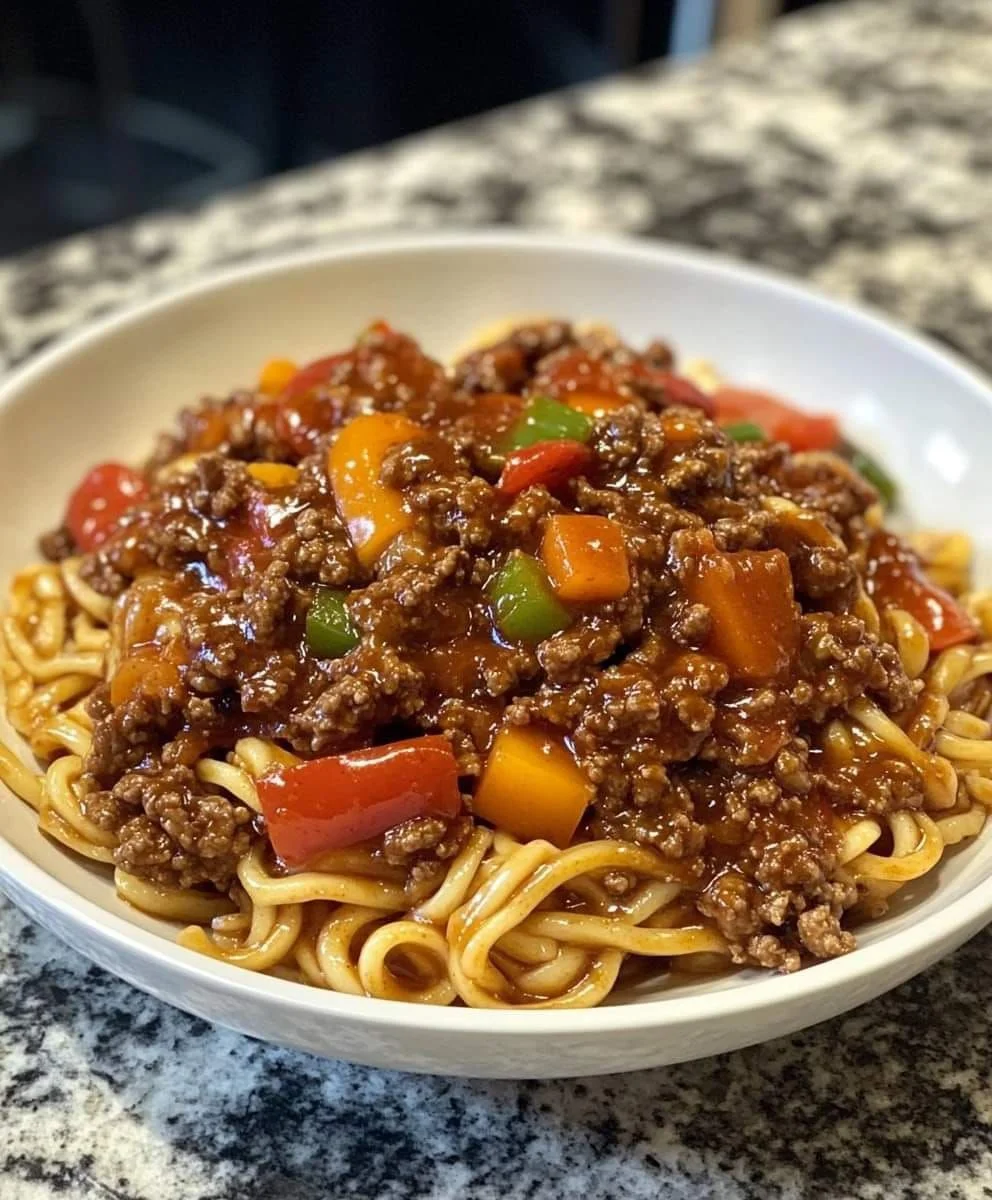
Chewy udon noodles are tossed with browned beef, crisp-tender bell peppers and a sweet chilli-soy glaze. This quick, one-pan meal is ready in about 20 minutes and makes a satisfying weeknight dinner.
Ingredients
- 225 g (8 oz)udon noodles
- 225 g (½ lb)minced beef
- 30 ml (2 tbsp)sweet chilli sauce
- 15 ml (1 tbsp)soy sauce
- 60 ml (¼ cup)diced bell pepper
Instructions
- 1
Cook the noodles
Cook the udon according to the packet instructions, usually for a few minutes in boiling water. Drain, rinse under cold water to stop the cooking, and set aside.
- 2
Brown beef and peppers
Heat a frying pan or wok over a medium-high heat. Add the minced beef and cook, breaking it up with a spoon or spatula, until it starts to brown. When it is about halfway cooked, add the diced bell pepper and cook for another 2–3 minutes, until slightly softened but still crisp.
- 3
Stir in the sauces
Reduce the heat to medium and add the sweet chilli sauce and soy sauce. Stir until the beef and pepper are evenly coated.
- 4
Toss with noodles
Add the cooked udon to the pan and toss until thoroughly coated in sauce and heated through.
- 5
Serve warm
Divide the noodles between plates or bowls. Finish with chopped coriander for freshness and aroma.
What are sweet chilli beef noodles?
Udon are thick Japanese wheat noodles, valued for their springy, chewy texture. This dish pairs them with minced beef and a sweet chilli-soy sauce for a quick, savoury-sweet meal.
The recipe is a simple fusion-style noodle stir-fry rather than a traditional Japanese preparation. Its short ingredient list keeps the focus on chewy noodles, browned beef and the glossy sauce.
Nutrition and macros by portion
The nutrition label shows one serving as written: 500 calories, 0g protein, 0g carbs, 0g fat.
| Portion | Adjustment | kcal | Protein | Carbs | Fat |
|---|---|---|---|---|---|
| Lighter | More peppers, less noodles | 350 kcal | 0g | 0g | 0g |
| This serving | As written | 500 kcal | 0g | 0g | 0g |
| Hungry | Add another noodle portion | 750 kcal | 0g | 0g | 0g |
The udon supplies most of the carbohydrates, while the beef contributes protein and some of the fat; the sweet chilli sauce also adds carbohydrates. Serve with a generous portion of greens or salad to round out the plate.
Why udon works here
Noodle choice: Udon’s sturdy texture stands up to tossing with minced beef and sauce without becoming flimsy. Cook it just until tender, following the packet directions, since timings vary between fresh and dried noodles.
After draining: Rinsing under cold water stops the cooking and helps keep the noodles from over-softening while you prepare the beef.
Getting the beef and peppers right
Beef: Break the mince into small pieces as it browns so it mixes evenly with the noodles. Let it colour before adding the pepper rather than stirring constantly.
Pepper: Add it when the beef is halfway cooked, then give it 2–3 minutes. It should soften slightly but retain some crunch.
Making the sweet chilli glaze
Sauce: Sweet chilli sauce brings sweetness and a mild kick, while soy sauce adds savoury depth. Stir them into the beef and pepper over medium heat so they coat the mixture evenly.
Balance: The sauce is the main seasoning in this short recipe. Taste a noodle once everything is combined, bearing in mind that soy sauce can be quite salty.
Timing and texture
Order: Start the noodles first, then cook the beef and pepper while they drain. This keeps the total preparation close to the stated 20 minutes, depending on the noodle packet’s cooking time.
Finish: Toss the noodles through the pan only until they are coated and hot. Prolonged cooking can make them too soft and reduce the peppers’ bite.
What to serve alongside
Fresh sides: A simple cucumber salad or steamed greens can add a fresh contrast to the sweet, savoury noodles. Keep the sides lightly seasoned so they do not compete with the sauce.
Garnish: Chopped coriander is suggested as a finishing touch in the method. Add it just before serving for its fresh aroma.
Recipe notes & tips
- Check the packet before cooking, as fresh and dried udon can have different timings.
- Break the mince into small pieces for an even mix with the noodles.
- Keep the peppers in the pan for only 2–3 minutes to preserve some crunch.
- Stir the sauces together with the beef and pepper before adding the noodles.
- Toss gently so the udon stays intact.
- Serve as soon as the noodles are hot to keep their texture at its best.
Variations
- Add garlic: Stir finely chopped garlic into the beef as it begins to brown.
- Use extra vegetables: Add thinly sliced spring onions or mushrooms with the bell pepper.
- Turn up the heat: Add fresh chilli or a pinch of chilli flakes to the sauce.
- Try another noodle: Use thick wheat noodles if udon is unavailable, and cook them according to their packet.
- Finish with sesame: Sprinkle toasted sesame seeds over the bowls just before serving.
Common mistakes to avoid
- Overcooking the udon: Follow the packet timing and rinse it under cold water after draining.
- Crowding the pan: Use a wide frying pan or wok so the beef can brown rather than steam.
- Adding peppers too early: Wait until the beef is about halfway cooked so the peppers keep some bite.
- Cooking the peppers until soft: Keep their pan time to 2–3 minutes for a little crunch.
- Leaving the noodles in the pan too long: Toss only until coated and heated through.
How to store
Refrigerate leftovers in an airtight container and use within 3 days. Reheat in a frying pan over a medium heat, stirring until hot; add a small splash of water if the noodles seem dry.
Frequently asked questions
Can I use frozen udon noodles?
Yes. Cook them according to the packet instructions, then drain and rinse as directed in the recipe.
How can I tell when the beef is cooked?
Break it into small pieces and cook until browned throughout, with no raw-looking mince remaining.
Can I make the dish less sweet?
Use a little less sweet chilli sauce and adjust to taste. Keep the soy sauce in mind as you season, since it adds saltiness.
Can I prepare the noodles ahead?
You can cook and rinse them shortly before cooking the beef. Drain them well and avoid leaving them soaking in water.
Is coriander essential?
No. It is a finishing garnish in the method, so you can omit it if you prefer.
Cook it from the original
This recipe comes from fiqeu.com. Their page has the author’s own photos, notes and tips — the best place to cook it from.
Open the recipe on fiqeu.com