
Rustic No Knead Rosemary Garlic Bread
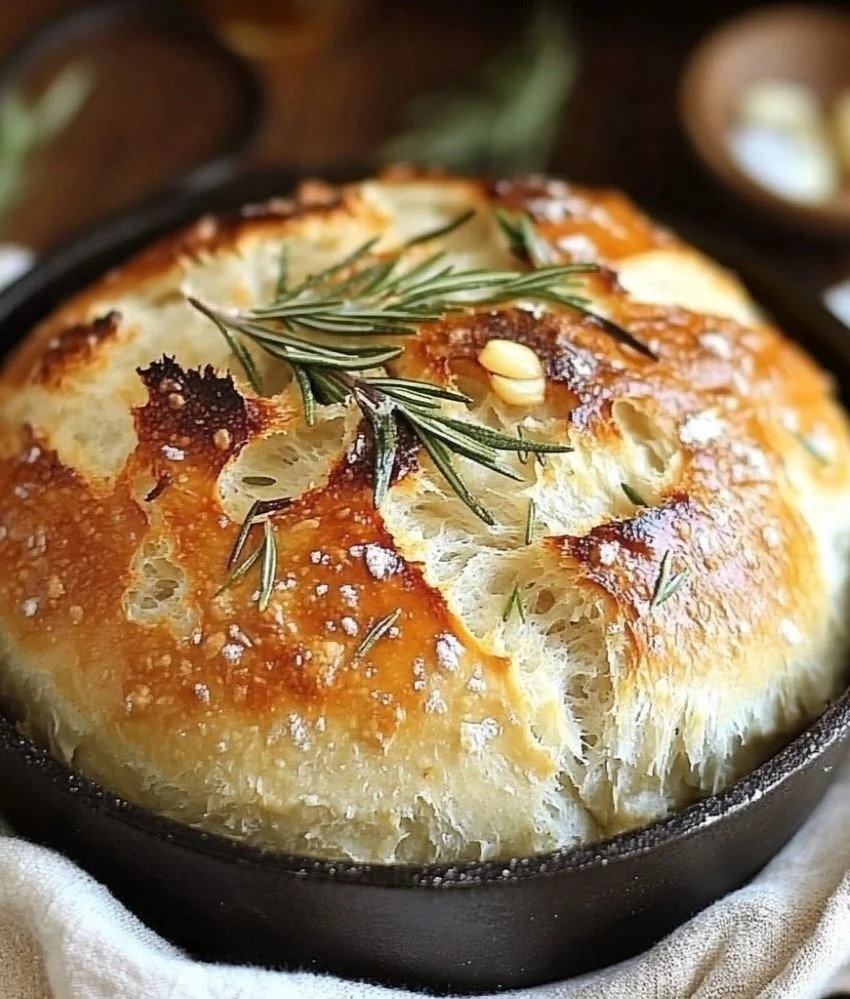
This rustic no-knead loaf is flavoured with fresh rosemary and garlic, with a crisp crust and chewy centre. A long, hands-off rise builds flavour and structure without the work of kneading.
Ingredients
- 375 g (3 cups)plain flour
- 9 g (1½ teaspoons)salt
- 2 g (½ teaspoon)instant yeast
- 360 ml (1½ cups), warm (45°C/110°F)water
- 6 g (2 tablespoons), choppedfresh rosemary
- 3 cloves, mincedgarlic
- 15 ml (1 tablespoon)olive oil
Instructions
- 1
Mix the ingredients
In a large bowl, stir together the flour, salt and instant yeast. Add the chopped rosemary and minced garlic, then pour in the warm water. Mix with a wooden spoon or your hands until a shaggy dough forms.
- 2
Leave to rise
Cover the bowl with cling film or a clean tea towel and leave the dough at room temperature for 12 to 18 hours.
- 3
Shape the dough
Lightly flour your work surface and turn out the risen dough. With floured hands, gently form it into a round loaf, using a few folds to give it structure without kneading. Set it on a piece of baking parchment and leave it to rest for 30 minutes while the oven heats.
- 4
Heat the oven
Heat the oven to 230°C (450°F), with a lidded Dutch oven inside. Let the Dutch oven heat for at least 30 minutes.
- 5
Bake the loaf
Carefully take the hot Dutch oven out of the oven and lower the dough, still on the baking parchment, into it. Cover with the lid and bake for 30 minutes. Remove the lid and bake for a further 15 minutes, or until the crust is golden brown and crackly.
- 6
Cool before slicing
Take the bread out of the Dutch oven and leave it to cool on a wire rack for at least 10 minutes before slicing.
What is rustic no-knead bread?
No-knead bread uses a wet dough and a long rise instead of the usual kneading to develop its structure. This style became popular through home baking, drawing on the simple idea that time can do much of the work of mixing and developing dough.
This version adds rosemary and garlic for a savoury, fragrant loaf. Baking it in a preheated covered Dutch oven traps steam around the dough, helping the loaf rise before the crust sets.
Nutrition and macros by portion
The nutrition label shows one serving as written: 150 calories, 0g protein, 0g carbs, 0g fat.
| Portion | Adjustment | kcal | Protein | Carbs | Fat |
|---|---|---|---|---|---|
| Lighter | Serve a smaller slice | 105 kcal | 0g | 0g | 0g |
| This serving | As written | 150 kcal | 0g | 0g | 0g |
| Hungry | Add a larger slice | 225 kcal | 0g | 0g | 0g |
Flour provides most of the carbohydrates, while the olive oil contributes fat; the flour and small amount of yeast provide some protein. Pair a slice with a protein-rich topping and vegetables, or serve it alongside soup to make a more balanced plate.
The ingredients that shape the loaf
Flour and yeast: plain flour forms the dough, while instant yeast works during the long room-temperature rise. The salt seasons the loaf and is mixed in with the dry ingredients.
Rosemary and garlic: chopped fresh rosemary and minced garlic are stirred through the dough, so their flavour is spread across the loaf rather than concentrated on the crust.
Olive oil: it is included in the ingredient list, but the supplied method does not say when to add it. Follow the listed method as written, or check the original publisher’s instructions if you want to use it.
Why the long rise matters
The dough rests, covered, for 12 to 18 hours at room temperature. During this time it should become puffy, with bubbles visible on its surface; those are useful cues that fermentation has progressed.
Room temperature affects how quickly the dough rises, so use the visual cues as well as the timing. Avoid stirring or kneading it during the rest.
Shape gently
A lightly floured surface and hands make the sticky dough easier to handle. Fold it just a few times as you form a round loaf; the aim is to give it some shape without knocking out all its air.
The shaped dough rests on baking parchment for 30 minutes while the oven heats. The parchment also makes it easier to transfer the dough into the hot Dutch oven.
A covered pot makes a crisp crust
Preheating the lidded Dutch oven for at least 30 minutes gives the loaf a hot baking environment. Take care when handling the pot and lid, as both will be very hot.
Bake covered for 30 minutes, then uncover and bake for another 15 minutes. The crust should be golden brown and crackly before you take the bread out.
Let the crumb set
Cooling the loaf on a wire rack for at least 10 minutes lets its interior settle before slicing. Cutting into it too soon can make the crumb seem gummy.
Serve slices with soup, a salad or a meal that can make use of the rosemary and garlic flavour. It is also good with olive oil for dipping.
Recipe notes & tips
- Mix only until the flour is moistened and a shaggy dough forms.
- Use a bowl cover that fits well to keep the dough from drying during its long rise.
- Flour your hands and work surface lightly when shaping the sticky dough.
- Preheat the Dutch oven for the full 30 minutes before adding the dough.
- Use the crust’s golden colour and crackly appearance as the doneness cues.
- Let the loaf cool on a wire rack for at least 10 minutes before cutting.
Variations
- More herbs: Replace some of the rosemary with chopped thyme.
- Extra garlic: Add more minced garlic for a stronger savoury flavour.
- Peppery loaf: Add freshly ground black pepper to the dry ingredients.
- Cheese addition: Fold grated hard cheese into the dough with the herbs.
- Olive addition: Add chopped olives with the rosemary and garlic.
Common mistakes to avoid
- Short rise: Give the dough the full 12 to 18 hours so it has time to become puffy and bubbly.
- Too much handling: Shape with a few gentle folds rather than kneading the dough.
- Cool Dutch oven: Heat the lidded pot for at least 30 minutes before baking.
- Unsafe transfer: Use care when moving the very hot Dutch oven and lowering in the dough.
- Slicing too soon: Cool the loaf on a rack for at least 10 minutes before cutting.
- Unclear oil step: The listed method does not specify when to use the olive oil, so check the publisher’s instructions rather than adding it at a guessed stage.
How to store
Once fully cool, store the loaf in a paper bag or bread bin at room temperature and use within about 2 days for the best texture. Reheat slices briefly in a toaster or warm oven; freeze extra bread, well wrapped, for longer storage.
Frequently asked questions
Can I leave the dough to rise overnight?
Yes. The method calls for a covered rise at room temperature for 12 to 18 hours, which can fit an overnight schedule.
How do I know when the dough has risen enough?
Look for a puffy dough with bubbles on the surface. The method also notes that it may double in size, though timing can vary with room temperature.
Do I need to knead this bread?
No. Mix until a shaggy dough forms, then use a few gentle folds while shaping to give it structure.
Can I bake it without a Dutch oven?
The supplied method relies on a preheated, covered Dutch oven to create a hot, steamy baking environment. For alternatives, use the original publisher’s guidance rather than assuming the same timings will apply.
When should I add the olive oil?
Olive oil appears in the ingredient list, but its use is not specified in the supplied method. Check the original publisher’s recipe for clarification.
Why should I cool the bread before slicing?
Cooling for at least 10 minutes helps the interior set. Slicing sooner can leave the crumb gummy.
Cook it from the original
This recipe comes from fiqeu.com. Their page has the author’s own photos, notes and tips — the best place to cook it from.
Open the recipe on fiqeu.com