
Aloo Halwa Recipe | Aloo ka Halwa | Potato Halwa
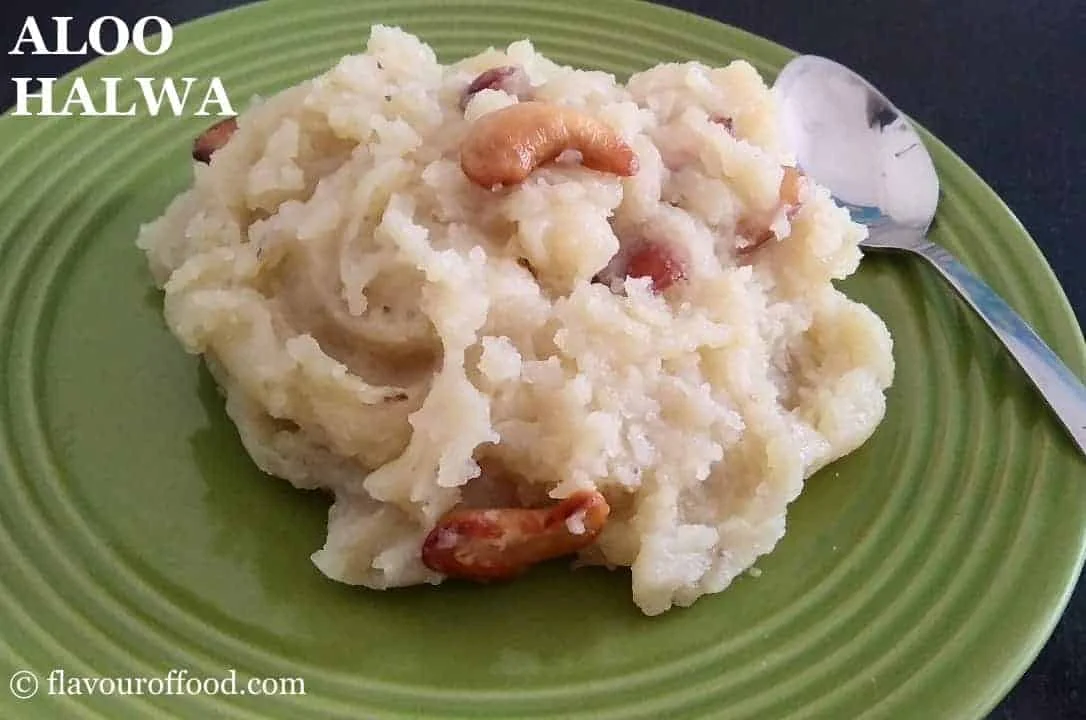
Aloo halwa is a rich Indian sweet made by cooking grated or mashed potato with ghee, milk and sugar until thick and glossy. It is a comforting way to turn a few everyday ingredients into a warm dessert, often prepared during fasting periods.
Ingredients
- 2 largepotatoes
- 3 tablespoonsghee (clarified butter)
- 180 ml (¾ cup)milk
- 150 g (¾ cup)sugar
- 3–4 of eachcashew nuts and almonds
- ¼ teaspoonground cardamom
Instructions
- 1
Prepare the potatoes
Wash and boil the potatoes, then peel and grate them, or mash them. Chop the cashew nuts and almonds.
- 2
Heat the ghee
Warm 3 tablespoons of ghee in a pan.
- 3
Fry the nuts
Add the chopped almonds and cashew nuts and fry until golden.
- 4
Set nuts aside
Remove the fried nuts from the pan.
- 5
Cook the potato
Add the grated or mashed potato to the ghee and mix thoroughly.
- 6
Stir continuously
Keep stirring so the potato does not stick to the pan.
- 7
Add the milk
After 2 minutes, pour in 180 ml (¾ cup) milk. Stir continuously until the potato has absorbed it.
- 8
Mix in sugar
Add 150 g (¾ cup) sugar and mix well. The recipe notes that you can adjust the amount to taste.
- 9
Thicken the halwa
Stir until the mixture looks glossy and has thickened slightly.
- 10
Return the nuts
Mix the fried almonds and cashew nuts back into the pan.
- 11
Add cardamom
Stir in ¼ teaspoon ground cardamom.
- 12
Serve the halwa
Serve the aloo halwa, also called batata shira, garnished with almond.
What is aloo halwa?
Aloo halwa, also known as potato halwa or batata shira, is an Indian sweet made by cooking potato with ghee, milk and sugar. Potato-based sweets are found in Indian home cooking, and this version is described as a dish commonly made during fasting periods such as Navratri and Ekadashi.
Here, grated or mashed potato absorbs the milk before sugar is added, then the mixture is cooked until glossy. Ghee-fried nuts and cardamom add richness and fragrance.
Nutrition and macros by portion
The nutrition label shows one serving as written: 689 calories, 8g protein, 117g carbs, 23g fat.
| Portion | Adjustment | kcal | Protein | Carbs | Fat |
|---|---|---|---|---|---|
| Lighter | Use less sugar and ghee | 482 kcal | 6g | 82g | 16g |
| This serving | As written | 689 kcal | 8g | 117g | 23g |
| Hungry | Serve a larger bowl | 1034 kcal | 12g | 176g | 35g |
The potatoes and sugar provide most of the carbohydrates, while ghee contributes much of the fat. Milk and nuts add some protein, with the nuts also contributing fat. For a more balanced plate, serve a modest bowl alongside a savoury dish with a source of protein.
Getting the potato ready
Boiled potatoes: cook them until tender enough to grate or mash, then peel them before preparing the halwa. Grating gives a more distinct, slightly textured result; mashing makes the mixture more uniform.
Even pieces: chop the almonds and cashews before frying so they brown evenly and are easy to fold through the finished sweet.
Frying the nuts
Golden colour: fry the nuts in the ghee until golden, then lift them out of the pan. This keeps them from continuing to cook while the potato is stirred.
Reserve the ghee: leave it in the pan for the potato, which is stirred into the same fat for flavour and to help prevent sticking.
Stirring in the milk
Add it after 2 minutes: once the potato has cooked in the ghee, pour in the milk and keep stirring. The method’s cue is that the potato absorbs the milk.
Keep the mixture moving: regular stirring helps the potato cook evenly and reduces the chance of it catching on the pan.
Knowing when it is ready
Glossy and thick: after the sugar is mixed in, continue stirring until the halwa looks glossy and thickens slightly, as the recipe directs.
Finish with flavour: return the fried nuts and stir in the cardamom near the end. The halwa is served warm, with almond as a garnish.
Serving the halwa
This is a sweet, rich dish that can be served as a dessert or as part of a fasting-period meal. A small bowl of plain yoghurt alongside it can provide a cool contrast, if it suits your meal.
For a more substantial plate, pair it with a savoury dish rather than adding more sweetness.
Recipe notes & tips
- Boil the potatoes until tender so they are easy to grate or mash.
- Chop the nuts before heating the ghee so they are ready to fry.
- Remove the nuts as soon as they turn golden.
- Stir continuously after adding the potato to help prevent sticking.
- Wait for the potato to absorb the milk before adding the sugar.
- Use the glossy, slightly thickened appearance as the final cooking cue.
Variations
- Adjust the sweetness: use more or less sugar to suit your taste.
- Choose the texture: grate the potato for more texture or mash it for a smoother halwa.
- Vary the nuts: change the balance of almonds and cashews while keeping to the listed quantity.
- Make it richer: serve with a little extra ghee, added at the table.
- Serve it warm: offer the halwa soon after cooking for a soft, freshly made texture.
Common mistakes to avoid
- Skipping the peeling: peel the boiled potatoes before grating or mashing so the halwa has an even texture.
- Over-frying the nuts: take them out when golden, before they darken further.
- Leaving the potato unstirred: stir continuously to reduce sticking to the pan.
- Adding sugar too early: first let the potato absorb the milk, then mix in the sugar.
- Stopping before it thickens: keep stirring until the mixture looks glossy and has thickened slightly.
How to store
Refrigerate leftovers in a covered container and use within 2–3 days. Reheat gently in a pan, stirring until warm; add a small splash of milk if the halwa has become too firm.
Frequently asked questions
Can I grate or mash the potatoes?
Yes. The recipe allows either grated or mashed potato. Grated potato retains more texture, while mashed potato gives a more uniform result.
How do I stop the potato sticking?
Stir continuously after adding the potato to the ghee, as directed. Keep stirring as you add the milk and cook the mixture.
When should I add the sugar?
Add it after the potato has absorbed the milk. Mix well, then continue stirring until the halwa looks glossy and thickens slightly.
Can I adjust the sugar?
Yes. The recipe suggests adjusting the amount to taste, though changing it will alter the sweetness and texture.
How should I serve aloo halwa?
Serve it warm, with the fried nuts mixed through and almond used as a garnish.
Cook it from the original
This recipe comes from flavouroffood.com. Their page has the author’s own photos, notes and tips — the best place to cook it from.
Open the recipe on flavouroffood.com