
Pork Belly Burnt Ends
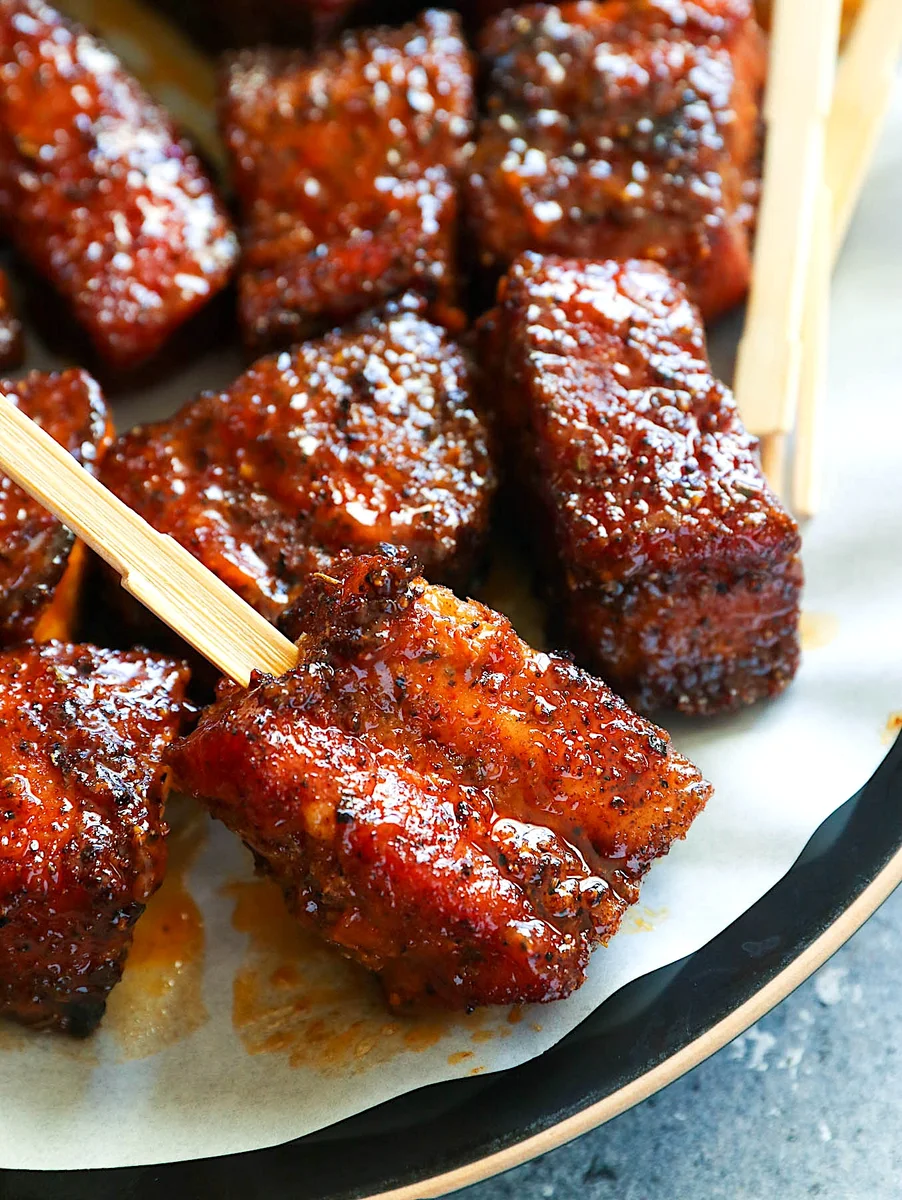
Pork belly burnt ends are smoky, tender cubes coated in a sweet, savoury barbecue glaze. They take time on the smoker, but make a richly flavoured sharing dish for a barbecue or gathering.
Ingredients
- 15 ml (1 tablespoon)freshly ground black pepper
- 15 ml (1 tablespoon)garlic powder
- 15 ml (1 tablespoon)onion powder
- 30 ml (2 tablespoons)dried thyme
- 30 ml (2 tablespoons)dried oregano
- 60–80 ml (1/4–1/3 cup), firmly packeddark brown sugar
- 15 ml (1 tablespoon)chilli powder
- 2.5–5 ml (1/2–1 teaspoon)cayenne powder
- 30 ml (2 tablespoons)smoked paprika
- 5 ml (1 teaspoon)cumin
- 1.36–1.81 kg (3–4 pounds)skinless pork belly
- 360 ml (1 1/2 cups)BBQ sauce
- 30–45 ml (2–3 tablespoons)honey
- 15–30 ml (1–2 tablespoons)Worcestershire sauce
- to tastehot sauce
Instructions
- 1
Mix the seasoning
Combine all the dry ingredients in a small bowl to make the pork seasoning. Alternatively, use your preferred pork seasoning or a shop-bought dry rub.
- 2
Cut the pork
Cut the pork belly into 2.5–3.8 cm (1–1½-inch) cubes and place them on a tray intended for use in the smoker.
- 3
Season the cubes
Coat the pork cubes generously with the rub, covering all sides. Arrange them evenly on a baking tray with space between each piece, cover and refrigerate until you are ready to smoke them.
- 4
Heat the smoker
Fill the charcoal chamber or pellet grill hopper with your chosen fuel. If using charcoal, light it and wait until it forms a bed of glowing embers. Keep the smoker at about 107–121°C (225–250°F).
- 5
Prepare the wood
Soak the wood chips or chunks in water for 30–60 minutes, then drain them. Put the soaked wood on the hot coals or in the smoker's designated wood-chip tray or box.
- 6
Add a water pan
If possible, fill a small aluminium pan with water and place it at the far end of the smoker to help steady the temperature and keep the pork belly from drying out.
- 7
Smoke the pork
Set the tray of pork belly on the smoker's grill grate, close the lid and smoke until the meat reaches an internal temperature of 74°C (165–170°F). Take it out and leave it to rest for a few minutes.
- 8
Transfer the cubes
Move the pork cubes into an aluminium foil pan or another heat-resistant container.
- 9
Add the glaze
Add 1–2 tablespoons of the pork dry rub, followed by the BBQ sauce, brown sugar, Worcestershire sauce and honey. For extra moisture and balanced flavour, add some liquid or juice from the pork belly. Toss well, then adjust the liquid and other ingredients to suit your taste.
- 10
Smoke until tender
Put the foil pan in the smoker and cook for 2 more hours, or until the pork has the texture and caramelisation you want. The cubes should be tender but not falling apart, with a little bite while still being easy to chew.
- 11
Cool and serve
Remove the burnt ends from the smoker and let them cool slightly. Serve with your chosen sides and accompaniments.
What are pork belly burnt ends?
Burnt ends are associated with American barbecue, where pieces of smoked meat are cooked until their edges are dark and caramelised. This version uses pork belly rather than the brisket traditionally associated with burnt ends.
The method builds flavour in stages: a dry rub seasons the pork before smoking, then a sweet, savoury sauce coats it for a second, slower cook.
Nutrition and macros by portion
The nutrition label shows one serving as written: 747 calories, 12g protein, 38g carbs, 61g fat.
| Portion | Adjustment | kcal | Protein | Carbs | Fat |
|---|---|---|---|---|---|
| Lighter | Smaller portion, extra vegetables | 523 kcal | 8g | 27g | 43g |
| This serving | As written | 747 kcal | 12g | 38g | 61g |
| Hungry | Larger portion | 1121 kcal | 18g | 57g | 92g |
The pork belly contributes most of the fat and protein, while the brown sugar, BBQ sauce and honey provide much of the carbohydrate. Serve a moderate portion alongside vegetables or a fresh salad to balance the rich, sweet glaze.
Build the dry rub
Herbs and spices: black pepper, garlic, onion, thyme, oregano, chilli, cayenne, paprika and cumin give the pork a savoury, smoky-spiced coating. Mix them thoroughly so each cube gets a balanced share.
Brown sugar: the sugar adds sweetness to the rub and later helps the sauce caramelise. Use the lower end of the range for a less sweet result.
Cut and space the pork
Even cubes: cut the belly into pieces around 2.5–3.8 cm so they cook at a similar pace. Try to keep their size consistent.
Room to smoke: arrange the seasoned pieces with space between them rather than crowding the tray. This gives the smoke access to their surfaces.
Manage the smoker
Steady heat: aim for 107–121°C throughout the first smoking stage. Let charcoal burn down to glowing embers before cooking, as directed in the method.
Wood and water: soak and drain the wood before adding it to the smoker. A small water pan at the far end can help stabilise the cooking environment.
Glaze without drying
Pork juices: after the first smoke, transfer the cubes to a heat-resistant pan and add the BBQ sauce, sugar, honey, Worcestershire sauce and a little extra rub. Some pork liquid can be added to bring moisture to the mixture.
Taste as you go: the recipe allows for adjustment of the liquid and other ingredients. Add hot sauce to taste if you want extra heat.
Know when they are done
First stage: smoke the pork until it reaches an internal temperature of 74°C (165–170°F), then rest it briefly before adding the glaze.
Second stage: cook the sauced cubes for 2 more hours, looking for a caramelised coating and tender meat that still holds its shape. They should not be falling apart.
Serving ideas
These rich, sweet-and-savoury bites work well as a barbecue appetiser or part of a sharing spread. Serve them with your preferred sides and accompaniments, as the method suggests.
Because the pork and glaze are substantial, a crisp or fresh-tasting side can provide contrast alongside them.
Recipe notes & tips
- Keep the pork cubes close in size so they cook at a similar rate.
- Leave space between the cubes on the tray to avoid crowding them.
- Use a thermometer to check the pork's internal temperature during the first smoking stage.
- Reserve some pork liquid to add to the sauce if the mixture needs more moisture.
- Adjust the hot sauce and other glaze ingredients to your taste.
Variations
- More heat: increase the cayenne or add hot sauce to taste.
- Milder rub: leave out the cayenne for less chilli heat.
- Sweeter glaze: use the higher amount of brown sugar and honey.
- Different rub: replace the homemade seasoning with a favourite pork rub.
- Wood choice: use your preferred smoking wood chips or chunks.
Common mistakes to avoid
- Uneven cubes: pieces cook at different rates; cut them as consistently as you can.
- Crowded tray: the pork has less exposed surface for smoking; leave space between the cubes.
- Unsteady heat: the pork may not cook evenly; keep the smoker around 107–121°C.
- Dry glaze: the cubes can lose moisture during the second cook; add some pork liquid to the sauce.
- Cooking until they fall apart: the texture becomes too soft; take them off when tender but still holding their shape.
How to store
Cool leftovers promptly, place them in a covered container and refrigerate for up to 3 days. Reheat until piping hot, gently in a covered pan or in the microwave, adding a little liquid if the glaze has thickened.
Frequently asked questions
Can I make these without a smoker?
This method is written for a smoker or pellet grill, which supplies the smoke flavour. For a different cooking setup, follow that appliance's directions rather than assuming the timing will be the same.
How big should I cut the pork belly?
Cut it into 2.5–3.8 cm (1–1½-inch) cubes. Keeping the pieces similar in size helps them cook more evenly.
When should I add the BBQ sauce?
Add the sauce after the first smoking stage, once the pork has reached 74°C (165–170°F) and rested briefly. The sauced cubes then go back into the smoker for 2 more hours.
How can I tell when the burnt ends are ready?
Look for tender meat and a caramelised coating. The cubes should still have a little bite and should not be falling apart.
Can I adjust the spice level?
Yes. Use less cayenne for a milder rub, or add hot sauce to taste when mixing the glaze.
Cook it from the original
This recipe comes from feedthegrill.com. Their page has the author’s own photos, notes and tips — the best place to cook it from.
Open the recipe on feedthegrill.com