
Chickpea veggie bowl
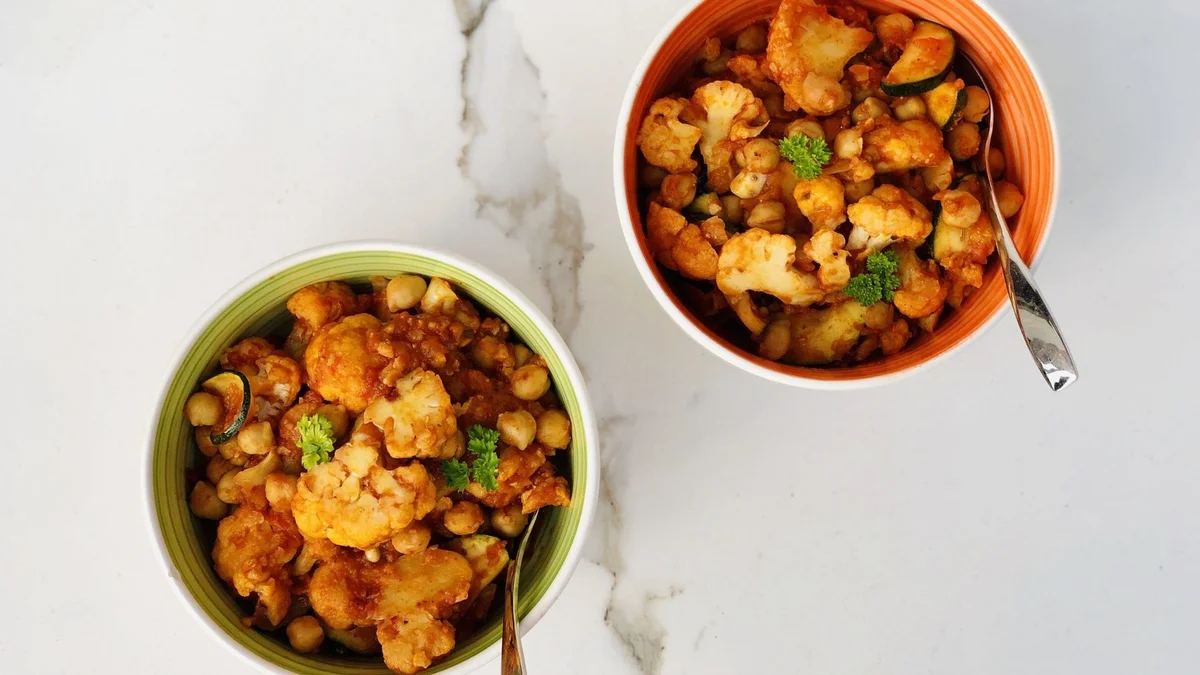
A quick bowl of chickpeas, cauliflower and aubergine simmered with tomato passata and garlic. It is a straightforward way to make a warm, vegetable-packed meal in one pan.
Ingredients
- 140 gCanned chickpeas, drained
- 200 g (2 cups)Cauliflower
- 2 ml (0.4 tsp)Olive oil
- 0.4Aubergine
- 6 tbspTomato passata
- 0.4Onion
- 1Garlic clove
Instructions
- 1
Chop the vegetables
Chop the onion, cauliflower and aubergine.
- 2
Heat the oil
Warm the olive oil in a frying pan over a medium heat.
- 3
Cook until softened
Add the onion, cauliflower and aubergine. Cook for 10–15 minutes, until softened.
- 4
Add chickpeas and sauce
Stir in the chickpeas, garlic and tomato passata.
- 5
Season and serve
Season with salt and pepper, then serve.
What is a chickpea veggie bowl?
This is a simple, warm bowl combining chickpeas with vegetables and a tomato-based sauce. Rather than a fixed traditional preparation, it is a flexible home-style meal built around pantry chickpeas and whatever vegetables are to hand.
Here, cauliflower and aubergine soften in the pan before the chickpeas, garlic and passata go in. That order gives the vegetables a head start and lets the sauce bring the components together.
Nutrition and macros by portion
The nutrition label shows one serving as written: 375 calories, 0g protein, 0g carbs, 0g fat.
| Portion | Adjustment | kcal | Protein | Carbs | Fat |
|---|---|---|---|---|---|
| Lighter | Use less olive oil | 263 kcal | 0g | 0g | 0g |
| This serving | As written | 375 kcal | 0g | 0g | 0g |
| Hungry | Serve with rice | 563 kcal | 0g | 0g | 0g |
The chickpeas and vegetables provide most of the carbohydrates, while the olive oil contributes fat; chickpeas also provide some protein. For a more balanced plate, serve the bowl with a side of greens or another vegetable.
Why these ingredients work
Chickpeas: drained canned chickpeas make this a speedy dish and add a tender, hearty element. Add them towards the end so they warm through without becoming overly soft.
Cauliflower and aubergine: these vegetables become tender as they cook and take on the flavour of the passata. Chop them into similarly sized pieces to help them cook at a similar rate.
The key cooking step
Soften the vegetables: let the onion, cauliflower and aubergine cook in the oil before adding the wet ingredients. Stir occasionally so the pieces cook evenly and do not catch on the pan.
The recipe gives a 10–15 minute cooking window. Start checking at 10 minutes, since the time needed depends on the size of the pieces and the heat of the pan.
How to judge the texture
Vegetables: the cauliflower should be tender when pierced, and the aubergine should have softened. If either still feels firm, continue cooking briefly before adding the chickpeas and sauce.
Sauce: passata should coat the vegetables and chickpeas rather than leave the bowl watery. If it looks loose, let it cook gently for a little longer.
Timing and preparation
Chopping: cut the vegetables before heating the pan, so they can go in together. Small, even pieces are especially helpful given the short cooking time.
Total time: the stated total is 12 minutes, while the vegetable step alone calls for 10–15 minutes. Use the softened-vegetable cue as your guide, as preparation time and piece size can affect how long the bowl takes.
What to serve with it
Serve the bowl on its own for a simple meal, or pair it with rice, couscous or flatbread if you would like a more filling plate. A spoonful of yoghurt or a squeeze of lemon can be added at the table, though neither is part of the listed recipe.
If serving with a side, prepare it while the vegetables cook so everything is ready together.
Recipe notes & tips
- Drain the chickpeas well so excess liquid does not thin the passata.
- Cut the cauliflower and aubergine into similar-sized pieces for more even cooking.
- Stir the vegetables occasionally to help them soften without sticking.
- Check the cauliflower with a fork before adding the chickpeas and passata.
- Taste and adjust the salt and pepper just before serving.
Variations
- Add chilli: stir in chilli flakes with the garlic for a warmer sauce.
- Use courgette: swap in chopped courgette for some of the cauliflower or aubergine.
- Add spinach: stir a handful into the pan at the end until wilted.
- Finish with herbs: scatter chopped parsley over the bowl before serving.
- Serve with grains: spoon the chickpea mixture over cooked rice or couscous.
Common mistakes to avoid
- Uneven chopping: large pieces take longer to soften, so cut the vegetables to a similar size.
- Adding the sauce too soon: the vegetables may stay firm, so soften them first as directed.
- Crowding the pan: vegetables can cook unevenly, so use a pan large enough to hold them in a broad layer.
- Overcooking the chickpeas: they can break down, so add them with the passata near the end.
- Skipping the final seasoning: taste the mixture and adjust the salt and pepper before serving.
How to store
Cool leftovers promptly and store them in a covered container in the fridge for up to 3 days. Reheat in a pan over a gentle heat, stirring until hot throughout; add a small splash of water if the sauce has thickened.
Frequently asked questions
Can I use dried chickpeas?
Yes, but cook them fully first; dried chickpeas cannot be added straight to this short-cooking recipe. Use 140 g cooked chickpeas to match the listed amount.
Can I make this ahead?
Yes. Cook the bowl, cool it promptly and refrigerate it in a covered container, then reheat before serving.
How do I know when the vegetables are ready?
The cauliflower should be easy to pierce with a fork and the aubergine should feel soft. If they are still firm, cook them a little longer before adding the chickpeas and passata.
Can I use chopped tinned tomatoes instead of passata?
You can, though the sauce will be chunkier and may need a little longer to reduce. Cook until it coats the chickpeas and vegetables.
What can I serve alongside the bowl?
Rice, couscous or flatbread all work well. For a lighter accompaniment, serve it with a simple green salad.
Cook it from the original
This recipe comes from fitlap.com. Their page has the author’s own photos, notes and tips — the best place to cook it from.
Open the recipe on fitlap.com