
Saudi Chicken Kabsa
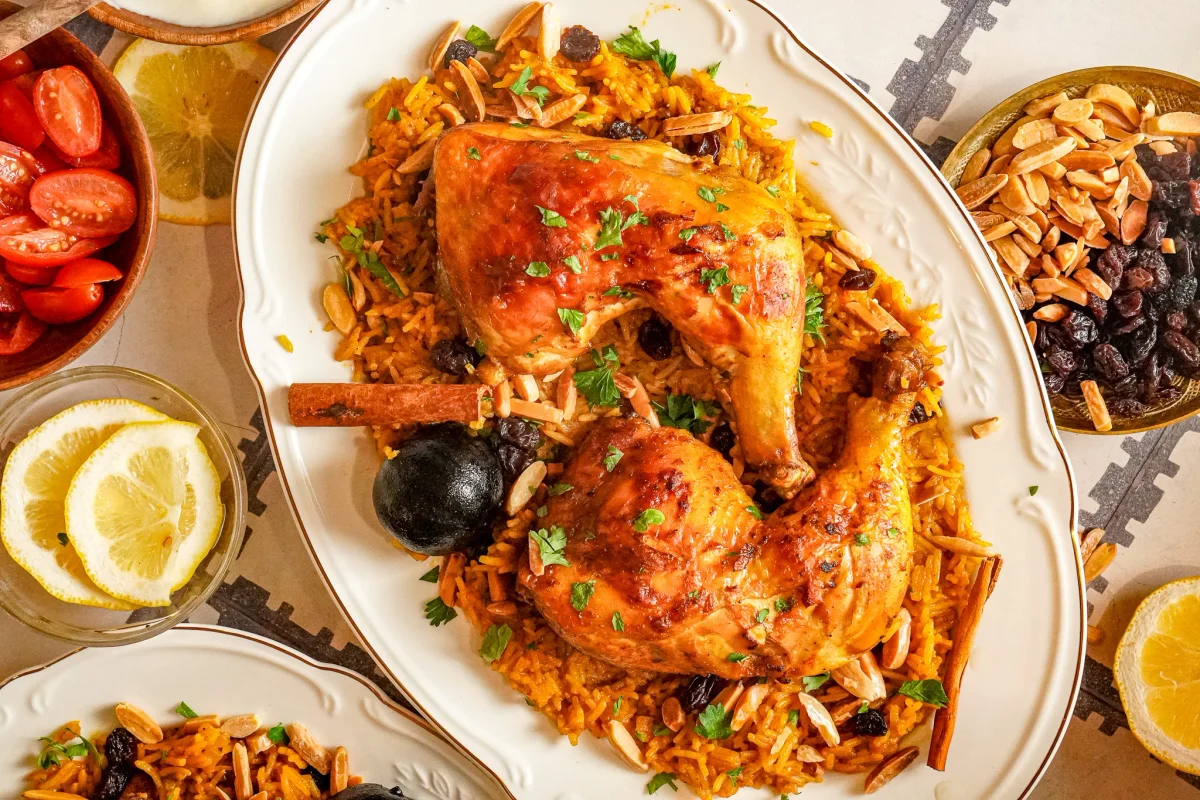
Saudi chicken kabsa pairs spiced chicken with rice cooked in a tomato-rich broth. It makes a generous one-pot-style centrepiece for a family lunch or a special occasion.
Ingredients
- 4whole chicken leg quarters (or 1 chicken cut into 4 pieces)
- 1½ largeyellow onions, finely chopped
- 6 clovesgarlic, finely minced
- 1dried lemon
- 3cinnamon sticks
- 1dried bay leaf
- 5cardamom pods
- 4whole cloves
- 45 ml (3 tablespoons)olive oil
- 1 largetomato, puréed
- 180 ml (¾ cup)tomato sauce
- 15 ml (1 tablespoon)tomato paste
- 950 ml (4 cups)water
- 1½ teaspoonssalt
- 2 tablespoonskabsa spices
- ½ teaspoonground cinnamon
- ½ teaspoonblack pepper
- 1 teaspoongarlic powder
- 1 teaspoononion powder
- 1 teaspooncurry powder
- ½ teaspoonturmeric
- ½ teaspoonground cardamom
- 1½ teaspoonsseven-spice blend
- 1 teaspoonground coriander
- 190 g (1 cup)basmati rice, washed and soaked for 20 minutes
- 1 teaspoonsalt
- 475 ml (2 cups)chicken broth
Instructions
- 1
Brown the onions
Heat the olive oil in a pot over medium-high heat. Add the finely chopped onions and cook until browned.
- 2
Add the garlic
Stir in the minced garlic and cook until fragrant. The method suggests adding a spicy pepper here if desired.
- 3
Season the chicken
Add the chicken and whole spices, preferably gathered in a spice bag for easier removal. Mix and sauté for 2–3 minutes, then add the ground spices and stir again.
- 4
Add the tomatoes
Stir in the tomato paste, tomato sauce, puréed tomato and water.
- 5
Simmer the chicken
Mix well, cover and bring to a rolling boil. Boil for 5 minutes, then reduce the heat to medium and simmer for 30 minutes, or until the chicken is cooked.
- 6
Crisp the chicken
Remove the whole spices and set aside the remaining broth. Lift out the chicken and crisp it in a pan or air fryer; alternatively, broil it for a few minutes.
- 7
Cook the rice
Put the rice in a pot with the salt and reserved broth. If there is not enough broth, make up the remaining amount with water.
- 8
Simmer the rice
Bring the rice to a rolling boil and boil for 5 minutes. Cover, reduce the heat to low and simmer for 15–20 minutes.
- 9
Plate and serve
Transfer the cooked rice to a large serving platter and arrange the chicken on top. Garnish with freshly chopped parsley, toasted almonds or pine nuts if desired.
What is Saudi chicken kabsa?
Kabsa is a rice-and-meat dish associated with Saudi and wider Gulf cooking, commonly built around fragrant spices and rice cooked in seasoned broth. This version simmers the chicken with tomatoes and whole spices, then uses the resulting broth to cook the basmati.
Tomato adds savoury depth, while the mix of whole and ground spices gives the rice and chicken layered aroma. Crisping the chicken separately at the end adds contrast to the soft, broth-infused rice.
Nutrition and macros by portion
The nutrition label shows one serving as written: 600 calories, 6g protein, 49g carbs, 12g fat.
| Portion | Adjustment | kcal | Protein | Carbs | Fat |
|---|---|---|---|---|---|
| Lighter | More salad, less rice | 420 kcal | 4g | 34g | 8g |
| This serving | As written | 600 kcal | 6g | 49g | 12g |
| Hungry | Larger rice portion | 900 kcal | 9g | 74g | 18g |
The rice and tomato provide most of the carbohydrates, while the chicken supplies most of the protein. Olive oil and chicken contribute fat; serve with salad or vegetables for a fresh contrast alongside the rice and chicken.
Build the flavour in stages
Onions first: brown them in the oil before adding garlic, so their sweetness develops as the base of the dish.
Whole spices: a dried lemon, cinnamon, bay, cardamom and cloves perfume the cooking liquid. A spice bag makes them easier to remove before the broth is used for rice.
Ground spices: add these after the chicken has had a brief sauté with the whole spices. Stir thoroughly so the seasonings coat the chicken before the tomatoes and water go in.
Use the broth for the rice
The broth left after simmering the chicken carries the tomato and spice flavours into the rice. Remove the whole spices and chicken first, then measure the liquid available for the rice.
If the reserved broth does not cover the amount needed, top it up with water as the method directs. This keeps the rice cooking liquid at the intended level without leaving out the flavour already in the broth.
Get the rice texture right
Soaking the washed basmati for 20 minutes is part of the recipe, so allow for that before cooking. Drain it before adding it to the pot with the broth and the second measure of salt.
After the 5-minute rolling boil, cover the pot and keep the rice at a low simmer for 15–20 minutes. Once cooked, the grains should be tender; avoid stirring them repeatedly while they simmer.
Check the chicken and crisp it
The chicken simmers for 30 minutes after the initial 5-minute boil, or until cooked. Check that the thickest part is cooked through before lifting it from the broth.
A few minutes under the grill or in an air fryer gives the chicken a browned finish. Keep an eye on it while crisping, since the time needed depends on the appliance and the size of the pieces.
Serve it as a centrepiece
Spread the rice over a large platter and place the chicken on top so both are easy to serve. Chopped parsley, toasted almonds or pine nuts are suggested garnishes for freshness and crunch.
A simple salad or cooked vegetables can round out the plate alongside the rice and chicken. Keep additions separate until serving so the rice stays fluffy and the chicken retains its crisp surface.
Recipe notes & tips
- Soak the washed basmati for the full 20 minutes before cooking.
- Use a spice bag for the whole spices if you want to remove them quickly.
- Keep the broth after removing the chicken; it is the cooking liquid for the rice.
- Top up the broth with water only if there is not enough for the rice.
- Crisp the chicken just before serving to preserve its browned exterior.
- Toast the optional almonds or pine nuts before scattering them over the platter.
Variations
- Add a spicy pepper: include one with the garlic, as suggested in the method.
- Use a whole chicken: cut it into four pieces in place of the leg quarters.
- Garnish with parsley: add freshly chopped parsley just before serving.
- Add toasted almonds: scatter them over the finished platter for crunch.
- Add pine nuts: toast them and use as an alternative crunchy garnish.
Common mistakes to avoid
- Skipping the onion browning: cook until browned to develop the base before adding garlic.
- Leaving whole spices in the rice: remove them from the broth before cooking the rice.
- Discarding the broth: reserve it after simmering the chicken for the rice.
- Guessing the rice liquid: top up the reserved broth with water if it is insufficient.
- Overcooking the chicken while crisping: watch it closely when using the grill or air fryer.
How to store
Refrigerate leftover chicken and rice in airtight containers once cooled, and use within 3 days. Reheat until piping hot, adding a small splash of water to the rice if it has dried out; crisp the chicken separately if you want to restore its browned finish.
Frequently asked questions
Can I use a whole chicken instead of leg quarters?
Yes. The ingredient list gives one chicken cut into four pieces as an alternative to the four leg quarters.
Do I need to soak the basmati rice?
The recipe specifies washing and soaking it for 20 minutes. Drain it before adding it to the broth.
What if I do not have enough broth for the rice?
Top up the remaining amount with water, as directed. The reserved broth still brings the chicken's tomato and spice flavour to the rice.
How do I know when the chicken is cooked?
The method gives a 30-minute simmer after the initial 5-minute boil, but also says to cook until done. Check the thickest part before removing the chicken.
Can I crisp the chicken without an air fryer?
Yes. The method allows you to crisp it in a pan or broil it for a few minutes.
Can I prepare the chicken and rice in advance?
You can cook them ahead and refrigerate them separately, then reheat thoroughly before serving. Crisp the chicken close to serving time for a better finish.
Cook it from the original
This recipe comes from falasteenifoodie.com. Their page has the author’s own photos, notes and tips — the best place to cook it from.
Open the recipe on falasteenifoodie.com