
Sihi Avalakki | Sweet Poha
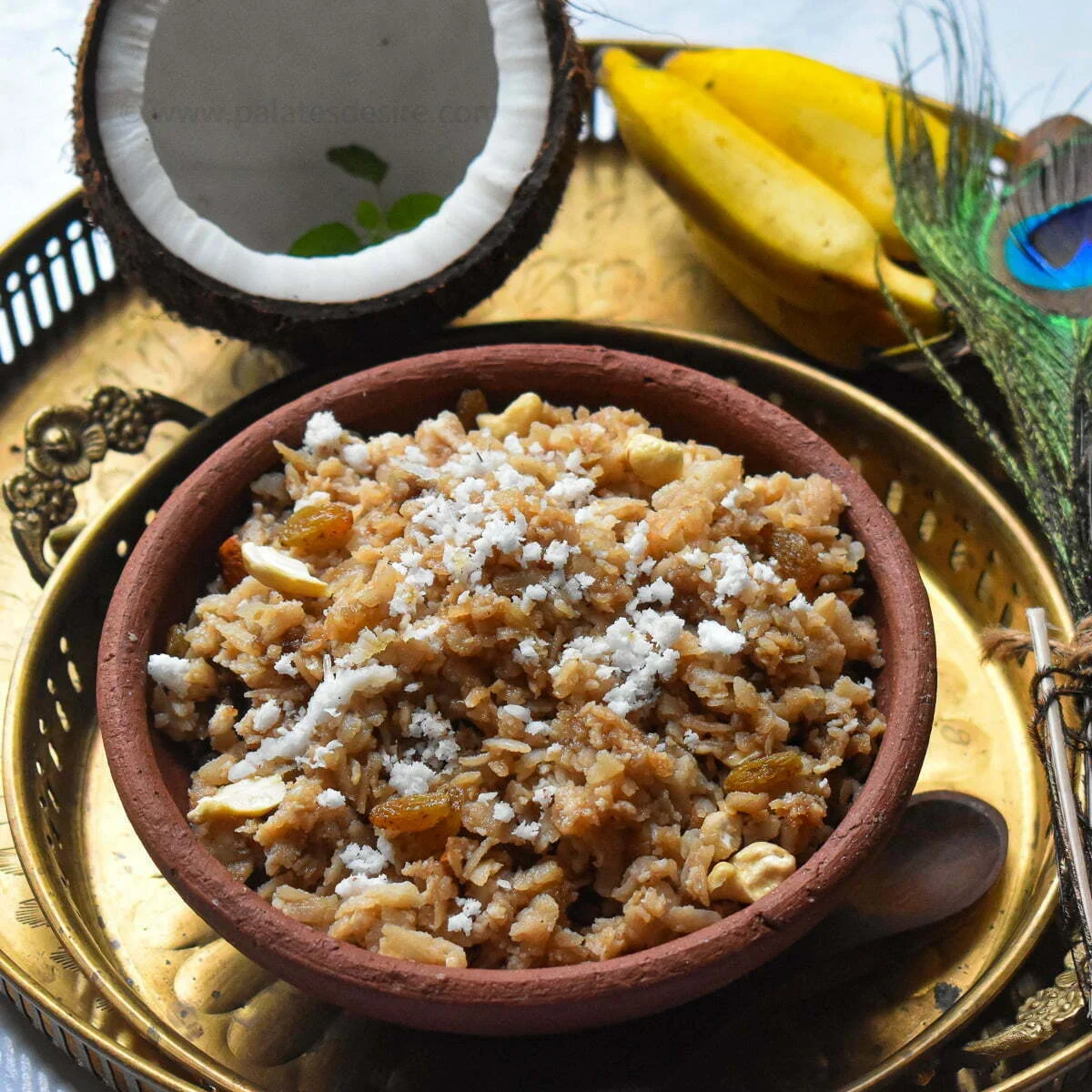
Sihi Avalakki is a gently sweetened poha dish made with coconut, jaggery, milk and warming cardamom. It comes together without cooking, making it a quick offering for Sri Krishna or a simple sweet to share.
Ingredients
- 150 g (1½ cups)thick poha
- 40 g (½ cup)freshly grated coconut
- 60 ml (¼ cup)milk
- 2.5 ml (½ tsp)ground cardamom
- 50 g (4 tbsp)jaggery powder
- 1 pinchedible camphor
- 8 g (1 tbsp)chopped cashew nuts
- 8 g (1 tbsp)chopped almonds
- 15 ml (1 tbsp)honey
Instructions
- 1
Rinse and soak
Wash and rinse the thick poha with water. Soak it in the milk and leave it for 8 minutes.
- 2
Add the flavourings
Add the grated coconut, honey, jaggery powder, ground cardamom, edible camphor, cashews and almonds.
- 3
Mix and rest
Gently mix everything together, then leave it for 5 minutes so the juices can blend before serving.
What is Sihi Avalakki?
Sihi Avalakki is a sweet poha preparation from Indian cuisine, with avalakki meaning flattened rice and sihi meaning sweet. It is often prepared as prashad, an offering to Lord Sri Krishna.
This version combines softened thick poha with jaggery, coconut, milk, nuts and fragrant cardamom. The short resting time lets the flavours mingle without cooking the mixture.
Nutrition and macros by portion
The nutrition label shows one serving as written: 259 calories, 0g protein, 0g carbs, 0g fat.
| Portion | Adjustment | kcal | Protein | Carbs | Fat |
|---|---|---|---|---|---|
| Lighter | Use less jaggery and honey | 181 kcal | 0g | 0g | 0g |
| This serving | As written | 259 kcal | 0g | 0g | 0g |
| Hungry | Serve a larger portion | 389 kcal | 0g | 0g | 0g |
The poha and jaggery provide most of the carbohydrate, while coconut, milk and nuts contribute fat; the nuts and milk also add some protein. Pair a serving with a savoury dish or fresh fruit if you want a more balanced plate.
Choosing and soaking the poha
Thick poha: this variety holds its shape better after soaking than thin flakes. Rinse it briefly, then let it soften in the measured milk for 8 minutes.
Check the texture before mixing in the other ingredients: the flakes should be tender but still distinct. If they seem firm, allow them a little more time to absorb the milk.
Balancing the sweetness
Jaggery and honey: both bring sweetness, while jaggery gives the dish its characteristic deep, rounded flavour. Stir gently so the jaggery is distributed without crushing the poha.
Cardamom and camphor: cardamom adds a warm aroma, and edible camphor is used only as a tiny accent. Use edible camphor specifically, and keep to the recipe’s small pinch.
Getting the texture right
Gentle mixing: fold the ingredients together rather than stirring vigorously, which can break the softened flakes. The coconut and chopped nuts should be spread throughout the mixture.
Five-minute rest: leave the mixture aside after combining so the juices and flavours blend. Serve once the poha is moist and tender, not mushy.
Serving and timing
This is a no-cook recipe that takes 10 minutes in total, including the two resting periods. It is best served soon after the final 5-minute rest, while the poha still has a pleasant bite.
For a simple plate, serve it on its own as a sweet offering or alongside a savoury breakfast item. Keep the offering free of any additions that do not suit your household’s practice.
Recipe notes & tips
- Rinse the poha briefly so it softens without becoming waterlogged.
- Use thick poha to help the flakes keep their shape after soaking.
- Measure edible camphor carefully and use just a pinch.
- Fold the mixture gently to keep the softened flakes intact.
- Taste after mixing and allow the full 5-minute rest before serving.
Variations
- Extra coconut: add a little more freshly grated coconut for a fuller coconut flavour.
- Raisin addition: stir in a few raisins for extra sweetness and chew.
- Nut swap: use chopped pistachios in place of either the cashews or almonds.
- Dairy-free version: replace the milk with an unsweetened plant-based alternative.
- Jaggery adjustment: reduce the jaggery for a less sweet version, then taste before serving.
Common mistakes to avoid
- Long rinsing: the poha can turn soggy; rinse it quickly and drain it well.
- Using thin poha: it may become too soft during soaking; choose thick flakes.
- Skipping the soak: the flakes may remain firm; leave them in the milk for 8 minutes.
- Rough mixing: the poha can break apart; fold the ingredients together gently.
- Too much camphor: its flavour can dominate; use only the stated pinch of edible camphor.
How to store
Because this dish contains milk and fresh coconut, cover and refrigerate leftovers promptly and use within 1 day. Serve chilled or let it sit briefly at room temperature; reheating is not necessary.
Frequently asked questions
Can I make Sihi Avalakki ahead?
It is best made shortly before serving so the poha keeps its texture. You can measure the dry ingredients ahead, then rinse and soak the poha when you are ready.
Can I use thin poha?
Thick poha is better suited to this recipe because it holds its shape. Thin poha may soften too much during the milk soak.
How do I know when the poha has soaked enough?
After 8 minutes, the flakes should be tender but still distinct. If they remain firm, give them a little longer before adding the other ingredients.
Can I leave out the edible camphor?
Yes. The recipe will still have flavour from the cardamom, jaggery and coconut.
Should I serve it warm or cold?
It is not cooked, so it is usually served at room temperature or chilled. Avoid heating it, as that can soften the poha further.
How long does it keep?
Store it covered in the fridge and use it within 1 day because it contains milk and fresh coconut.
Cook it from the original
This recipe comes from palatesdesire.com. Their page has the author’s own photos, notes and tips — the best place to cook it from.
Open the recipe on palatesdesire.com