
Authentic Bucatini Alla Carbonara
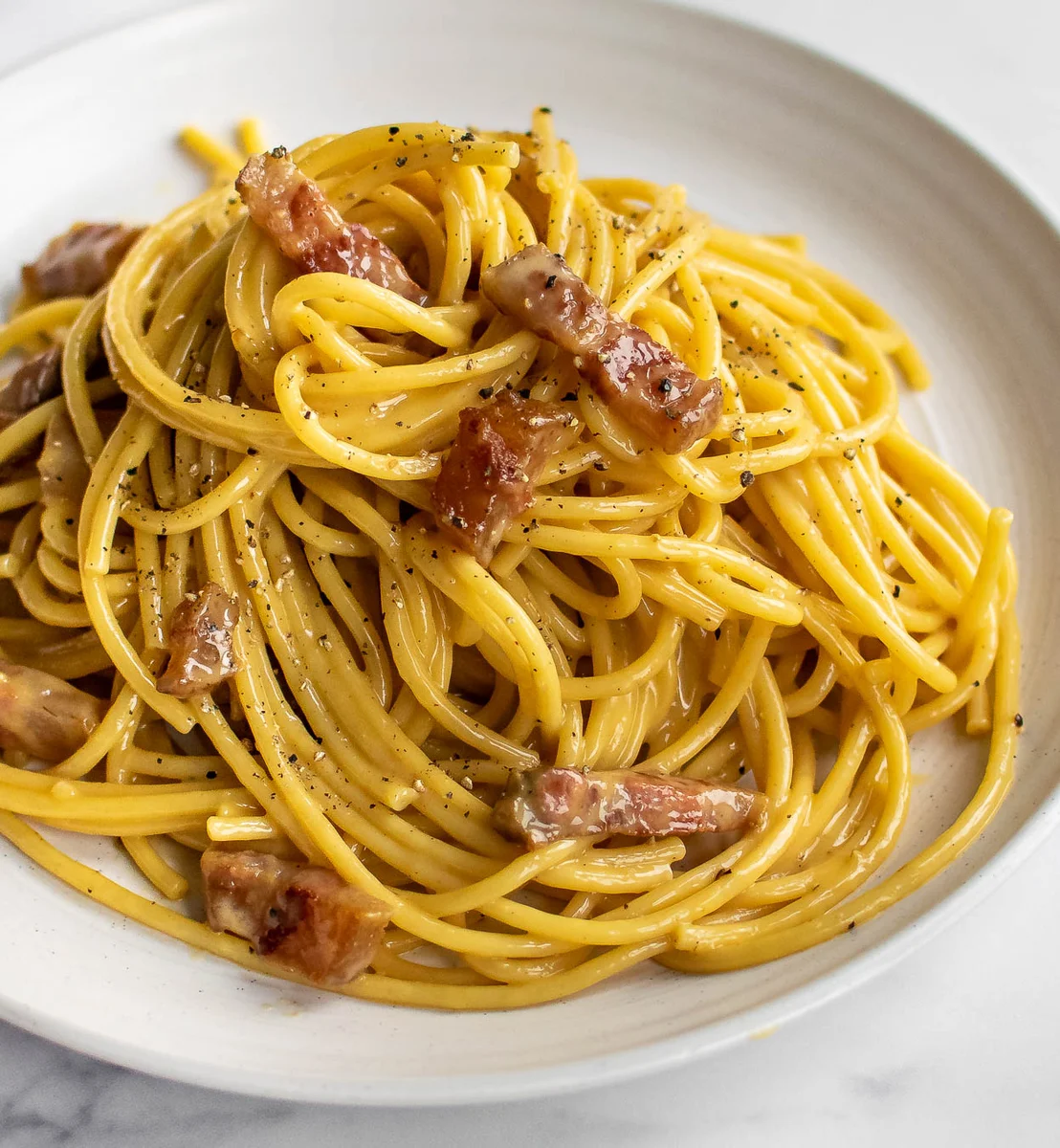
Bucatini alla carbonara is a Roman pasta dish coated in a glossy sauce of eggs, cheese and rendered guanciale. This version comes together in about 30 minutes, with starchy pasta water helping the sauce cling without cream.
Ingredients
- 113–142 g (4–5 oz)guanciale, cut into strips
- 1 whole egg and 3 egg yolks, at room temperatureeggs
- About 75 g (¾ cup)Pecorino Romano, grated
- About 25 g (¼ cup)Parmigiano Reggiano, grated
- 340 g (¾ lb)bucatini
- To tastefreshly cracked black pepper
- To tastekosher salt
Instructions
- 1
Boil the water
Bring a large pot of water to the boil. Once it is boiling, salt the water.
- 2
Mix the eggs
In a mixing bowl, combine the eggs, both cheeses and a generous pinch of black pepper.
- 3
Cook the guanciale
Put the guanciale in a large cold frying pan and set it over medium-low heat. Cook for 10–15 minutes, until its fat has rendered and the strips are beginning to crisp. Turn off the heat while the pasta cooks. When the pasta is ready, return the pan to medium heat and transfer the pasta straight into it, reserving the pasta water. Toss to coat each strand in the rendered fat, then add a splash of pasta water and keep tossing for 1–2 minutes.
- 4
Toss with eggs
Turn off the heat and wait 30 seconds. Stir a couple of tablespoons of pasta water into the egg mixture, then pour it into the pan. Toss the pasta straight away, adding small splashes of pasta water as needed to loosen the sauce. Continue until glossy. Taste, add salt if needed and more pepper, then serve with extra cheese.
- 5
Serve the pasta
Enjoy!
What is bucatini alla carbonara?
Carbonara is a Roman pasta dish traditionally made with cured pork, eggs, hard cheese and black pepper. Bucatini, with its hollow centre, makes a substantial choice for carrying the rich sauce.
This version uses both Pecorino Romano and Parmigiano Reggiano. The combination gives the sauce a savoury, sharp character, while pasta water helps bring the ingredients together.
Nutrition and macros by portion
The nutrition label shows one serving as written: 645 calories, 28g protein, 65g carbs, 31g fat.
| Portion | Adjustment | kcal | Protein | Carbs | Fat |
|---|---|---|---|---|---|
| Lighter | Less guanciale, more salad | 451 kcal | 20g | 46g | 22g |
| This serving | As written | 645 kcal | 28g | 65g | 31g |
| Hungry | Larger pasta portion | 968 kcal | 42g | 98g | 47g |
Most of the carbohydrates come from the bucatini, while guanciale, eggs and cheese provide much of the fat and protein. Pair a serving with a generous portion of salad or vegetables for a more balanced plate.
Why start guanciale in a cold pan?
Gradually heating the guanciale gives its fat time to render before the strips crisp. Keep the heat at medium-low and allow 10–15 minutes, watching for golden edges rather than rushing the process.
That rendered fat coats the pasta and contributes much of the dish’s savoury flavour. Turning off the heat while the pasta finishes cooking prevents the guanciale from continuing to fry.
Get the egg mixture ready
Room-temperature eggs are easier to combine with the grated cheeses. Mix them with a generous pinch of pepper before the pasta is ready, so the final tossing can happen promptly.
Loosening the mixture with a couple of tablespoons of pasta water helps it spread through the bucatini. Add the water gradually; you can always add another splash later.
Use pasta water carefully
The recipe uses pasta water at two stages: first to help the pasta and guanciale come together, then to adjust the egg-and-cheese sauce. Reserve some before draining or transferring the pasta.
Add small splashes as you toss. The aim is a sauce that coats the pasta in a glossy layer, not a watery pool at the bottom of the pan.
Keep the sauce silky
Once the pan is off the heat, wait 30 seconds before adding the egg mixture. Toss immediately so the eggs distribute over the hot pasta rather than sitting in one spot.
Avoid returning the pan to high heat after adding the eggs. Gentle residual heat and frequent tossing help form a smooth sauce instead of scrambling the eggs.
Serve straight away
Carbonara is at its best just after the sauce turns glossy, so have bowls ready before you start tossing in the eggs. Finish with extra cheese and black pepper as suggested in the method.
A crisp green salad or simply dressed vegetables make a fresh accompaniment alongside the rich pasta.
Recipe notes & tips
- Bring the eggs to room temperature before mixing them with the cheese.
- Grate the cheeses finely so they blend readily into the egg mixture.
- Reserve pasta water before draining the bucatini.
- Start the guanciale in a cold pan and let it render slowly.
- Have the egg mixture ready before transferring the pasta to the pan.
- Serve as soon as the sauce is glossy for the best texture.
Variations
- More Pecorino: Use a little extra Pecorino Romano for a sharper, saltier cheese flavour.
- More pepper: Add another generous grind of black pepper when mixing the eggs.
- Different pasta: Swap in spaghetti if bucatini is unavailable, keeping the cooking method the same.
- Guanciale substitute: Use pancetta if needed, noting that the flavour will differ from traditional guanciale.
- Cheese balance: Adjust the proportions of Pecorino Romano and Parmigiano Reggiano while keeping the total amount similar.
Common mistakes to avoid
- Starting with a hot pan: The guanciale may brown before its fat renders; begin with a cold pan.
- Skipping the pasta water: The sauce can be difficult to loosen; reserve some before draining.
- Adding eggs over strong heat: They can scramble; switch off the heat and wait 30 seconds first.
- Pouring in too much water: The sauce may turn thin; add small splashes as you toss.
- Leaving the pasta still: The sauce may not coat it evenly; toss immediately after adding the eggs.
- Over-salting early: Guanciale and cheeses are already savoury; taste before adding more salt.
How to store
Refrigerate leftovers in an airtight container for up to 2 days. Reheat gently in a pan with a small splash of water, stirring often; avoid high heat, which can make the egg sauce clumpy.
Frequently asked questions
Can I make carbonara without guanciale?
Pancetta can be used as a substitute, although its flavour and texture differ from guanciale. Cook it slowly so some fat renders before adding the pasta.
Why does this recipe use pasta water?
It helps the rendered fat, eggs and cheese form a sauce that clings to the bucatini. Add it a little at a time while tossing.
How do I stop the eggs from scrambling?
Turn off the heat and wait 30 seconds before adding the egg mixture. Toss immediately and use small splashes of pasta water to adjust the sauce.
Can I make the sauce with cream?
This recipe gets its sauce from eggs, cheese and pasta water, so cream is not needed. Adding cream would change the dish’s texture and character.
What can I use instead of bucatini?
Spaghetti is a practical alternative. Cook it according to its packet instructions and follow the same tossing method.
Can I prepare carbonara ahead?
It is best made just before serving, since the egg-and-cheese sauce is most appealing when freshly tossed. You can grate the cheese and mix the eggs and cheese in advance.
Cook it from the original
This recipe comes from carolynscooking.com. Their page has the author’s own photos, notes and tips — the best place to cook it from.
Open the recipe on carolynscooking.com