
Easy Homemade Bagels {Dairy-Free}
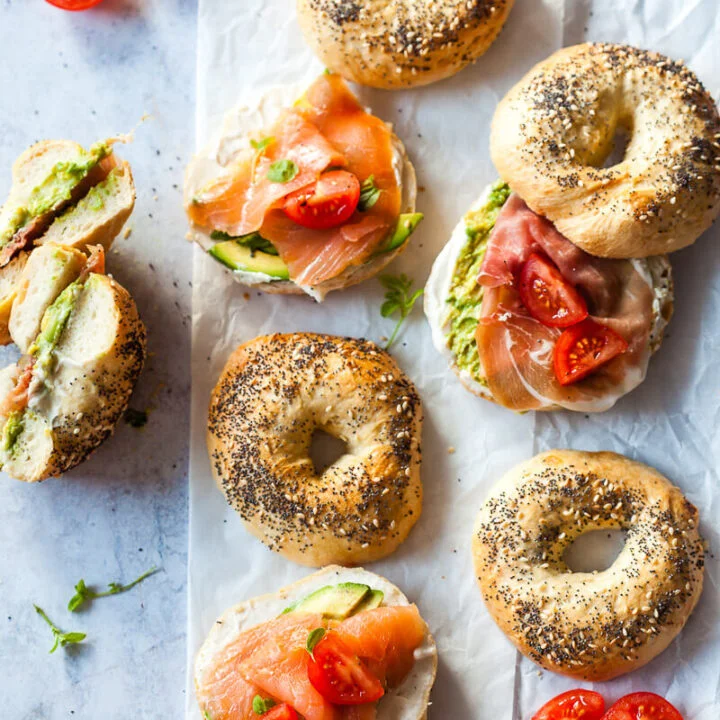
These dairy-free, egg-free bagels use a simple yeast dough, a brief simmer and a hot oven to make four chewy, golden rolls. They take time to rise, but the hands-on steps are straightforward and the toppings are easy to vary.
Ingredients
- 250 gplain flour
- 1 tsp (about 3 g)dried yeast
- 1 pinchsalt
- 180 mlwater
- 80 mlunsweetened soya milk
- 1 tsp (about 2 g)sesame seeds
- 1 tsp (about 2 g)poppy seeds
Instructions
- 1
Mix and rise
Mix the flour, dried yeast, salt and water in a bowl. Knead until the dough is elastic, then cover and leave it to rise for about 2 hours, or until doubled in size.
- 2
Prepare the tray
Heat the oven to 190°C (370°F) and line a baking tray with baking paper.
- 3
Shape the bagels
Turn the dough out on to the work surface, shape it into a ball and divide it into four pieces. Shape each piece into a ball, make a hole in the middle with your thumb and index finger, then rotate to widen the hole. Repeat with the remaining dough and leave the shaped bagels to rest for 10 minutes.
- 4
Simmer the bagels
Bring a large pot of water to the boil, then lower the heat to a simmer. Cook the bagels for about 40 seconds, turn them over and cook for another 30 seconds. They will rise as they cook, so leave room between them. Lift them out and place them on the prepared tray.
- 5
Add the topping
Brush each bagel with soya milk and sprinkle with sesame seeds and poppy seeds.
- 6
Bake until golden
Bake in the preheated oven for about 25 minutes, until golden brown. Transfer the baked bagels to a cooling rack.
- 7
Serve with toppings
Serve with dairy-free cream cheese, avocado or other toppings of your choice, such as salmon or prosciutto.
What are bagels?
Bagels are ring-shaped yeast breads, commonly associated with Jewish communities in Eastern Europe and now popular in many parts of the world. Their characteristic chew comes in part from cooking the shaped dough briefly in water before baking.
This version keeps the dough simple and dairy-free, with soya milk used as a wash rather than mixed into the dough. A mix of sesame and poppy seeds gives the crust a savoury finish.
Nutrition and macros by portion
The nutrition label shows one serving as written: 241 calories, 7g protein, 49g carbs, 1g fat.
| Portion | Adjustment | kcal | Protein | Carbs | Fat |
|---|---|---|---|---|---|
| Lighter | Use lighter toppings | 169 kcal | 5g | 34g | 1g |
| This serving | As written | 241 kcal | 7g | 49g | 1g |
| Hungry | Add a second bagel | 362 kcal | 11g | 74g | 2g |
The flour provides most of the carbohydrates, while the small amount of soya milk and seeds contribute some protein and fat. Serve a bagel with a protein-rich topping and fruit or vegetables to make a more balanced plate.
A simple dough
Flour and water: these form the dough, while yeast gives it time to rise and salt rounds out the flavour. Knead until the dough feels elastic before covering it.
Soya milk: brush it over the shaped bagels before baking to help the seeds adhere. The recipe uses it as a topping wash, not as part of the dough.
Shape the centre hole
Even portions: divide the dough into four pieces so the bagels bake at a similar rate. Shape each into a ball before making the hole.
Wide opening: use your thumb and index finger to start the hole, then rotate the dough to enlarge it. Keep in mind that the hole can narrow as the dough rises and bakes.
Why simmer first?
Short bath: simmering the bagels before baking is the defining technique here. The recipe calls for about 40 seconds on one side and 30 seconds after turning.
Room in the pot: bagels rise in the water, so cook them without crowding. Lift them out gently and let excess water drain before placing them on the tray.
Check the bake
Golden crust: bake at 190°C (370°F) for about 25 minutes, watching for an evenly golden-brown surface. Transfer the bagels to a cooling rack once they come out of the oven.
Cooling: give them time to cool before slicing, so the inside can settle and the crumb is easier to handle.
Ways to serve
Creamy toppings: dairy-free cream cheese and avocado are suggested options that suit the savoury seed topping. Spread them on once the bagels have cooled enough to slice.
More savoury options: salmon or prosciutto can make a fuller topping. You can also serve the bagels plain or with other toppings you enjoy.
Recipe notes & tips
- Cover the dough during its first rise so its surface does not dry out.
- Knead until the dough feels elastic before leaving it to rise.
- Make the centre holes a little wider than you want them in the finished bagels, as they may shrink.
- Simmer the bagels in batches if needed so they have room to rise.
- Drain each bagel briefly before moving it to the baking tray.
- Use a cooling rack after baking to let air circulate around the crust.
Variations
- Everything topping: replace or supplement the seeds with an everything-style seasoning.
- Plain finish: leave off the sesame and poppy seeds for an unseeded crust.
- Sesame bagels: use sesame seeds alone for a simple, nutty topping.
- Poppy bagels: use poppy seeds alone for a delicate, lightly crunchy crust.
- Avocado topping: add sliced or mashed avocado after the bagels have cooled.
Common mistakes to avoid
- Under-kneading: the dough may lack elasticity; knead until it feels elastic before the first rise.
- Rushing the rise: the dough needs about 2 hours to double; allow it to finish rising before shaping.
- Small holes: the openings can narrow during cooking; widen them well when shaping.
- Crowding the pot: bagels rise as they simmer; leave extra space or cook them in batches.
- Skipping the wash: the seeds may not stick well; brush the bagels with soya milk before topping.
- Overbaking: the crust can become too dark; check for a golden-brown finish at about 25 minutes.
How to store
Once completely cool, store the bagels in an airtight container at room temperature for up to 2 days. For longer storage, freeze them well wrapped; thaw and warm briefly in the oven before serving.
Frequently asked questions
Can I make these bagels without soya milk?
The soya milk is used to brush the tops, rather than to make the dough. You can omit the wash, though the seeds may not adhere as well.
How can I tell when the dough has risen enough?
The recipe calls for about 2 hours, or until the dough has doubled in size. Use the size cue as well as the time.
Why do the bagels need a water bath?
The method briefly simmers the shaped dough before baking, helping create the characteristic bagel texture. Follow the stated cooking times: about 40 seconds, then another 30 seconds after turning.
Can I use just one type of seed?
Yes. Use either sesame seeds or poppy seeds on their own, keeping the total topping to your preference.
Can I freeze homemade bagels?
Yes. Cool them completely, wrap them well and freeze. Thaw before warming in the oven.
What can I put on these bagels?
The recipe suggests dairy-free cream cheese, avocado, salmon or prosciutto. You can also serve them plain or choose other toppings.
Cook it from the original
This recipe comes from vibrantplate.com. Their page has the author’s own photos, notes and tips — the best place to cook it from.
Open the recipe on vibrantplate.com